
Meta and Blue Owl Capital's Hyperion Data Center: A Strategic Bet on AI-Driven Infrastructure
Financial Engineering: Offloading Debt, Retaining Control
The joint venture's structure is a masterclass in capital efficiency. Blue OwlOWL-- Capital, a private credit firm, holds an 80% stake in the project, having contributed $7 billion in cash upfront, while MetaMETA-- retains a 20% ownership stake and transferred land and construction assets worth $3 billion, receiving a one-time distribution in return, according to Meta's press release. This arrangement allows Meta to offload the bulk of the project's debt-estimated at over $27 billion-off its balance sheet while maintaining operational control through a 16-year residual value guarantee and operating lease agreements.
The financing model is further bolstered by a $30 billion private capital package, including bonds issued to PIMCO and other investors with a 24-year maturity, according to a DataCenter Frontier article. By leveraging external capital, Meta avoids the financial strain of funding such a massive project internally-a critical advantage as AI infrastructure costs escalate. A Construction Review Online report notes this approach reflects a broader industry trend where tech firms increasingly rely on joint ventures and infrastructure financing to scale without overburdening their balance sheets.
Strategic Implications: AI as the New Compute Frontier
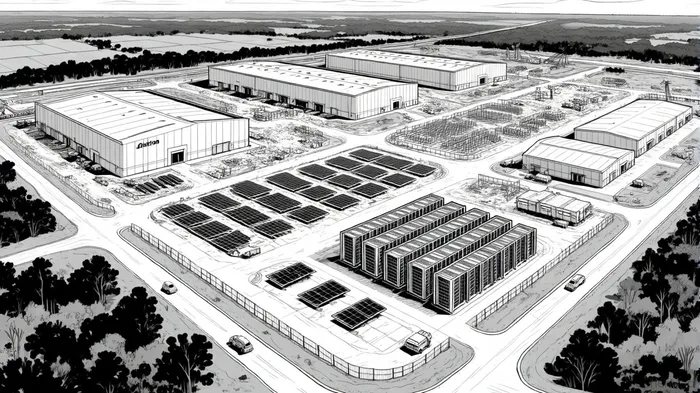
Hyperion is not just another data center-it is a cornerstone of Meta's long-term strategy to lead in AI and artificial general intelligence (AGI). The facility, spanning 4 million square feet and consuming up to 5 gigawatts of power, will house AI-optimized hardware tailored for training large language models and advanced machine learning systems, as described by Construction Review Online. By vertically integrating its compute infrastructure, Meta aims to reduce reliance on third-party cloud providers like Amazon Web Services and Microsoft Azure, a move that aligns with its dual-track strategy of combining owned data centers with cloud partnerships, as noted by DataCenter Frontier.
The Louisiana location is no accident. The state's access to low-cost natural gas, renewable energy initiatives, and underutilized grid capacity make it an ideal site for energy-intensive operations, according to Construction Review Online. Meta has pledged to pair 100% of Hyperion's electricity use with renewable energy through programs like Geaux Zero, addressing sustainability concerns while securing stable power costs. This strategic alignment of geography, energy, and AI demand positions Hyperion as a scalable, future-proof asset.
Risks and Challenges: Execution, Energy, and Market Saturation
Despite its promise, the Hyperion project faces significant risks. Construction of a 4-million-square-foot facility by 2029 is an ambitious timeline, requiring coordination of thousands of workers and suppliers in a region with limited data center experience, as Meta's press release acknowledges. Delays could disrupt Meta's AI roadmap and strain relationships with investors. Additionally, the energy mix-relying on gas and renewables-raises questions about long-term sustainability and regulatory scrutiny, particularly as climate pressures intensify.
Market saturation is another concern. With hyperscalers like Google and Microsoft also expanding their AI infrastructure, the risk of oversupply in the data center market could drive down margins. However, Meta's focus on AI-specific hardware and its ability to leverage Blue Owl's capital may give it an edge. As Reuters reported, the joint venture model could become a blueprint for other tech firms seeking to balance growth with financial prudence.
The Bigger Picture: A Template for the Future
Hyperion's success could redefine how tech companies approach infrastructure. By decoupling ownership from operational control, Meta has created a flexible model that allows it to scale rapidly while minimizing financial exposure. For Blue Owl, the venture offers a high-yield, long-term asset in a sector poised for explosive growth. According to a Data Center Pulse report, similar partnerships are likely to proliferate as AI demand outpaces traditional capital allocation models.
For investors, the joint venture highlights the importance of aligning with firms that can navigate both technological and financial complexity. Meta's ability to execute on Hyperion-and replicate its model elsewhere-will be a key determinant of its leadership in the AI era.
Conclusion
Meta's Hyperion Data Center is more than a physical asset-it is a strategic and financial statement about the future of AI. By partnering with Blue Owl Capital, Meta has secured the capital, flexibility, and geographic advantages needed to build a next-generation infrastructure hub. While risks remain, the project exemplifies how innovation in both technology and finance can drive progress in the AI arms race. As the world moves toward an AI-first future, Hyperion may well become a benchmark for how to build, fund, and operate the data centers that will power it.







Comentarios
Aún no hay comentarios