
Meta's Antitrust Trial: A Crossroads for Innovation and Investment
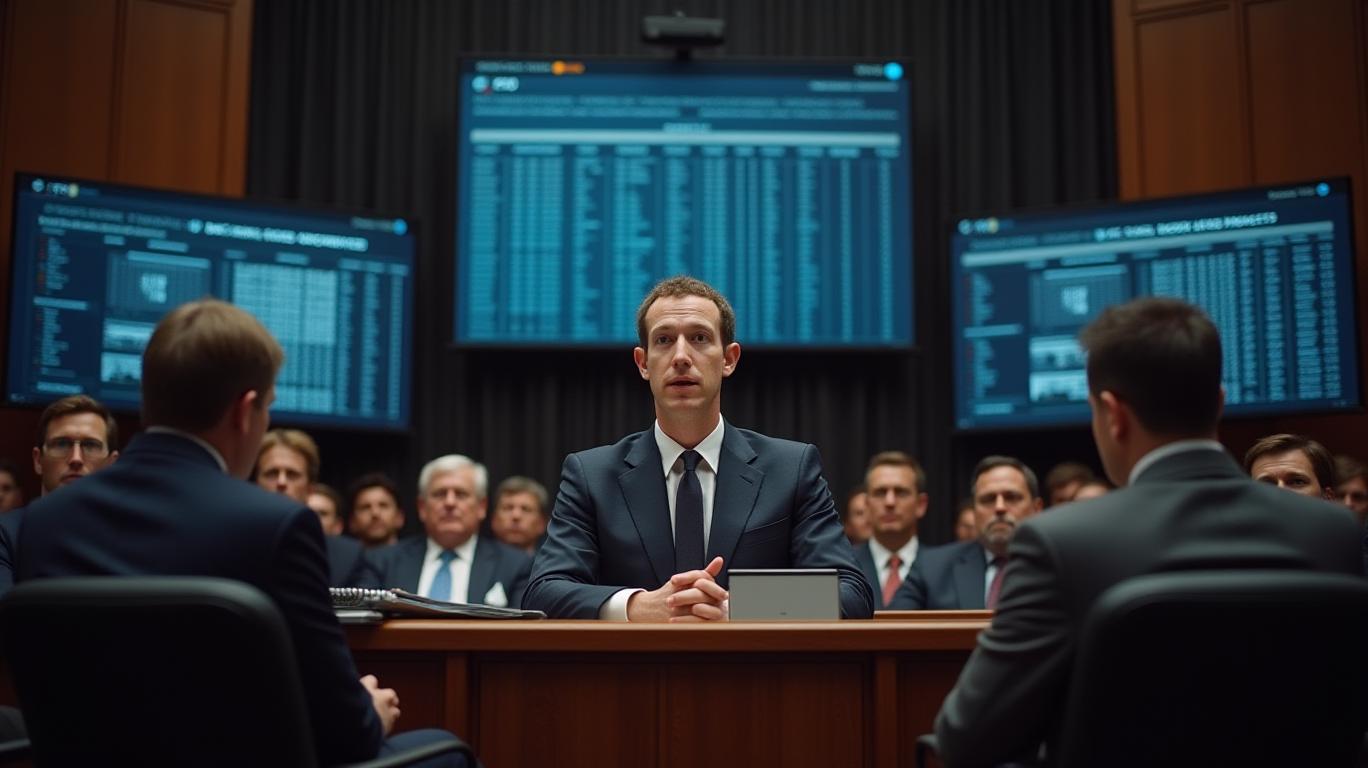
The ongoing antitrust trial between MetaMETA-- Platforms and the Federal Trade Commission (FTC) has become a pivotal moment in the evolution of Big Tech regulation, with profound implications for investors and the broader digital economy. As Meta’s CEO, Mark Zuckerberg, faces intense questioning over acquisitions of Instagram and WhatsApp, the case has crystallized debates about market power, innovation incentives, and the future of competition in the digital age. For investors, the trial is not just a legal battle but a critical stress test for Meta’s valuation, business model, and long-term growth trajectory.
The FTC’s Case: Monopoly or Market Realities?
The FTC alleges that Meta acquired Instagram (2012) and WhatsApp (2014) not to innovate but to eliminate rivals, creating a “personal social networking” monopoly. Internal emails from Zuckerberg, highlighted in court, reveal concerns about these platforms as threats, with phrases like “neutralize a potential competitor” and “a big risk for us.” The FTC argues that Meta’s dominance—78% of its narrowly defined market—has stifled competition, reduced privacy, and increased ad intrusions.
Yet Meta’s defense, led by attorney Mark Hansen, counters that the FTC’s market definition is artificially constrained. They argue that TikTok, YouTube, and X (formerly Twitter) are direct competitors, and Meta’s true market share, measured by user time spent, is closer to 30%. Hansen emphasizes that Meta’s free platforms thrive in a hyper-competitive landscape, with users averaging 40 apps monthly.
Political and Legal Uncertainties
The trial’s political undercurrents add another layer of complexity. Meta’s ties to the Trump administration—including a $25 million settlement over Trump’s suspended account and a $1 million donation to his inaugural fund—have fueled speculation about potential White House influence. While FTC Chair Andrew Ferguson insists the case is apolitical, Trump’s replacement of Democratic commissioners raises concerns about regulatory independence.
Legally, the outcome hinges on U.S. District Judge James Boasberg’s interpretation of market definitions. His 2021 dismissal of an earlier FTC case, which deemed the agency’s evidence insufficient, suggests skepticism toward broad antitrust claims. However, the updated case now focuses on harm to competition rather than consumer prices, a strategic shift that could sway the court’s view.
Investment Implications: Risks and Opportunities
A FTC victory could force Meta to divest Instagram and WhatsApp, potentially dismantling its $1.3 trillion advertising ecosystem. These platforms contributed significantly to Meta’s 2023 revenue ($166 billion), with Instagram alone accounting for roughly half its ad income. A breakup would disrupt user data integration, advertising systems, and growth in emerging markets, likely triggering a stock sell-off.

Conversely, a Meta win would reinforce its business model and embolden Big Tech to pursue aggressive acquisitions. Investors might view the ruling as a green light for tech consolidation, boosting Meta’s valuation and potentially benefiting competitors like TikTok’s parent ByteDance.
Broader Market Dynamics
The trial also reflects broader trends in tech regulation. Bipartisan support for curbing Big Tech power, alongside cases against Google and Apple, signals a shift toward stricter oversight. For investors, the Meta trial could set precedents for how courts assess digital markets, influencing everything from merger approvals to privacy regulations.
Meanwhile, Meta’s stock price has already reflected trial-related volatility. Since the case’s announcement, META shares have fluctuated between $280 and $320, underperforming peers like Alphabet (GOOGL) and Amazon (AMZN). A ruling against Meta could push its valuation closer to its 2022 lows, while a win might spark a rally toward $400, its 2021 peak.
Conclusion: Navigating Uncertainty
The FTC vs. Meta trial is a watershed moment for antitrust enforcement, with direct consequences for investor portfolios and the tech sector’s trajectory. While the FTC’s narrow market definition and Zuckerberg’s internal communications pose risks, Meta’s robust user engagement, diversified revenue streams, and defense of innovation incentives provide countervailing positives.
For investors, a balanced approach is prudent:
- Defensive Positioning: Consider hedging Meta holdings with short positions in ad-tech or social media competitors if a FTC win seems likely.
- Long-Term View: If Meta prevails, its dominance in AR/VR (via Meta Quest) and AI could drive recovery, though regulatory overhang remains.
- Sector-Wide Risks: Antitrust outcomes may affect valuations across Big Tech, favoring smaller, agile competitors in the short term.
The trial’s outcome, expected by mid-2025, will not only shape Meta’s corporate structure but also redefine the boundaries of innovation, competition, and regulation in the digital economy. For investors, the key lies in discerning between short-term volatility and long-term structural shifts.
As the courtroom drama unfolds, one truth remains clear: the stakes for investors, consumers, and the future of tech are higher than ever.





Comentarios
Aún no hay comentarios