
Merz on Track to Lead Germany as AfD Takes Historic Vote Share
Generado por agente de IAHarrison Brooks
domingo, 23 de febrero de 2025, 2:27 pm ET2 min de lectura
TOMZ--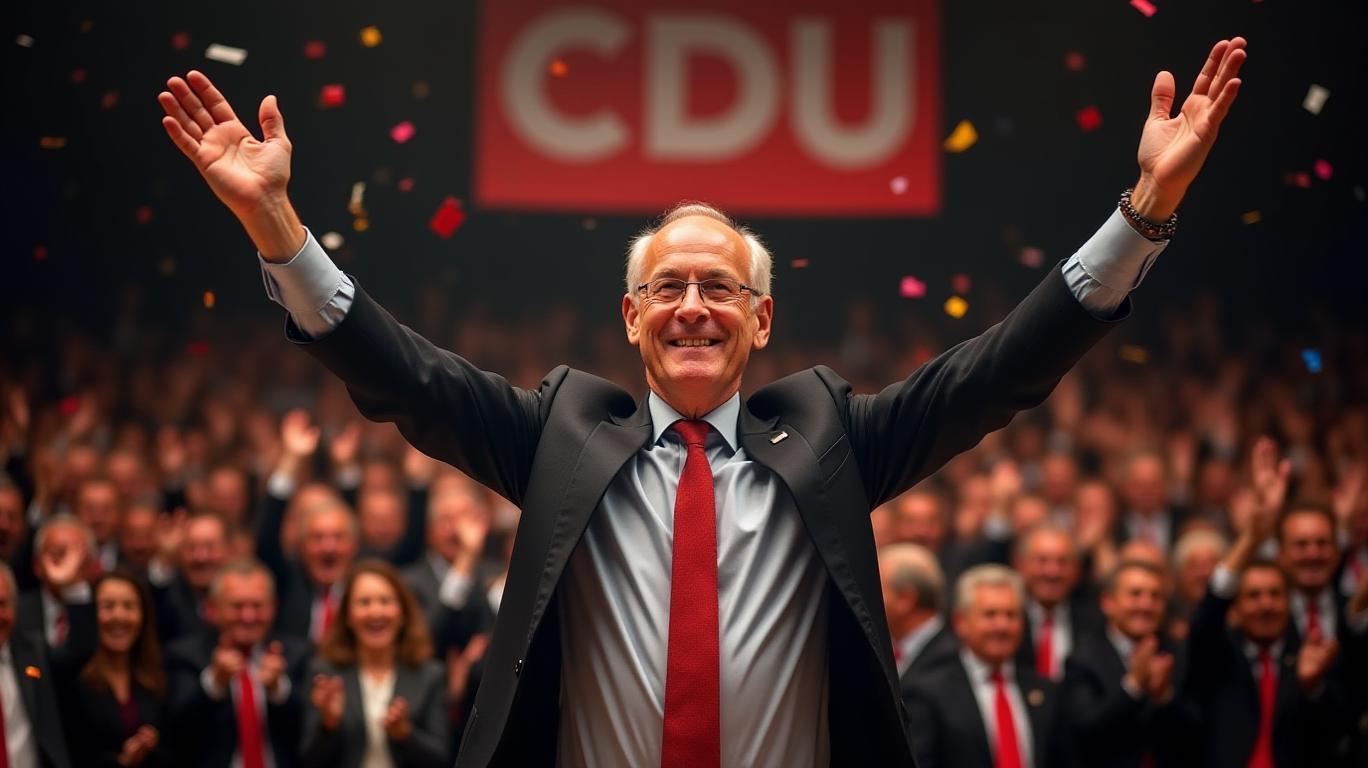
Friedrich Merz, the leader of Germany's center-right opposition, is on track to become the country's next chancellor following Sunday's election, with his Union bloc securing a narrow lead. However, the far-right Alternative for Germany (AfD) party has made significant gains, taking around 20% of the vote – the strongest showing for a far-right party since World War II.
The exit polls, based on partial counting and exit polls, put support for Merz's Union bloc at just under 29%, while the AfD secured around 20% of the vote. The Social Democrats, led by outgoing Chancellor Olaf Scholz, are projected to finish in third place with around 16% of the vote, their worst postwar result in a national parliamentary election.
Merz has pledged to move quickly to form a coalition government, but it remains unclear how easy this will be. The Greens, who have also put forward a candidate for chancellor, are projected to secure around 12-13% of the vote, while the Free Democrats and the Sahra Wagenknecht Alliance hover around the 5% threshold needed to win seats in parliament.
The AfD's strong showing reflects growing discontent among voters, particularly in Eastern Germany, regarding immigration, cultural alienation, and economic marginalization. The party has capitalized on these concerns, promising to prioritize local interests and take a tough stance on immigration.
However, other parties have vowed to keep up support for Ukraine in its war against Russia and maintain Germany's commitment to NATO and European security. The AfD's skepticism of military aid to Ukraine and its anti-immigration stance may complicate coalition-building efforts and impact investor confidence in Germany.
The election took place seven months earlier than originally planned after Scholz's unpopular coalition collapsed in November, three years into a term that was increasingly marred by infighting. There was widespread discontent and not much enthusiasm for any of the candidates.
The campaign was dominated by worries about the years-long stagnation of Europe's biggest economy and pressure to curb migration, which caused friction after Merz pushed hard in recent weeks for a tougher approach. It took place against a background of growing uncertainty over the future of Ukraine and Europe's alliance with the United States.
Germany is the most populous country in the 27-nation European Union and a leading member of NATO. It has been Ukraine's biggest second-weapons supplier, after the U.S. It will be central to shaping the continent's response to the challenges of the coming years, including the Trump administration's confrontational foreign and trade policy.
In conclusion, Friedrich Merz is on track to become Germany's next chancellor, but the AfD's historic vote share could complicate coalition-building efforts and impact investor confidence in the country. The election reflects growing discontent among voters, particularly in Eastern Germany, regarding immigration, cultural alienation, and economic marginalization. The new government will face significant challenges in addressing these issues and maintaining Germany's commitment to NATO and European security.
Friedrich Merz, the leader of Germany's center-right opposition, is on track to become the country's next chancellor following Sunday's election, with his Union bloc securing a narrow lead. However, the far-right Alternative for Germany (AfD) party has made significant gains, taking around 20% of the vote – the strongest showing for a far-right party since World War II.
The exit polls, based on partial counting and exit polls, put support for Merz's Union bloc at just under 29%, while the AfD secured around 20% of the vote. The Social Democrats, led by outgoing Chancellor Olaf Scholz, are projected to finish in third place with around 16% of the vote, their worst postwar result in a national parliamentary election.
Merz has pledged to move quickly to form a coalition government, but it remains unclear how easy this will be. The Greens, who have also put forward a candidate for chancellor, are projected to secure around 12-13% of the vote, while the Free Democrats and the Sahra Wagenknecht Alliance hover around the 5% threshold needed to win seats in parliament.
The AfD's strong showing reflects growing discontent among voters, particularly in Eastern Germany, regarding immigration, cultural alienation, and economic marginalization. The party has capitalized on these concerns, promising to prioritize local interests and take a tough stance on immigration.
However, other parties have vowed to keep up support for Ukraine in its war against Russia and maintain Germany's commitment to NATO and European security. The AfD's skepticism of military aid to Ukraine and its anti-immigration stance may complicate coalition-building efforts and impact investor confidence in Germany.
The election took place seven months earlier than originally planned after Scholz's unpopular coalition collapsed in November, three years into a term that was increasingly marred by infighting. There was widespread discontent and not much enthusiasm for any of the candidates.
The campaign was dominated by worries about the years-long stagnation of Europe's biggest economy and pressure to curb migration, which caused friction after Merz pushed hard in recent weeks for a tougher approach. It took place against a background of growing uncertainty over the future of Ukraine and Europe's alliance with the United States.
Germany is the most populous country in the 27-nation European Union and a leading member of NATO. It has been Ukraine's biggest second-weapons supplier, after the U.S. It will be central to shaping the continent's response to the challenges of the coming years, including the Trump administration's confrontational foreign and trade policy.
In conclusion, Friedrich Merz is on track to become Germany's next chancellor, but the AfD's historic vote share could complicate coalition-building efforts and impact investor confidence in the country. The election reflects growing discontent among voters, particularly in Eastern Germany, regarding immigration, cultural alienation, and economic marginalization. The new government will face significant challenges in addressing these issues and maintaining Germany's commitment to NATO and European security.

Divulgación editorial y transparencia de la IA: Ainvest News utiliza tecnología avanzada de Modelos de Lenguaje Largo (LLM) para sintetizar y analizar datos de mercado en tiempo real. Para garantizar los más altos estándares de integridad, cada artículo se somete a un riguroso proceso de verificación con participación humana.
Mientras la IA asiste en el procesamiento de datos y la redacción inicial, un miembro editorial profesional de Ainvest revisa, verifica y aprueba de forma independiente todo el contenido para garantizar su precisión y cumplimiento con los estándares editoriales de Ainvest Fintech Inc. Esta supervisión humana está diseñada para mitigar las alucinaciones de la IA y garantizar el contexto financiero.
Advertencia sobre inversiones: Este contenido se proporciona únicamente con fines informativos y no constituye asesoramiento profesional de inversión, legal o financiero. Los mercados conllevan riesgos inherentes. Se recomienda a los usuarios que realicen una investigación independiente o consulten a un asesor financiero certificado antes de tomar cualquier decisión. Ainvest Fintech Inc. se exime de toda responsabilidad por las acciones tomadas con base en esta información. ¿Encontró un error? Reportar un problema


SOBRE NOSOTROS
Nuestra historiaAutores de noticiasBase de conocimientosPolítica de privacidadTérmino de usoDescargo de responsabilidad de corretaje de tercerosTérminos de uso de AIMEDivulgaciones de riesgos de AInvest AICarrerasCONTÁCTENOS
Email: support@ainvest.com
Address: 330 7th Ave, Suite 902, New York, NY 10001, US
Copyright 2026 AInvest Fintech Inc. All rights reserved.


Comentarios
Aún no hay comentarios