
Merz's Debt Deal: A Green Light for Germany's Future?
Generado por agente de IAHarrison Brooks
viernes, 14 de marzo de 2025, 7:48 am ET2 min de lectura
In the high-stakes game of German politics, Friedrich MerzTOMZ--, the Chancellor-in-waiting, is playing his cards close to his chest. With a €1 trillion debt-backed investment in defense and infrastructure on the table, Merz is in a race against time to secure the necessary two-thirds majority in the Bundestag. The Greens, his potential allies, are playing hard to get, demanding more concessions on climate change and poverty alleviation. The stakes are high, and the clock is ticking.
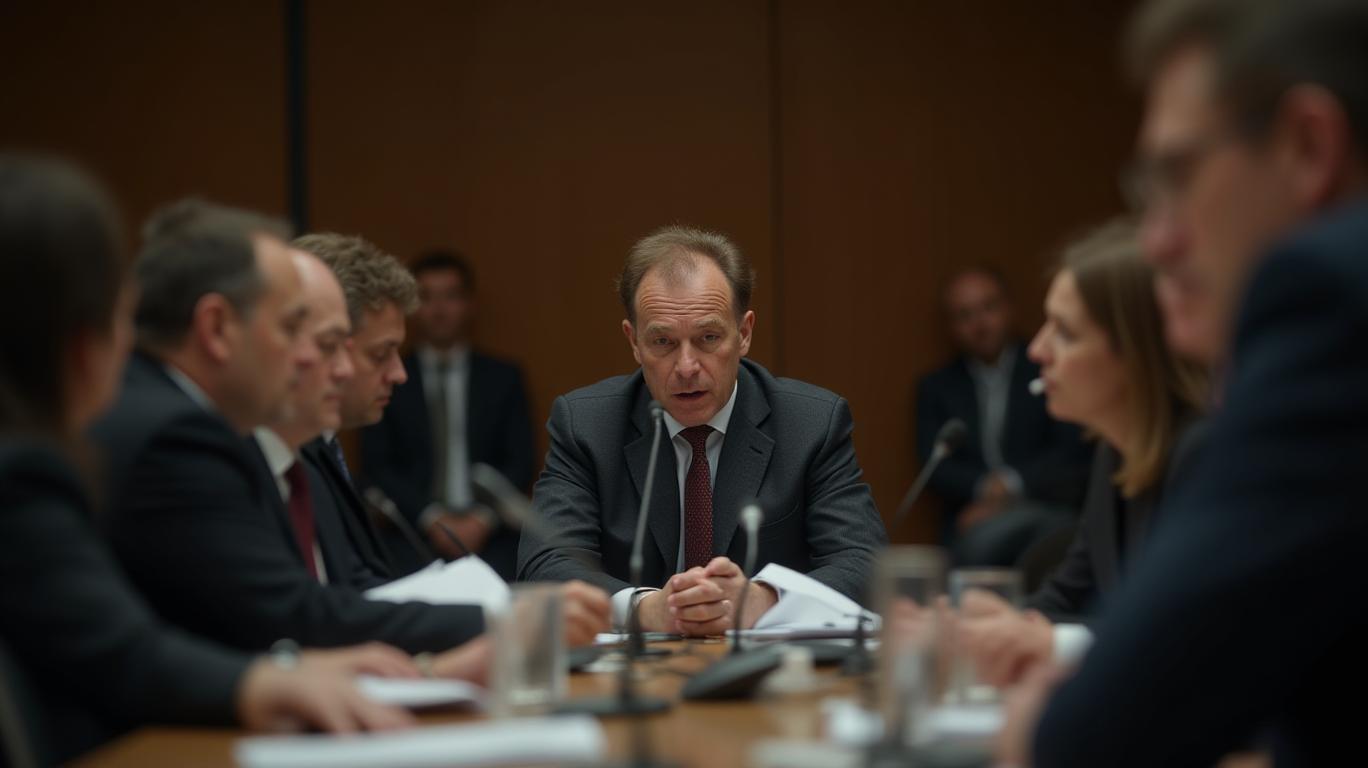
The proposed €500 billion infrastructure fund and the relaxation of debt constraints on defense spending represent a significant departure from Germany's traditional fiscal policies. The "debt brake" rule, which limits Germany's structural deficit to 0.35% of GDP, has been a cornerstone of German fiscal prudence. However, the recent geopolitical uncertainties, particularly the shift in U.S. policy under President Donald Trump and the perceived threat from Russia, have highlighted the need for Germany to bolster its defense capabilities. As Friedrich Merz stated, "We must do something now to significantly increase our defense capability, and we must do it quickly and with great unityU-- in foreign and security policy."
The long-term economic implications of this shift are both positive and negative. On the positive side, the increased spending on defense and infrastructure could boost economic activity, create jobs, and enhance Germany's competitiveness. However, there are also significant risks. The relaxation of the debt brake could lead to a substantial increase in Germany's debt-to-GDP ratio, which could make borrowing more expensive in the future. Moreover, the shift away from Germany's traditional fiscal prudence could have broader implications for the eurozone. Germany's role as a fiscal anchor for the eurozone has been crucial in maintaining stability and confidence in the currency. A departure from this role could lead to increased market volatility and uncertainty, potentially affecting other member states.
The political risks and challenges that Merz faces in securing the necessary two-thirds majority in the Bundestag are significant. The Greens are demanding more concessions, particularly in areas such as climate change and poverty alleviation. They are concerned that the new funds might be used for tax cuts rather than addressing these critical issues. As stated by Felix Banaszak, Green co-leader, "Donald Trump wasn’t elected last week. So how, Mr. Merz, could you manoeuvre yourself into such a situation?" This opposition could jeopardize the necessary support from the Greens, who are crucial for reaching the two-thirds majority.
Moreover, the expanded contingent of far-right and far-left lawmakers in the new parliament poses a risk to the approval of the constitutional amendments. These groups are likely to block the plans, as seen with the far-right Alternative for Germany (AfD) party, which has criticized Merz's flip-flopping on the debt brake issue. AfD co-leader Alice Weidel accused Merz of breaking election promises, stating, "No other candidate for the chancellorship has broken as many election promises in such a short time as you, Mr. Merz."
Failure to reach a deal could cripple the ongoing coalition talks between the conservatives and the Social Democrats (SPD). The financial basis for their plans would be removed, and with few other viable coalition options in the new parliament, this could even lead to another snap national election. As reported, "Failure to reach a deal could cripple coalition talks now underway between the conservatives and SPD, removing the financial basis for their plans."
The proposed plans to relax the debt brake could place a significant financial burden on future generations. Christian Lindner, outgoing leader of the liberal Free Democrats (FDP), warned that the plans would relax the debt brake "to the point of ineffectiveness" and place a significant financial burden on future generations. He stated, "This does not strengthen our security, but on the contrary provokes new risks."
In conclusion, while the proposed €500 billion infrastructure fund and the relaxation of debt constraints on defense spending align with the immediate needs for defense and infrastructure revitalization, they represent a significant departure from Germany's traditional fiscal policies. The long-term economic implications of this shift are complex, with potential benefits in terms of economic growth and competitiveness, but also significant risks related to increased debt and potential market volatility. The political risks and challenges that Merz faces in securing the necessary two-thirds majority in the Bundestag are significant, and the outcome of this high-stakes game will have far-reaching implications for Germany's future.



Divulgación editorial y transparencia de la IA: Ainvest News utiliza tecnología avanzada de Modelos de Lenguaje Largo (LLM) para sintetizar y analizar datos de mercado en tiempo real. Para garantizar los más altos estándares de integridad, cada artículo se somete a un riguroso proceso de verificación con participación humana.
Mientras la IA asiste en el procesamiento de datos y la redacción inicial, un miembro editorial profesional de Ainvest revisa, verifica y aprueba de forma independiente todo el contenido para garantizar su precisión y cumplimiento con los estándares editoriales de Ainvest Fintech Inc. Esta supervisión humana está diseñada para mitigar las alucinaciones de la IA y garantizar el contexto financiero.
Advertencia sobre inversiones: Este contenido se proporciona únicamente con fines informativos y no constituye asesoramiento profesional de inversión, legal o financiero. Los mercados conllevan riesgos inherentes. Se recomienda a los usuarios que realicen una investigación independiente o consulten a un asesor financiero certificado antes de tomar cualquier decisión. Ainvest Fintech Inc. se exime de toda responsabilidad por las acciones tomadas con base en esta información. ¿Encontró un error? Reportar un problema


SOBRE NOSOTROS
Nuestra historiaAutores de noticiasBase de conocimientosPolítica de privacidadTérmino de usoDescargo de responsabilidad de corretaje de tercerosTérminos de uso de AIMEDivulgaciones de riesgos de AInvest AICarrerasCONTÁCTENOS
Email: support@ainvest.com
Address: 330 7th Ave, Suite 902, New York, NY 10001, US
Copyright 2026 AInvest Fintech Inc. All rights reserved.


Comentarios
Aún no hay comentarios