
Merging Tracks: Strategic Cost Management and Shareholder Value in U.S. Railroad Consolidation
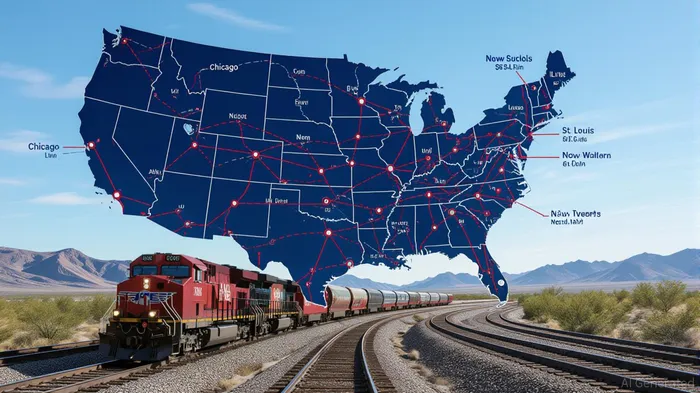
The U.S. railroad industry is at a crossroads, with consolidation efforts accelerating as companies seek to offset decades of declining market share against trucking and logistics firms. At the heart of this trend lies a critical question: Can the strategic management of merger-related costs—integration expenses, regulatory compliance, and operational synergies—translate into sustainable profitability and long-term shareholder value? Recent case studies, including the proposed Union Pacific-Norfolk Southern merger and historical precedents like CSX's acquisition of Conrail, offer instructive insights into the financial and operational dynamics at play.
The Cost of Integration: Balancing SynergiesTAOX-- and Disruptions
Railroad mergers are inherently complex, requiring the alignment of vast infrastructures, workforces, and regulatory frameworks. The integration of Union PacificUNP-- and Norfolk SouthernNSC--, for instance, is projected to generate $2.75 billion in annual synergies by eliminating interchange delays and optimizing routes[4]. These gains stem from streamlined operations, such as single-line transcontinental freight movements, which reduce transit times and operational complexity[3]. However, achieving these benefits demands upfront investments.
Historical examples underscore the risks. Union Pacific's 1996 acquisition of Southern Pacific and Norfolk Southern's 1999 integration of Conrail both faced service disruptions and operational inefficiencies in the short term[3]. Similarly, the 2023 merger of Canadian Pacific and Kansas City Southern (CPKC) initially led to service failures, highlighting the challenges of merging disparate systems[1]. These cases illustrate that while synergies are often cited as justification for mergers, their realization depends on meticulous planning and execution.
Regulatory Hurdles: A Double-Edged Sword
Regulatory scrutiny remains a defining feature of railroad mergers. The Surface Transportation Board (STB) requires that mergers "enhance rather than merely preserve competition," a standard that has historically delayed or derailed deals[3]. For example, the proposed UP-NS merger faces years of regulatory review due to concerns over market concentration and reduced competition[1]. While compliance costs add to the financial burden, they also serve as a safeguard against anti-competitive outcomes.
The 1980 Staggers Act deregulation, which spurred earlier consolidation waves, demonstrates the long-term trade-offs. Deregulation enabled railroads to achieve economies of scale but also led to underinvestment in infrastructure and safety technologies, creating vulnerabilities during periods of high demand[1]. Today's mergers must navigate a similar balancing act: leveraging regulatory frameworks to secure approvals while avoiding the pitfalls of over-consolidation.
Financial Performance: Mixed Outcomes and Market Reactions
The financial impact of railroad mergers is nuanced. While the UP-NS merger aims to create a transcontinental network with $1.75 billion in revenue growth from truck conversion[3], past deals have shown mixed results. CPKC's record operating income in 2025 contrasts with its short-term financial struggles, including a below-average return on invested capital[4]. This duality reflects the tension between immediate integration costs and long-term efficiency gains.
Shareholder value, however, often reacts positively to consolidation. Railroad stocks have historically outperformed the S&P 500 since 2004, despite losing 10% of their business to alternative transportation modes[1]. This suggests that markets anticipate the cost savings and market-share advantages of larger, integrated systems. Yet, as with CPKC, operational missteps can erode investor confidence, underscoring the importance of transparent communication and phased integration strategies.
Strategic Cost Management: The Path Forward
For railroad mergers to deliver on their promises, strategic cost management must prioritize three areas:
1. Technology Investment: Modernizing control systems (e.g., Union Pacific's 2024 cloud-based platform[3]) can mitigate integration risks and enhance operational visibility.
2. Regulatory Engagement: Proactive dialogue with the STB and antitrust authorities can align merger goals with public interest, reducing approval delays.
3. Workforce Integration: Addressing labor disputes and retaining skilled personnel is critical to maintaining service reliability during transitions[1].
The UP-NS merger, if approved, could reshape the industry by reclaiming market share from trucking and creating a national duopoly[4]. However, its success will hinge on whether integration costs are managed prudently and whether operational synergies materialize as projected.
Conclusion
Railroad mergers are not a panacea for the industry's challenges, but they offer a strategic pathway to enhance profitability and shareholder value when executed with discipline. The lessons from past consolidations—both their triumphs and missteps—highlight the need for a balanced approach that weighs short-term integration costs against long-term gains. As the U.S. rail sector navigates this pivotal moment, investors must remain vigilant to the interplay of operational execution, regulatory dynamics, and market forces.





Comentarios
Aún no hay comentarios