
Merck's Gardasil Stumble Creates Buying Opportunity: Here's Why the Dividend and Pipeline Make MRK a Winner
The pharmaceutical giant MerckMRK-- & Co. (MRK) has been hit by a perfect storm in its Gardasil HPV vaccine business, with sales slumping 41% in Q1 2025 due to China's inventory overhang and weak demand. But beneath the headlines of short-term pain lies a compelling investment thesis: a 3.97% dividend yield, a world-class pipeline, and two near-term catalysts—Winrevair and Enflonsia—that could supercharge growth by 2026. This is a buy for bold investors willing to look past the Gardasil headwinds.
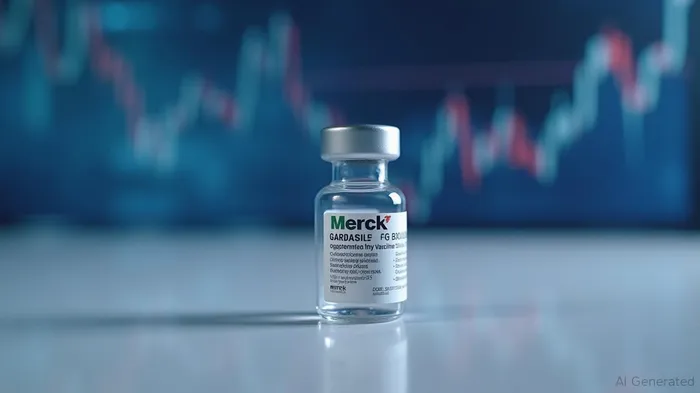
The Near-Term Gardasil Blues: A Necessary Correction
China's Gardasil saga has been brutal. Shipments were halted through mid-2025 to reduce inventory buildup at partner Zhifei Biological, which now holds excess stock due to slowing demand. This contributed to a 41% plunge in Q1 Gardasil sales to $1.327 billion, with China alone accounting for 60-70% of international sales. The IMF's grim China GDP forecast of 4.6% in 2025—down from 5.2% in 2024—adds fuel to the fire, as discretionary healthcare spending lags in a cooling economy.
But here's the key: this is a pause, not a failure. Merck's CEO Robert Davis emphasized the 120 million unvaccinated women in China and the recent male approval (ages 16–26) as long-term tailwinds. Once inventories clear, Gardasil could rebound. Meanwhile, sales outside China grew 16% in Q1, led by Japan and the U.S., where pricing power remains strong.
The dividend, too, remains intact. Despite a 327% payout ratio (a red flag), Merck hiked its quarterly dividend to $0.81 per share in Q2—up from $0.77 in 2024—showing confidence in cash flow. The 3.97% yield (vs. 2.37% in 2024) is now a cushion for investors as shares trade near 52-week lows.
The Silver Lining: Winrevair and Enflonsia Are On Fire
While Gardasil stumbles, Merck's pipeline is firing on all cylinders. Let's break down the two catalysts that could redefine this stock by year-end:
1. Winrevair: A Breakthrough in PAH
- FDA Priority Review: The agency is reviewing Winrevair's label expansion based on the ZENITH trial, which showed a 76% reduction in major PAH events (death, hospitalization, or lung transplant). The decision is due by October 25, 2025, with approval all but certain.
- HYPERION Trial: Data from newly diagnosed PAH patients showed Winrevair delays disease progression, expanding its addressable market. With over 40,000 U.S. PAH patients and a $3 billion annual spend on treatments, this drug could become a cash cow.
2. Enflonsia: RSV Prevention Goldmine
- FDA Approved in June 2025: This single-dose RSV vaccine for infants boasts an 84% hospitalization reduction and a simple 105 mg fixed dose. The CDC's ACIP is expected to endorse it by late Q3, just in time for the 2025–2026 RSV season.
- Market Dominance: With palivizumab (Synagis) requiring weight-based dosing and only partial protection, Enflonsia's convenience and efficacy could capture $2–3 billion in sales within three years.
Why Buy Now? The Math Speaks for Itself
Merck's stock is pricing in all the bad news. At a P/E of 11.5 (vs. 14 for peers), it's dirt-cheap given its dividend and pipeline. Here's the roadmap:
- Q3 2025: Enflonsia's ACIP nod and early shipments ahead of RSV season.
- Q4 2025: Winrevair's FDA approval and potential PAH market share gains.
- 2026: Gardasil inventory cleared, male demand in China ramps up, and Enflonsia's sales take off.
The $64.1–65.6 billion 2025 revenue guidance is a floor—Winrevair and Enflonsia could push 2026 sales to $70 billion+. Even with Keytruda's patent cliff in 2028, this duo buys time for new oncology drugs to mature.
Risk? Yes, But the Reward Outweighs It
The risks are clear: China's economy could stay weak, Gardasil's inventory could take longer to clear, and competition (e.g., China's own HPV vaccines) might erode margins. But at $58/share, Merck offers a 3.97% yield and a 10% upside to pre-Gardasil slump levels by 2026.
This is a “buy the dip” moment. The dividend acts as a safety net, and the pipeline catalysts are too big to ignore. Investors who buy now will be positioned to capitalize on Merck's comeback story.
Action Plan:
- Buy now at $58/share, targeting $65–70 by end-2026.
- Set a stop-loss at $53 to protect against further Gardasil setbacks.
The verdict? Merck is a bargain. The near-term pain is temporary, and the long-term payoff is massive. Don't miss this one.





Comentarios
Aún no hay comentarios