
Mercedes-Benz: Navigating EV Crosswinds to Capture Long-Term Value
The automotive industry's transition to electric vehicles (EVs) has become a high-stakes race, with legacy automakers like Mercedes-Benz Group AG (MBG) facing near-term headwinds while racing to secure long-term relevance. As Q3 2024 results reveal a mix of financial resilience and strategic challenges, investors must weigh whether the company's cash strength, shareholder returns, and product pipeline justify a contrarian bet.
Financial Resilience Amid EV Slumps
MBG's Q3 2024 results underscore a paradox: declining profitability but robust cash flow and shareholder returns. While revenue fell 6.7% year-on-year to €34.5 billion, free cash flow (FCF) held steady at €2.4 billion, supported by disciplined working capital management. This liquidity buffer—net liquidity remains at €28.7 billion—provides a critical moat against macroeconomic volatility.
However, the EV segment's struggles are undeniable. Global BEV sales dropped 31% to 42,500 units, with China's market share erosion hitting hard. The Top-End segment (S-Class, G-Class) also declined 11.6%, reflecting weaker luxury demand in key markets like China. Yet, the dividend proposal of €4.30 per share and a €5 billion buyback program signal confidence in long-term prospects.
Strategic Shifts: Cost Cuts, Flagship Launches, and Tech Bets
To counter near-term pressures, MBG is doubling down on three pillars:
1. Cost Efficiency: Aims to reduce production costs by 10% by 2027 via supplier partnerships and process improvements. This is critical to offsetting EV transition costs (e.g., software development for MB.OS).
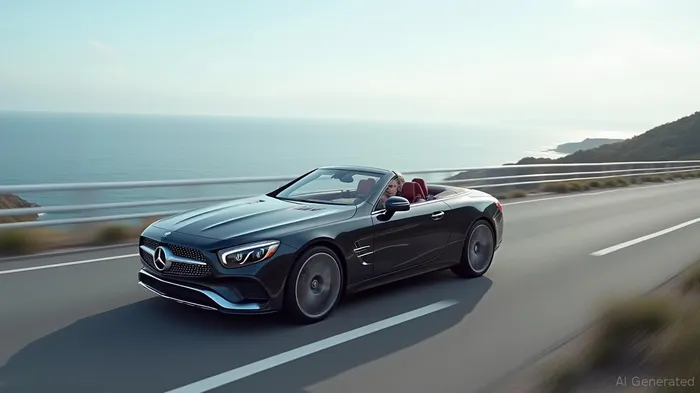
2. Flagship Product Offensive: The Maybach SL 680 Monogram Series, launching late 2025, targets ultra-luxury buyers with bespoke design and performance. Its 577-horsepower V8 engine and exclusive “PixelPaint” hood tech highlight MBG's ability to monetize niche segments.
3. Tech Leadership: Investments in autonomous driving (via the unified MB.OS platform) and market-specific adaptations (e.g., China's EV regulations) aim to future-proof the brand.
Risks and Mitigants: Balancing the Scales
- Near-Term Risks:
- CO2 Compliance Costs: Stricter emissions rules could strain margins.
- Dealer Compensations in China: Weak demand may force rebates, further squeezing profitability.
Competitive Pressure: Chinese rivals like BYD (now the world's largest EV seller) and Tesla's cost leadership pose existential threats.
Mitigants:
- Diversified Market Exposure: Europe and the U.S. remain stable, with the latter seeing 9% full-year sales growth.
- Liquidity and Flexibility: Strong FCF and a conservative balance sheet allow reinvestment without over-leveraging.
- Brand Equity: The Mercedes and Maybach brands retain premium pricing power, even as rivals encroach.
Investment Thesis: Buy the Dip, Play the Long Game
The market's focus on short-term EV sales misses MBG's long-term advantages:
1. Valuation Attractiveness: At current multiples (P/E of ~12x forward earnings), the stock reflects pessimism about near-term challenges but ignores structural strengths.
2. Catalysts Ahead: The Maybach SL launch (2025), the CLA EV (2025), and the C-Class EV (2026) could reaccelerate growth.
3. Shareholder-Friendly Policy: The buyback and dividend combo ensures capital isn't stranded, even if EV adoption lags.
Recommendation: Investors with a 12–18 month horizon should consider accumulating MBG shares on dips below €60. The stock's ~30% year-to-date decline has priced in near-term pain, while long-term risks like brand relevance and tech execution remain manageable.
Conclusion
Mercedes-Benz's resilience isn't about perfection—it's about navigating a turbulent transition with balance sheets intact and innovation pipelines full. For investors willing to look past quarterly noise, the path to value creation remains clear.





Comentarios
Aún no hay comentarios