
The Menopause Treatment Market: A Convergence of Demographic Shifts and Pharmaceutical Innovation
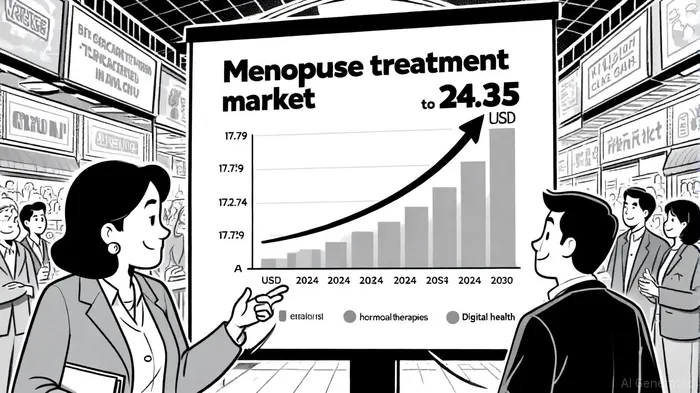
The global menopause treatment market is poised for transformative growth, driven by a confluence of demographic shifts and pharmaceutical innovation. By 2030, the market is projected to expand from USD 17.79 billion in 2024 to USD 24.35 billion, reflecting a compound annual growth rate (CAGR) of 5.42% [1]. This trajectory is underpinned by two critical forces: the aging global population and the rapid evolution of treatment modalities that address unmet needs in menopausal care.
Demographic Shifts: A Growing Patient Population
The demographic foundation for this market expansion is robust. By 2030, the global population of menopausal and post-menopausal women is expected to reach 1.2 billion, with 47 million women transitioning into this phase annually [3]. This surge is a direct consequence of rising life expectancy and the aging of the post-World War II "baby boomer" generation, particularly in developed economies. For instance, North America currently dominates the market, accounting for 37.4% of global revenue in 2024, with the U.S. alone holding 83.51% of the North American share [1]. The region's aging population—projected to see 1.2 billion post-menopausal women globally by 2030—will sustain its leadership in market growth [4].
Regional disparities in menopause timing further highlight the need for tailored strategies. While women in the U.S. experience menopause at an average age of 51, those in India reach menopause at 46, underscoring the influence of socioeconomic and lifestyle factors [1]. These variations necessitate localized approaches to treatment development and market penetration.
Pharmaceutical Innovation: Beyond Hormone Replacement Therapy
The market's growth is not merely demographic; it is also fueled by innovation in pharmaceutical and digital health solutions. Traditional hormone replacement therapy (HRT) faces declining adoption due to safety concerns, with over 1.2 million women in Europe opting against HRT in 2023 [4]. This has catalyzed a shift toward non-hormonal alternatives, such as selective serotonin reuptake inhibitors (SSRIs) and novel receptor antagonists.
Bayer's elinzanetant, a dual neurokinin-1 and 3 (NK-1 and NK-3) receptor antagonist for vasomotor symptoms, and Bonafide Health's Thermella, a hormone-free NK3 receptor antagonist, exemplify this innovation [1]. These therapies target the neurobiological roots of menopausal symptoms, offering safer and more targeted solutions. Meanwhile, personalized medicine is gaining traction, with 15% of treatment plans in 2023 incorporating genetic testing to tailor interventions [2].
Digital health is another disruptive force. Telehealth platforms have expanded access to care, particularly in rural and underserved areas, with a 40% increase in adoption since 2022 [2]. Wearable technologies for symptom tracking and AI-driven diagnostics are further enhancing patient engagement and treatment efficacy.
Regional Market Dynamics and Challenges
While North America and Europe remain the largest markets, the Asia-Pacific and Latin American regions present significant growth opportunities. In Asia-Pacific, rising healthcare investments and increasing awareness of menopausal health are driving demand, despite limited population-specific data [2]. Latin America, meanwhile, is projected to be the fastest-growing market, driven by urbanization and a growing middle class [1].
However, challenges persist. High treatment costs and inadequate insurance coverage in low- and middle-income countries restrict access, with over 35% of women in these regions lacking access to affordable care [4]. Additionally, the dominance of dietary supplements—accounting for 94.23% of market revenue in 2024—highlights the need for regulatory frameworks to ensure product safety and efficacy [1].
Strategic Implications for Investors
For investors, the menopause treatment market offers a compelling intersection of long-term demographic trends and innovation-driven growth. Key opportunities lie in:
1. Non-hormonal therapies: Companies developing novel receptor antagonists or personalized treatments, such as Bayer and Bonafide Health, are well-positioned to capture market share.
2. Digital health integration: Telemedicine platforms and wearable technologies that enhance patient engagement will benefit from the sector's shift toward accessibility.
3. Emerging markets: Asia-Pacific and Latin America's untapped potential, coupled with rising healthcare investments, presents high-growth opportunities for firms with localized strategies.
Yet, risks remain. Regulatory scrutiny of dietary supplements, cost barriers in developing economies, and the need for public health education could temper growth. Investors must prioritize companies that balance innovation with affordability and scalability.
Conclusion
The menopause treatment market is at a pivotal inflection pointIPCX--, driven by an aging global population and a reimagined approach to menopausal care. As pharmaceutical innovation and digital health converge with demographic demand, the sector offers a unique opportunity for investors to address a critical public health need while capitalizing on a market poised for sustained expansion.







Comentarios
Aún no hay comentarios