
The Meme Stock Renaissance: Retail Sentiment, Algo-Trading, and the New Market Dynamics
The resurgence of meme stocks from 2023 to 2025 has redefined the interplay between retail investor sentiment, algorithmic trading, and short-term stock performance. What began as a niche phenomenon-driven by social media platforms like Reddit's WallStreetBets-has evolved into a structured, albeit volatile, market segment. The relaunch of the Roundhill Meme Stock ETF (MEME) in October 2025, now actively managed and rebalanced weekly, underscores this shift. This ETF's focus on liquidity and rapid turnover reflects the ephemeral nature of retail-driven hype cycles, where stocks like OpendoorOPEN-- Technologies and Plug PowerPLUG-- surge not on fundamentals but on social media momentum, as detailed in The Roaring Return.
From FOMO to Strategic Coordination
Retail investor behavior has transitioned from impulsive fear-of-missing-out (FOMO) buying to coordinated, data-informed strategies. Investors now leverage real-time analytics and sentiment tools to identify targets for short squeezes or gamma hedging. For instance, Kohl'sKSS-- stock surged 39% in July 2025 after retail traders capitalized on high short interest and viral narratives, according to an EdgarIndex report. This evolution is supported by academic research showing that Google search sentiment predicts meme stock returns over a 3–7 day horizon, while Bloomberg news sentiment has longer-term predictive power, as described in an MLQuants study.
Algorithmic trading has amplified these dynamics. High-frequency trading (HFT) systems and machine learning models now react to social media sentiment in milliseconds, creating feedback loops where viral posts trigger algorithmic buy signals, further inflating prices, as discussed in a Forbes article. A 2025 study found that meme stock volatility is strongly correlated with social media engagement, with trading volume spiking in tandem with RedditRDDT-- and Twitter activity, according to an IEEE study.
Quantifying the Sentiment-Volatility Link
Quantitative analysis reveals the mediated role of algo-trading in linking retail sentiment to stock performance. For example, a statistical model using FinBERT (a financial NLP tool) demonstrated that algorithmic strategies incorporating social media sentiment outperformed traditional technical indicators in predicting meme stock movements, as shown in a Quantified Strategies article. Another study highlighted a 63% win rate for machine learning ensembles in meme stock trading, attributed to their ability to process unstructured data from platforms like StockTwits, according to an AskApe blog.
However, these gains come with risks. Meme stocks exhibit volatility far exceeding traditional benchmarks. A 2023–2025 analysis found that stocks like AMC and GameStop experienced price swings of over 200% in single weeks, driven by sentiment-driven buying rather than earnings reports, as reported in a Meyka analysis. This volatility is exacerbated by algo-trading's speed: automated systems can exacerbate price swings by rapidly executing trades based on sentiment signals, even when fundamentals remain unchanged, a point examined in a ScienceDirect paper.
The New Market Equilibrium
The convergence of retail sentiment and algo-trading has created a new market equilibrium where liquidity and momentum often override traditional valuation metrics. Companies like GameStop have leveraged this dynamic to raise capital, but the disconnect between price and fundamentals poses long-term risks. As noted by Daniel Burnside, a financial strategist, investors should limit meme stock allocations to no more than 5% of their portfolios due to their speculative nature, in a Forbes column.
Regulators are also grappling with the implications. The Securities and Exchange Commission (SEC) has increased scrutiny of market microstructure, particularly how algo-trading and social media sentiment interact to create liquidity imbalances, as covered in a U.S. News article. Meanwhile, institutional investors are adapting by adjusting short positions and deploying sentiment analytics to hedge against retail-driven volatility, as noted in a CNBC article.
Conclusion
The meme stock resurgence of 2023–2025 is not merely a speculative fad but a symptom of deeper shifts in market dynamics. Retail investors, armed with sentiment analytics and social media coordination, now wield influence comparable to institutional players. Algo-trading acts as both a catalyst and a stabilizer, amplifying short-term volatility while enabling sophisticated strategies. For investors, the key lies in balancing participation in this democratized market with disciplined risk management. As the line between retail and algorithmic trading blurs, the future of meme stocks will likely hinge on the integration of AI-driven sentiment analysis and regulatory frameworks that address the unique challenges of this new era.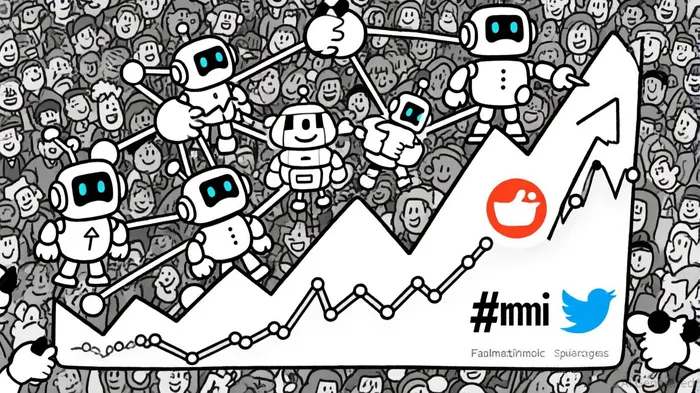







Comentarios
Aún no hay comentarios