
Meme Coin Volatility and Investor Risk: A Regulatory and Behavioral Analysis in the Wake of the $NYC Token Collapse
The collapse of the $NYC token in late 2025, which saw a $600 million market cap plummet to under $100 million in days, serves as a stark reminder of the risks inherent in influencer-driven crypto projects. A single investor reportedly lost $473,000 in 20 minutes during the crash, a loss exacerbated by a one-sided liquidity pool engineered by the project's team. This case, emblematic of the 2025 crypto winter, underscores the interplay of regulatory gaps, behavioral biases, and speculative hype in memeMEME-- coin markets.
The $NYC Token Collapse: A Case Study in Rug Pulls and Liquidity Manipulation
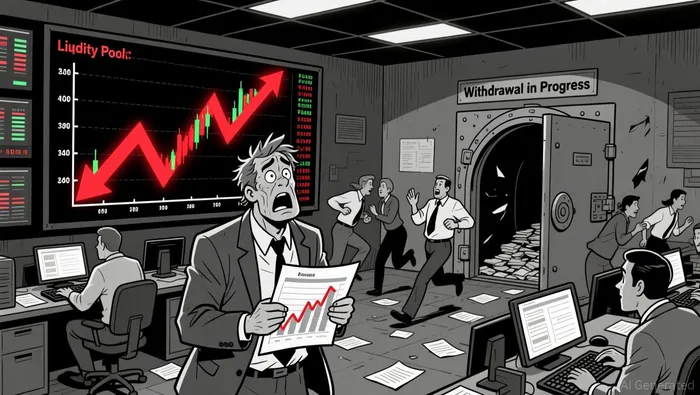
The $NYC token, launched by former New York City Mayor Eric Adams with a stated mission to combat antisemitism and anti-Americanism, initially attracted massive retail interest. Its rapid ascent to a $600 million valuation was fueled by celebrity endorsements and social media campaigns. However, the token's collapse revealed a critical flaw: a liquidity pool managed by Adams' team that withdrew liquidity at peak value and re-added it post-crash, effectively executing a rug pull. This manipulation highlights the vulnerability of unregulated tokens to predatory practices, particularly when liquidity is controlled by a centralized entity.
The broader 2025 crypto winter amplified the token's downfall. Macroeconomic headwinds, regulatory uncertainty, and leveraged positions created a perfect storm of volatility. By year-end, 85% of tokens traded below their launch valuations, reflecting a market correction that left many investors reeling. The $NYC case exemplifies how even high-profile projects can become victims of systemic instability when governance and transparency are lacking.
Regulatory Responses: A New Framework for Digital Assets
In response to such crises, the U.S. enacted historic reforms in 2025, including the GENIUS Act, which established federal oversight for stablecoins, requiring them to be backed by high-quality liquid assets. The CLARITY Act further sought to define digital assets as either securities or commodities, reducing regulatory ambiguity and shifting oversight to the CFTC for decentralized tokens. These measures aim to prevent future rug pulls by mandating transparency and third-party audits.
The Securities and Exchange Commission (SEC), under new leadership, also intensified enforcement actions. In August 2025, the SEC secured a $46 million default judgment against a crypto multi-level marketing scheme and settled claims against MyConstant for misleading investors. While these actions signal a focus on fraud, critics argue that regulatory clarity remains incomplete, particularly regarding liquid staking and decentralized finance (DeFi) protocols.
Influencer-Driven Hype: Fueling Volatility and Investor FOMO
Influencer marketing played a pivotal role in the $NYC token's rise-and its subsequent collapse. Social media personalities and mid-tier influencers, often with engaged niche audiences, amplified the token's narrative, leveraging viral momentum to drive adoption. Agencies like Blockchain App Factory and Coinbound structured these campaigns to maximize reach, though their effectiveness often came at the cost of regulatory compliance.
The behavioral impact of such campaigns is profound. Retail investors, driven by fear of missing out (FOMO), poured capital into $NYC and other meme coins without due diligence. This herding behavior, exacerbated by influencer endorsements, created a speculative bubble that collapsed when liquidity was withdrawn. The 2025 crypto winter further exposed the fragility of these projects, as meme coins plummeted 51.74% amid macroeconomic fears and regulatory scrutiny.
Behavioral Finance and the Psychology of Crypto Investing
Behavioral finance principles illuminate why investors fall prey to meme coin volatility. Studies show that social media sentiment and influencer narratives trigger emotional responses, overriding rational decision-making. During the 2025 crypto winter, panic selling and leveraged positions worsened losses, with Bitcoin and Ether ETPs experiencing net outflows as investors sought to minimize tax liabilities.
While seasoned investors began adopting more disciplined strategies in 2025, novice traders remained susceptible to FOMO-driven decisions. The $NYC collapse exemplifies how influencer-driven hype can create a false sense of security, leading to catastrophic losses when market conditions shift.
Conclusion: A Call for Caution and Clarity
The $NYC token collapse and the broader 2025 crypto winter underscore the urgent need for both regulatory safeguards and investor education. While legislative reforms like the GENIUS and CLARITY Acts provide a framework for accountability, they must be paired with investor awareness of behavioral biases. Meme coins, by their nature, will always carry high risk, but the lessons from 2025-particularly the dangers of centralized liquidity manipulation and influencer-driven hype-should serve as a cautionary tale.
As the crypto market evolves, investors must prioritize due diligence, diversification, and a long-term perspective. The future of digital assets depends not only on innovation but on a system that protects retail investors from the pitfalls of unregulated speculation.






Comentarios
Aún no hay comentarios