
Meme Coin Market Volatility and Pump.fun's PUMP Performance: Navigating Short-Term Risks and Sentiment Dynamics
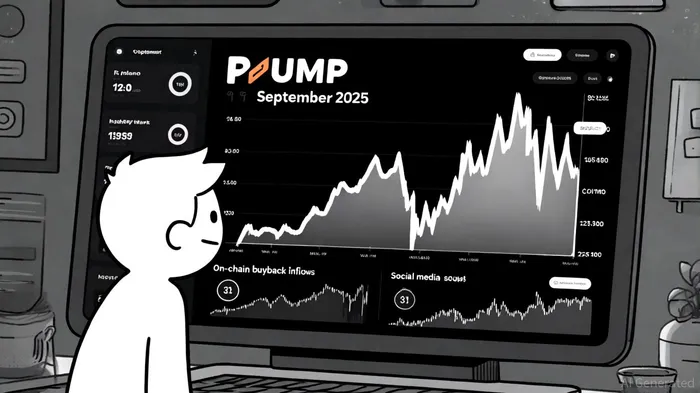
The memeMEME-- coin sector, long characterized by its speculative fervor, has seen Pump.fun'sFUN-- PUMP token emerge as both a lightning rod and a case study in market volatility. As of September 2025, PUMP's price trajectory reflects a blend of algorithmic hype, aggressive buybacks, and regulatory uncertainty, making it a microcosm of broader crypto market dynamics. This analysis examines the token's short-term risks and sentiment-driven momentum, drawing on recent performance data and investor behavior patterns.
PUMP's Volatility: A Double-Edged Sword
PUMP's price has oscillated wildly in recent weeks, surging 180% in 30 days following its Binance US listing while also plummeting 129.71% in a single day before rebounding with a 7,578.85% gain over seven days [1]. Such extremes underscore the token's exposure to speculative trading and automated compounding mechanisms. Technical analysts note a double-bottom breakout pattern, with a short-term target of $0.01 and support levels at $0.0078–$0.0085 [2]. However, on-chain metrics reveal a $26.08 million net inflow on September 11, signaling accumulation interest but also highlighting the fragility of retail-driven rallies [3].
Pump.fun's buyback strategy—allocating 98% of revenue to repurchase tokens—has temporarily stabilized the price, reducing circulating supply by 6.898% since July 2025 [4]. Yet, this deflationary model faces sustainability concerns as platform revenue has dropped from $10.66 million to $1.72 million weekly [5]. Critics argue that such tactics may mask underlying structural weaknesses, particularly as whale exits have siphoned $101 million in PUMP tokens since July [6].
Sentiment-Driven Momentum: Social Media and Retail Psychology
Market sentiment for PUMP remains overwhelmingly bullish, fueled by its listing on global exchanges and a $33 million buyback campaign [7]. Social media analytics show a 21.52% increase in bullish tweets, with bearish sentiment at a low 8.18% [8]. Platforms like X (formerly Twitter) and RedditRDDT-- have amplified PUMP's visibility, with retail investors framing it as a “Solana-native alternative to Bitcoin” [9].
However, this enthusiasm is not without risks. The token's mindshare now exceeds combined interest in BitcoinBTC-- and EthereumETH--, a trend analysts caution could lead to overvaluation [10]. Furthermore, a $5.5 billion class-action lawsuit alleging Pump.fun operates as an unlicensed gambling861167-- platform has introduced legal uncertainty [11]. Despite this, PUMP's price remains 55.7% below its all-time high, suggesting lingering optimism among traders [12].
Short-Term Risks and Regulatory Headwinds
While PUMP's technical indicators and sentiment metrics paint a bullish picture, several red flags persist. First, the token's volatility index—a measure of price swings—remains elevated, with potential support levels at $0.0051–$0.0060 [13]. Second, regulatory scrutiny is intensifying: the lawsuit and growing competition from platforms like LetsBONK.fun could erode PUMP's market share [14]. Third, leveraged retail positions have led to significant unrealized losses, with some traders facing margin calls as prices whipsaw [15].
Conclusion: A High-Risk, High-Reward Proposition
Pump.fun's PUMP token embodies the paradox of meme coins: a blend of viral appeal and algorithmic instability. While its buyback-driven flywheel and exchange listings have generated short-term momentum, the token's reliance on speculative demand and legal vulnerabilities make it a high-risk asset. Investors must weigh the allure of rapid gains against the likelihood of sharp corrections, particularly as regulatory clarity—or lack thereof—continues to shape the SolanaSOL-- ecosystem. For now, PUMP remains a barometer of retail crypto psychology, but its long-term viability will depend on structural innovation, not just social media hype.







Comentarios
Aún no hay comentarios