
The Megadeal Momentum: Why 2026 M&A Could Outperform 2025
The global M&A landscape in 2025 was defined by a paradox: declining deal volumes but surging deal values, driven by megadeals in high-impact sectors. As we approach 2026, the momentum appears poised to accelerate, fueled by strategic consolidation, AI-driven demand, and regulatory shifts. For investors, the question is no longer whether megadeals will dominate but how they will reshape industries and create opportunities for those who act decisively.
Industrial Sector: Megadeals as a Catalyst for Resilience
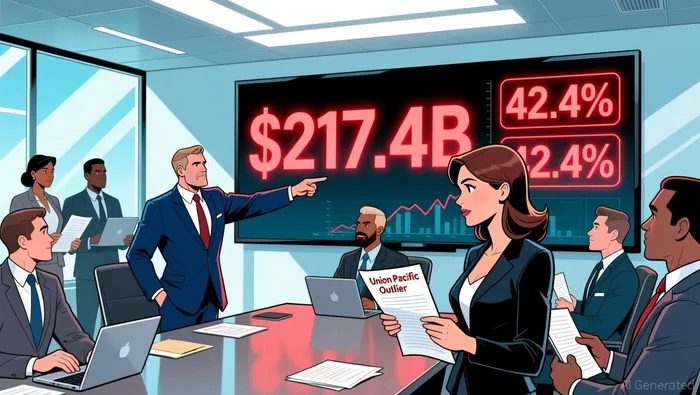
The industrial manufacturing sector exemplifies this trend. In Q3 2025, deal value in the U.S. surged by 133.9% quarter-over-quarter to $217.4 billion, driven by transformative transactions like Union Pacific's $85 billion merger with Norfolk SouthernNSC--. Even excluding this outlier, the sector's value still rose by 42.4% compared to Q2 2025, underscoring a strategic shift toward scale and digital innovation. Strategic acquirers accounted for 69% of deal value, reflecting a focus on long-term value creation.
Looking ahead, 2026 holds promise. The passage of the One Big Beautiful Bill Act and revised trade agreements are expected to reduce uncertainty, spurring demand for infrastructure and automation. While Q3 2025 saw a temporary dip in industrial automation M&A activity, the sector's fundamentals remain strong. With 111 private equity and venture capital investments in industrial automation through Q3 2025-up from 97 in the same period in 2024-the stage is set for a rebound.
AI: The Engine of Consolidation
Artificial intelligence is reshaping M&A across industries, with 2025 marking a 15% increase in global AI-related deal values compared to H1 2024. High-profile transactions, such as Google's proposed $32 billion acquisition of Wiz, highlight the sector's focus on capability-driven deals. AI is not merely a buzzword but a strategic imperative, driving demand for infrastructure investments and enabling companies to automate workflows and enhance decision-making.
In 2026, institutional forecasts predict AI will remain central to dealmaking. A report by PwC anticipates 74 megadeals in the U.S. alone, many of which will be AI-driven. The industrial sector, in particular, is leveraging AI to optimize supply chains and integrate digital tools, while media and telecom companies are acquiring AI assets to refine advertising and content delivery. As AI reshapes value chains, early movers will gain a competitive edge.
Media & Entertainment: Deregulation Fuels a New Era of Consolidation
The media and entertainment sector saw a 61% surge in deal value in Q3 2025, with eight transactions exceeding $10 billion. The proposed $82.7 billion Netflix acquisition of Warner Bros. Discovery, though announced post-Q3, epitomized the sector's shift toward content-centric strategies and scale-driven consolidation. Regulatory changes, such as the lifting of FCC ownership limits for top-four stations, have further accelerated this trend. Nexstar's $6.2 billion acquisition of Tegna, for instance, reflects a new era of aggressive consolidation.
Institutional reports suggest this momentum will continue in 2026. AlixPartners projects over $80 billion in media M&A deal value, driven by the need to integrate AI and consolidate legacy assets. With streaming platforms competing for dominance and advertisers demanding data-driven solutions, the sector is ripe for further consolidation.
The Middle Market: A Lagging but Catch-Up Opportunity
While large-cap sectors are thriving, the middle market has struggled. In 2025, middle-market deals dropped to a decade-low of 496, pressured by macroeconomic headwinds. However, 2026 could mark a turning point. Deloitte's M&A Trends Survey found that 90% of private equity respondents and 80% of corporate executives expect increased deal activity in the coming year.
AI tools are already enhancing efficiency in the middle market, from deal sourcing to integration. If financing conditions stabilize, private equity firms could revitalize this segment by targeting undervalued assets in industrial automation, AI infrastructure, and media technology. For investors, the middle market represents a compelling asymmetry: low entry costs with high-growth potential.
Conclusion: Positioning for 2026's Megadeal Momentum
The convergence of deregulation, AI-driven demand, and post-tariff normalization is creating a perfect storm for M&A in 2026. Industrial manufacturing, AI, and media are leading the charge, with megadeals redefining competitive landscapes. While the middle market lags, its catch-up potential is significant, particularly for investors who act early.
For those seeking to capitalize on this momentum, the key lies in strategic positioning. Undervalued sectors-such as industrial automation, AI infrastructure, and content-driven media-offer fertile ground for consolidation. As the data shows, 2026 is not just a continuation of 2025's trends but a step change in how value is created and captured. The question is whether investors will be ready.





Comentarios
Aún no hay comentarios