
Media Regulation and Free Speech: How Legal Rulings Reshape Digital Advertising Markets
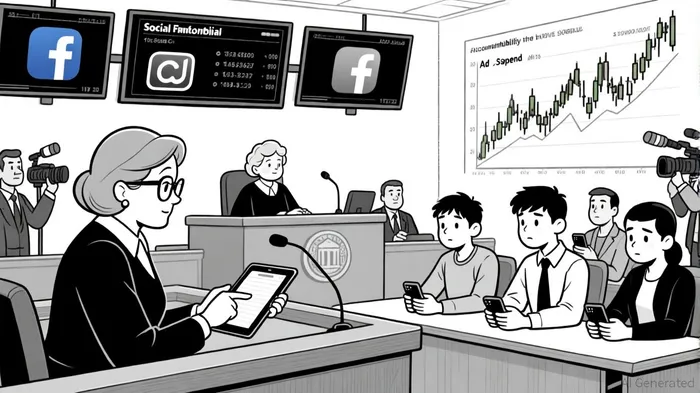
The legal landscape governing digital advertising markets is undergoing a seismic shift, driven by recent rulings that reframe the boundaries of media content liability. Two landmark cases—Anderson v. TikTok and Moody v. NetChoice—have created a paradox for social media platforms: algorithms are both protected speech under the First Amendment and a potential liability under tort law. This duality is reshaping ad spending patterns, stock valuations, and the strategic calculus of tech giants.
Legal Developments: A New Framework for Liability
In Anderson v. TikTok (2024), the Third Circuit Court of Appeals ruled that TikTok's algorithmic curation of content—specifically its promotion of the “Blackout Challenge”—constituted “first-party speech,” thereby stripping the platform of Section 230 immunity[1]. This decision built on the Supreme Court's Moody v. NetChoice ruling, which affirmed that algorithmic curation is a form of protected expression under the First Amendment[2]. The Third Circuit's logic was clear: if algorithms reflect editorial judgments, they are not merely passive hosts of user-generated content but active participants in content creation.
This legal pivot has profound implications. Platforms that once relied on Section 230 to avoid liability for user content now face exposure for algorithmic amplification. As one legal scholar noted, “The line between moderation and promotion has blurred, and courts are now holding platforms accountable for the consequences of their own design choices”[3].
Ad Spending Shifts: Advertisers Navigate a Riskier Landscape
The uncertainty introduced by these rulings has already triggered a reallocation of ad budgets. According to a report by Sensor Tower, if TikTok were to exit the U.S. market, MetaMETA-- could capture up to four percentage points of TikTok's ad spend share, with Instagram and Facebook absorbing most of the shift[4]. Similarly, YouTube and Snapchat are projected to gain an additional two percentage points each. This redistribution reinforces Meta's dominance in U.S. social media ad spending, with Facebook projected to command a 35% share by Q4 2025[4].
The immediate impact of TikTok's January 2025 outage further illustrates this trend. Data from Varos shows that cost-per-thousand-impressions (CPMs) on Meta's Reels rose by 10% during the outage, as advertisers competed for limited inventory[5]. Smaller businesses, however, have been disproportionately affected. Many lack the resources to adapt to higher CPMs and have either reduced ad spending or shifted to platforms like TikTok upon its return[5].
Platform Valuations: Legal Uncertainty and Investor Sentiment
The legal risks associated with algorithmic curation are also influencing stock valuations. TikTok's parent company, ByteDance, has responded to regulatory pressures with a stock buyback strategy, signaling confidence amid a $300 billion valuation[6]. However, the potential for a forced sale or shutdown of TikTok's U.S. operations introduces volatility. Analysts project that competitors like Meta and AlphabetGOOGL-- could see valuation boosts as they absorb TikTok's user base and ad revenue[7].
The Indian experience offers a cautionary tale. After TikTok's 2020 ban, Instagram and YouTube saw engagement hours rise by 40% and 12%, respectively, while Snapchat gained 89% more users[4]. This suggests that while Meta and YouTube are likely to benefit, emerging platforms could also capture a significant portion of TikTok's market.
Future Outlook: Legislative and Market Dynamics
The legal and regulatory environment remains fluid. If the Supreme Court clarifies the scope of Section 230, it could either stabilize or further destabilize the market. Meanwhile, geopolitical pressures—such as the U.S. House's bill requiring TikTok's sale or shutdown—add another layer of uncertainty[8]. Investors must weigh these factors against the long-term sustainability of algorithm-driven business models.
Conclusion: Strategic Considerations for Investors
For investors, the key takeaway is clear: the intersection of media regulation and free speech is a critical determinant of digital advertising markets. Platforms that adapt their algorithms to mitigate legal exposure—while maintaining user engagement—will likely outperform peers. Conversely, those that fail to navigate this legal tightrope risk eroded valuations and ad revenue. As one analyst put it, “The next era of digital advertising will be defined by platforms that balance innovation with accountability”[9].





Comentarios
Aún no hay comentarios