
Media and Legal Risk in Corporate Governance: How High-Profile Legal Dismissals Shape Market Sentiment and Stock Performance
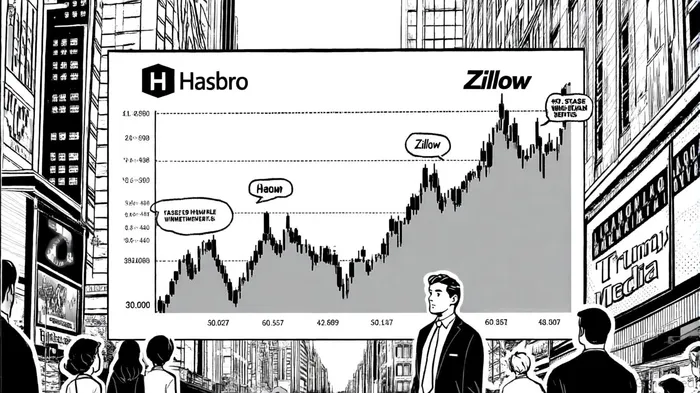
In the intricate dance of corporate governance, legal and media risks have emerged as pivotal forces shaping market dynamics. High-profile legal dismissals—whether of lawsuits, regulatory actions, or securities class actions—often trigger cascading effects on stock performance, mediated by media narratives and investor sentiment. Recent case studies and quantitative analyses underscore the profound interplay between judicial outcomes, public perception, and financial markets.
Legal Dismissals and Stock Performance: A Dual-Edged Sword
When corporations face legal challenges, the immediate market reaction is often a decline in stock prices. According to a report by the Journal of Behavioral and Experimental Finance, firms experiencing securities class-action lawsuits typically see a 12.3% abnormal return drop in the 20-day window surrounding the filing of a lawsuit[1]. This effect is amplified when cases involve governance failures or regulatory violations, as seen in Hasbro's 2025 legal scrutiny, which sparked sector-wide volatility in consumer discretionary stocks[5]. Conversely, successful dismissals can stabilize or even rejuvenate stock prices. For instance, Trump MediaDJT-- & Technology Group's dismissal of a stock lockup case led to a 7.2% rebound in its shares, as investor confidence was restored[2].
Judicial standards also play a critical role. The U.S. Supreme Court's Goldman Sachs decision has raised the bar for plaintiffs, requiring rigorous proof of “price impact” from alleged misstatements[2]. This was evident in Jaeger v. Zillow Grp., Inc., where the dismissal of claims due to insufficient price impact reduced litigation risks for the company[3]. However, prolonged legal battles—even if eventually dismissed—can depress stock prices due to sustained uncertainty, as highlighted in a 2024 NERA review[6].
Media Narratives: Amplifying or Mitigating Risk
Media coverage acts as both a magnifier and a dampener of market reactions. Negative narratives, particularly those emphasizing corporate misconduct or governance lapses, erode investor trust and amplify sell-offs. A 2025 study found that environmental violations triggered an average -9.2% cumulative abnormal return (CAR) within five days of announcement[3]. Conversely, companies with robust corporate social responsibility (CSR) initiatives experience reduced stock price volatility, as CSR efforts counterbalance adverse media effects[5].
Social media further complicates this dynamic. Research from 2025 reveals that negative sentiment on platforms like Seeking Alpha predicts short-term market downturns more effectively than traditional media, due to its timeliness and linguistic richness[2]. For example, during the Cambridge Analytica scandal, viral media coverage of Facebook's data practices led to a 14.6% cumulative abnormal return drop, underscoring the power of narrative-driven investor behavior[4].
Broader Implications for Investors and Governance
The interplay between legal dismissals and media narratives has long-term implications for corporate performance. Litigation not only incurs direct costs but also damages operational metrics like return on assets (ROA) and return on equity (ROE), as firms divert resources to legal defense and reputational repair[4]. The Enron scandal, for instance, resulted in a $7.2 billion settlement and catalyzed the Sarbanes-Oxley Act, reshaping corporate governance frameworks[5].
For investors, the key lies in discerning the context of legal dismissals. Prompt resolutions with clear corrective disclosures—such as Zillow's adherence to Goldman Sachs standards—can mitigate prolonged volatility[3]. Conversely, dismissals following extended litigation, like those in AI-related cases (which doubled in 2024[6]), may signal underlying sector risks.
Conclusion: Navigating the Legal-Media Nexus
High-profile legal dismissals are not isolated events but nodes in a network of judicial, media, and market forces. As the 2025 PLUS D&O Symposium noted, judicial discretion and media framing increasingly dictate the trajectory of stock prices[6]. Investors must prioritize transparency, sector-specific trends, and media literacy to navigate these risks. For corporations, proactive governance and CSR initiatives remain vital shields against the dual threats of litigation and reputational damage.
In an era where information spreads instantaneously, the line between legal resolution and market perception is thinner than ever. The lessons from HasbroHAS--, Zillow, and Trump Media underscore one truth: in corporate governance, the courtroom and the newsroom are inextricably linked.





Comentarios
Aún no hay comentarios