
Media and Free Speech Risks in Global Content Distribution: Assessing the Financial and Reputational Fallout of Defamation Lawsuits
The global media landscape is undergoing a seismic shift as defamation lawsuits increasingly intersect with free speech debates, financial risks, and reputational damage. From Fox News' $787 million settlement with Dominion Voting Systems to the BBC's $10 billion defamation battle with Donald Trump, high-profile cases reveal a troubling trend: media companies are facing unprecedented legal and reputational exposure in an era of AI-driven disinformation and polarized audiences. This analysis examines the financial and reputational impacts of these lawsuits, drawing on recent case studies and data to assess the evolving risks for investors.
The Financial Toll of Defamation: Settlements and Stock Market Reactions
Defamation lawsuits are no longer just legal battles-they are financial events with measurable consequences for corporate balance sheets and stock performance. The Dominion-Voting Systems v. Fox News case, for instance, underscores this reality. In 2023, Fox agreed to a $787.5 million settlement, a sum analysts estimated could reduce its stock price by $1.58 per share for every $500 million in damages. However, the actual stock price dropped only 16 cents post-announcement, suggesting that Fox's financial reserves and its audience's ideological alignment with the network cushioned the blow.
The BBC, meanwhile, faces a $10 billion defamation lawsuit from Donald Trump over a 2024 Panorama documentary that edited a January 6 speech to imply he incited violence. While the BBC has denied legal liability, the lawsuit has already triggered leadership changes, including the resignation of its director general and head of news. Legal experts speculate the BBC may settle for $10 million to $100 million to avoid reputational damage, though the corporation has not confirmed this. 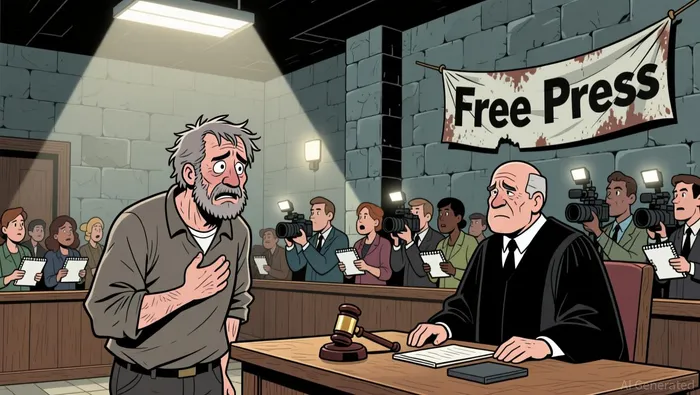 Such cases highlight how even the threat of litigation can destabilize media brands, particularly when political or ideological stakes are high.
Reputational Damage: Trust Erosion and the Paradox of Engagement
Reputational harm is often harder to quantify than financial penalties but equally critical. The Dominion case, for example, led to a 21% decline in trust among Fox News viewers aware of the lawsuit, according to internal communications. Yet, Fox's weekday prime-time ratings rose by 56% from 2023 to 2025, indicating that ideological loyalty can outweigh reputational damage in polarized markets. This duality-where trust erodes but engagement persists-reflects the broader challenge for media companies: audiences often prioritize alignment with their values over factual accuracy. The Guardian's 2025 libel case against actor Noel Clarke, which resulted in a £3 million cost order, also illustrates reputational risks. While the Guardian avoided liability, the case consumed significant resources and public attention. Similarly, the BBC's Trump lawsuit has already damaged its credibility, with critics accusing it of editorial bias. A 2025 Digital News Report notes that global trust in traditional media has declined, yet audiences still favor "trusted brands" with a history of accuracy. This suggests that while defamation lawsuits can tarnish reputations, credibility remains a valuable asset in an age of misinformation.
AI-Driven Disinformation: A New Frontier of Risk
The rise of AI-generated content has amplified both the scale and complexity of defamation risks. According to a 2025 World Economic Forum report, AI-driven disinformation costs corporations an estimated $78 billion annually in market losses and poor financial decisions. Deepfakes and synthetic media now enable malicious actors to fabricate defamatory content at unprecedented speed and scale, complicating efforts to retract or correct false claims. For media companies, this means not only defending against lawsuits but also investing in tools to detect and mitigate AI-generated misinformation.
Süddeutsche Zeitung's 2025 study further complicates the picture: while exposure to AI-generated content reduced overall trust in media, it paradoxically increased engagement with trusted brands. Audiences who struggled to distinguish real from AI-generated content showed higher subscription retention and willingness to pay for credible journalism. This duality-where disinformation erodes trust but also highlights the value of quality content-poses a strategic dilemma for media companies: how to leverage their credibility while combating the very technologies that undermine it.
Strategic Implications for Investors
For investors, the key takeaway is clear: media companies must now factor defamation lawsuits into their risk models. Legal settlements, while costly, are often manageable for well-capitalized firms like Fox News. The real threat lies in reputational damage, which can erode audience trust and brand value over time. The BBC's Trump lawsuit, for instance, could deter advertisers or donors if public perception of the corporation shifts. Similarly, Fox's reliance on ideological loyalty may prove unsustainable if audiences begin to prioritize factual accuracy over partisan alignment.
Moreover, the rise of AI-driven disinformation suggests that media companies will need to invest in both legal defenses and technological solutions. This could strain profit margins, particularly for smaller outlets lacking the resources of global giants. The 2025 MDL Index, which tracks securities class action litigation, surged by 154% in the first half of the year, reflecting the growing financial stakes of legal disputes. Investors should monitor these trends closely, as they may signal broader shifts in media sustainability and regulatory scrutiny.
Conclusion
The intersection of defamation lawsuits, free speech, and AI-driven disinformation is reshaping the media industry's risk profile. While financial penalties and stock market volatility are immediate concerns, the long-term threat lies in reputational erosion and the erosion of public trust. For global media companies, the challenge is to navigate these risks while maintaining credibility in an increasingly fragmented information ecosystem. Investors, in turn, must weigh these factors carefully, recognizing that the future of media is as much about legal resilience as it is about editorial integrity.







Comentarios
Aún no hay comentarios