
Media Consolidation and Streaming Market Dynamics: Strategic M&A Opportunities in the Entertainment Sector
Comcast: A Strategic Push Amid Regulatory Uncertainty
Comcast has emerged as a formidable contender in the WBDWBD-- acquisition race, leveraging its financial muscle and strategic alignment with WBD's core assets. The company has retained Goldman Sachs and Morgan Stanley to evaluate a potential bid and has gained access to WBD's data room, signaling serious intent. Comcast's focus is on acquiring WBD's studio and streaming divisions, including the Warner Bros.WBD-- movie and TV studios and HBO Max, to bolster its existing media portfolio. However, regulatory hurdles loom large. U.S. President 's public criticism of Comcast's leadership has raised concerns about antitrust scrutiny, potentially complicating the merger's approval. Despite these risks, Comcast remains confident in the transaction's viability, viewing it as a critical step in countering the fragmentation of the streaming market.
Paramount: Aggressive Bid and Integration-Driven Strategy
Paramount has taken a bold approach, for WBD-nearly double its recent share price. Backed by influential investors like , , and , Paramount's bid underscores its ambition to dominate the streaming wars. The company's strategy hinges on merging WBD's HBO Max with its own Paramount+ platform to create a unified streaming giant capable of competing with Netflix and Disney. Unlike Comcast, Paramount plans to retain WBD's creative teams and cable networks, emphasizing long-term integration over divestment. This approach aligns with broader industry trends of consolidating marketing and distribution operations while preserving intellectual property (IP) value.
Netflix: Content Expansion and Gaming Ambitions
Netflix's interest in WBD represents a departure from its traditional organic growth model. The streaming giant is exploring a bid focused on WBD's content library and gaming assets, including iconic franchises like Harry Potter and DC Comics, as well as WB Games. By acquiring these properties, Netflix aims to enhance its storytelling slate and expand into gaming-a sector projected to grow exponentially in 2025. The company has enlisted Moelis & Co. to evaluate the offer, signaling a strategic pivot toward M&A as a tool for rapid expansion. However, Netflix has explicitly ruled out acquiring WBD's legacy media networks, such as CNN or TNT, reflecting its commitment to a digital-first strategy.
Industry-Wide Trends: Digital Transformation and Consolidation
The current M&A frenzy is not an isolated phenomenon but part of a broader industry-wide shift. has become a catalyst for consolidation, with companies like EZCORP demonstrating how omnichannel strategies and AI-driven tools can enhance operational efficiency and customer engagement. In the media sector, digital infrastructure is increasingly seen as a competitive differentiator, enabling seamless data integration and scalable content delivery. For instance, partnerships like Supplyframe and Orbweaver's collaboration in the electronics industry highlight how harmonizing digital systems can streamline workflows-a lesson applicable to media mergers.
The 2025 streaming market is also marked by a disciplined approach to M&A, with companies prioritizing strategic fit and return on invested capital. EZCORP's expansion of 24 new stores in the past quarter, coupled with its digital initiatives like real-time quote tools, exemplifies how operational efficiency and digital innovation can drive acquisition success. These trends suggest that media companies will continue to pursue consolidation to reduce costs, expand IP libraries, and adapt to shifting consumer preferences.
Implications for Investors
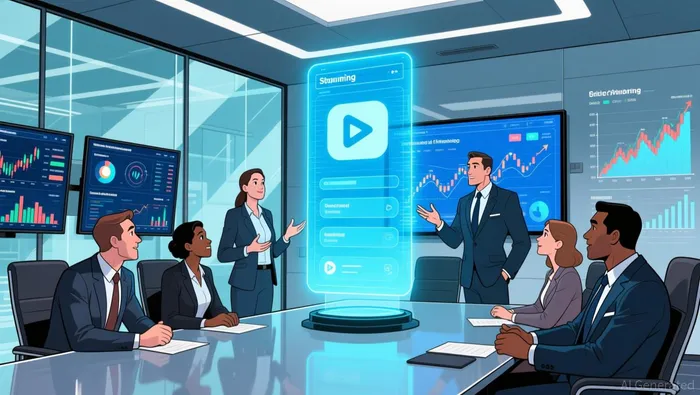
For investors, the WBD acquisition race highlights the strategic importance of M&A in the entertainment sector. Comcast's regulatory risks, Paramount's integration-focused approach, and Netflix's content-driven ambitions each present unique opportunities and challenges. The broader industry's emphasis on digital transformation further underscores the need for companies to invest in scalable technologies to remain competitive. As the November 20 deadline for nonbinding offers approaches, market reactions to these bids will likely influence stock valuations and investor sentiment.
In the long term, successful consolidation could lead to more robust streaming platforms, enhanced content libraries, and improved operational efficiencies. However, regulatory scrutiny and integration complexities remain critical risks. Investors should monitor developments closely, particularly the role of digital tools in facilitating seamless mergers and the potential for industry-wide consolidation to reshape the media landscape.







Comentarios
Aún no hay comentarios