
The Meat Price Surge: Navigating Inflationary Pressures and Investment Opportunities in a Post-Pandemic World
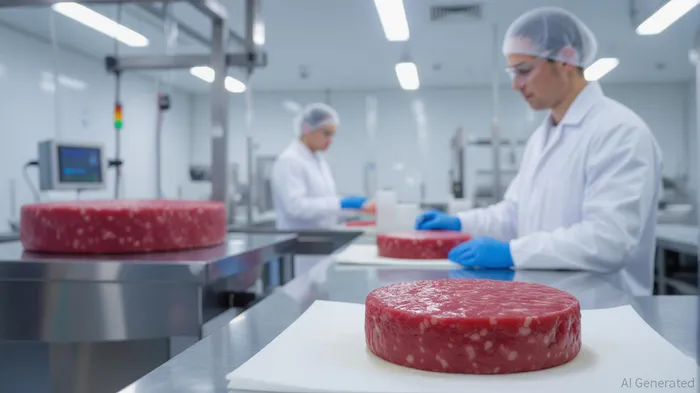
The post-pandemic era has reshaped global markets in ways few could have predicted. Among the most pressing challenges is the surge in meat prices, a key driver of food inflation that has strained household budgets and disrupted supply chains. While the immediate cause of this inflation—rising energy costs, labor shortages, and transportation bottlenecks—may seem familiar, the deeper story lies in the structural shifts reshaping agriculture and consumer behavior. For investors, this volatility presents both risks and opportunities, particularly in sectors poised to adapt to a world where resilience and innovation are paramount.
The Perfect Storm: Supply Chain Fragility and Demand Volatility
The pandemic exposed vulnerabilities in global supply chains, and the meat industry has been hit particularly hard. Labor shortages in processing plants, exacerbated by health concerns and migration patterns, have reduced output capacity. Meanwhile, transportation costs—driven by higher fuel prices and port congestion—have added layers of expense. For example, the cost of shipping a container from Asia to Europe has tripled since 2020, directly inflating the cost of imported livestock feed and finished meat products.
On the demand side, consumer behavior has diverged sharply from pre-pandemic norms. The shift to home cooking during lockdowns initially boosted retail meat sales, but this trend has since plateaued. Simultaneously, the rise of plant-based diets—accelerated by health awareness and environmental concerns—has created a new competitor for traditional meat producers. Companies like Beyond MeatBYND-- and Impossible Foods have captured market share, particularly among younger demographics, forcing legacy players to innovate or risk obsolescence.
Strategic Investment Opportunities in a Fragmented Market
The turbulence in the meat sector is not a death knell for agribusiness but a call to action for investors seeking long-term value. Two areas stand out:
Resilient Agribusiness Models
Companies that have invested in vertical integration, automation, and regional supply chains are better positioned to weather disruptions. For instance, firms leveraging AI-driven logistics or blockchain for traceability can reduce waste and optimize costs. Cargill (CARGO) and Tyson FoodsTSN-- (TSN) have already begun adopting such technologies, offering a blueprint for the future.Alternative Protein Innovation
The alternative protein market, valued at $12 billion in 2023, is projected to grow exponentially as regulatory hurdles ease and production costs decline. Cultivated meat firms like Upside Foods and plant-based dairy innovators such as RippleXRP-- Foods are attracting capital from both venture capitalists and institutional investors. These companies are not just competing with traditional meat—they are redefining the category.
Hedging Against Inflation: A Dual-Strategy Approach
Investors should consider a dual approach to mitigate risks while capitalizing on growth. Diversifying across traditional agribusiness and alternative protein firms creates a balanced portfolio. For example, pairing exposure to grain traders like Archer Daniels MidlandADM-- (ADM) with stakes in cell-cultured meat startups can hedge against both inflationary pressures and shifting consumer preferences.
However, caution is warranted. The alternative protein sector remains unproven at scale, and regulatory delays or consumer skepticism could slow adoption. Similarly, overreliance on traditional agribusiness exposes investors to cyclical downturns if supply chains stabilize or demand for meat declines further.
Conclusion: Building a Future-Proof Portfolio
The meat price surge is a symptom of broader economic and societal shifts. While the immediate outlook is fraught with uncertainty, the long-term horizon offers clear opportunities for those who act strategically. By investing in companies that prioritize resilience—whether through technological innovation, sustainable practices, or diversified product lines—investors can navigate the turbulence of today while positioning themselves for tomorrow's food economy.
In a world where inflation is no longer a temporary blip but a persistent force, the key to success lies not in resisting change but in embracing it.





Comentarios
Aún no hay comentarios