
McKesson Corporation (MCK): A Strategic Powerhouse in the Post-Pandemic Healthcare Supply Chain
In the evolving landscape of post-pandemic healthcare, McKesson CorporationMCK-- (MCK) has emerged as a linchpin of resilience and innovation. With drug shortages, supply chain volatility, and shifting patient needs persisting as challenges, McKesson's strategic investments in automation, data-driven forecasting, and high-margin services position it as a critical player. For investors, the question is no longer whether McKessonMCK-- can adapt—it's how quickly it can capitalize on its strengths to outpace competitors.
Supply Chain Resilience: Automation and Agility
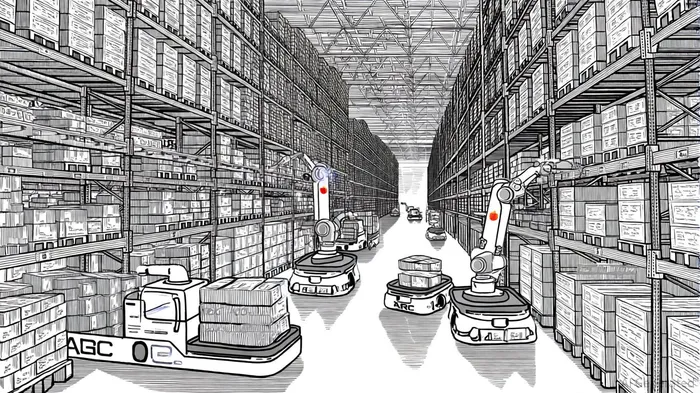
McKesson's dominance in pharmaceutical distribution is underpinned by its 30 U.S. distribution centers (DCs), including the National Redistribution Facility (NRDC) in Olive Branch, Mississippi. This facility alone processes 85,000 cases daily, leveraging automated guided vehicles (AGVs) to achieve a 99.98% order accuracy rate[1]. Such precision is not accidental but the result of a decade-long commitment to automation, begun in 2008, which has streamlined operations and reduced labor-intensive tasks[1].
The company's response to drug shortages further underscores its agility. The Critical Care Drug Task Force (CCDTF), a multidisciplinary team of pharmacists and procurement specialists, ensures equitable distribution of scarce medications[3]. By combining real-time data analytics with strategic partnerships, McKesson mitigates supply disruptions while maintaining patient care standards—a capability that has become increasingly valuable in a post-pandemic world.
Financial Fortitude and Strategic Realignment
McKesson's fiscal 2025 results reflect its operational prowess. Consolidated revenues surged 16% year-over-year to $359.1 billion, driven by a 18% increase in U.S. Pharmaceutical segment sales to $95.3 billion[4]. The company also raised its adjusted EPS guidance to $32.55–$32.95 for 2025 and projected long-term EPS growth of 13%–16% through 2026[1]. These figures highlight McKesson's ability to balance scale with profitability, even as it navigates challenges like lower-than-expected sales in branded and specialty drugs in Q3 2025[4].
Strategic acquisitions and segment restructurings further bolster its growth trajectory. The $850 million acquisition of PRISM Vision Holdings—a leader in retinal care—is expected to add $0.20–$0.30 to adjusted EPS within 12 months[6]. Meanwhile, the reorganization into four reportable segments—North American Pharmaceutical, Oncology and Multispecialty, Prescription Technology Solutions, and Medical-Surgical Solutions—focuses resources on high-margin opportunities[5]. This shift aligns with McKesson's 20.96% market share in the U.S. healthcare supply chain, a figure that remains robust despite the divestiture of its Canadian subsidiaries[4].
Analyst Optimism and Investment Potential
The investment community has taken notice. As of September 2025, McKesson's stock carries a “Strong Buy” consensus, with an average price target of $824.6—implying an 8.55% upside from current levels[1]. Analysts at Morgan Stanley and Evercore ISI Group have set price targets ranging from $800 to $864, citing the company's strategic partnerships, including a $32 billion collaboration to enhance supply chain transparency[5]. For the next trading session on September 23, 2025, models predict a price range of $684.34–$712.28, with an average forecast of $700.40[6].
Risks and Considerations
While McKesson's strengths are clear, risks persist. Its reliance on a concentrated customer base and low-margin distribution models could pressure margins if healthcare reimbursement policies shift. Additionally, the separation of its Medical-Surgical Solutions segment into an independent entity, though aimed at portfolio optimization, may introduce short-term operational complexities[4]. However, these risks are mitigated by McKesson's $359.1 billion revenue scale and its proactive focus on high-margin services like oncology and biopharma[5].
Conclusion: A Buy for the Long-Term
McKesson's post-pandemic strategy—centered on automation, data analytics, and strategic realignment—positions it as a leader in a sector where resilience is paramount. With a 18.87% market share in the healthcare supply chain and a 25.81% stake in the pharmacy services sector[6], the company's scale and innovation capabilities are unmatched. For investors seeking exposure to a healthcare supply chain that is both essential and evolving, McKesson offers a compelling case. As one analyst aptly put it, “McKesson isn't just surviving the new normal—it's redefining it”[5].







Comentarios
Aún no hay comentarios