
U.S. MBA 30-Year Mortgage Rate Hits 6.67%—Implications for Housing-Linked Sectors
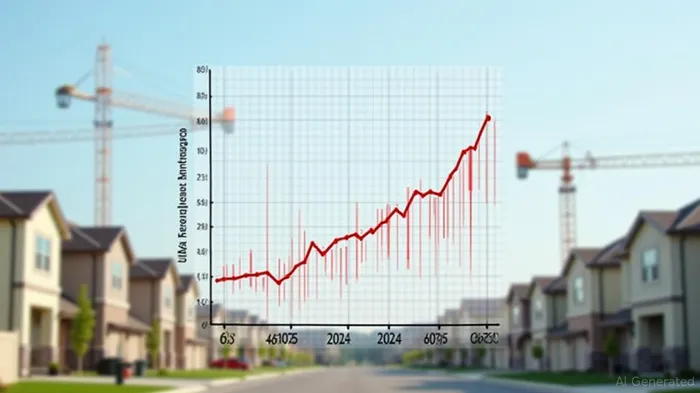
The U.S. MBA 30-year mortgage rate has settled at 6.67% as of August 2025, a level that reflects both the lingering effects of post-pandemic economic adjustments and the Federal Reserve's cautious approach to inflation. This rate, while elevated compared to the historic lows of 2021 (2.65%), remains within a range that suggests stabilization rather than volatility. For investors, this presents a critical inflection point for sector rotation strategies, particularly in housing-linked industries such as construction, real estate, and home furnishings.
The Mortgage Rate Landscape: Stability Amid Uncertainty
The 6.67% rate is part of a broader trend of gradual decline in 2025, following a peak of 7.08% in October 2022. This moderation is driven by weakening economic signals—slower home price growth, a softening labor market, and declining Treasury yields. However, the Federal Reserve's reluctance to cut rates aggressively (projecting only one or two reductions by year-end) means affordability constraints for homebuyers will persist.
Sector Impacts: Winners and Losers in a High-Rate Environment
- Homebuilders and Real Estate Agencies: Elevated mortgage rates have dampened demand for new homes, leading to reduced sales volumes. Companies like LennarLEN-- (LEN) and D.R. Horton (DHI) have seen profit margins compress as buyers delay purchases. Real estate agencies, including Keller WilliamsWMB-- (KW), face similar headwinds as transaction volumes remain subdued.
- Financials and Mortgage Servicers: Conversely, higher rates have bolstered net interest margins for banks and mortgage servicers. Institutions like JPMorgan ChaseJPM-- (JPM) and Wells FargoWFC-- (WFC) benefit from increased borrowing costs, while mortgage servicers such as PennyMac (PMT) see stronger refinancing activity as rates stabilize.
- Home Furnishing and Appliance Retailers: Sectors tied to new home purchases, such as furniture (Ashley HomeStore, ASH) and appliances (Whirlpool, WHR), face reduced demand. However, a potential rebound in 2026 could create buying opportunities for investors.
- REITs and Residential Leasing: Multifamily REITs (e.g., Equity ResidentialEQR--, EQR) have gained traction as homebuyers shift to rentals due to affordability challenges. This trend is likely to continue until rates drop below 6%.
Strategic Rotation: Positioning for the New Normal
Given the current rate environment, investors should consider the following rotation strategies:
- Exit Housing-Linked Sectors: Reduce exposure to homebuilders, real estate agencies, and furniture retailers. These sectors remain vulnerable to further rate hikes or prolonged affordability issues.
- Overweight Financials and Mortgage Servicers: Allocate capital to banks and servicers that benefit from stable or rising rates. ETFs like the Financial Select Sector SPDR (XLF) offer broad exposure.
- Hedge with Defensive Sectors: Increase allocations to utilities and consumer staples, which are less sensitive to rate fluctuations.
- Monitor Rate-Driven Opportunities: Keep a portion of the portfolio agile to capitalize on potential 2026 rebounds in housing-linked sectors if rates fall to 6.1% as projected.
The Macroeconomic Ripple Effect
Mortgage rates are not isolated to housing—they influence broader economic dynamics. Higher borrowing costs reduce consumer spending, which can slow GDP growth. However, a stable rate environment (as seen in 2025) allows households to adjust budgets, mitigating the worst effects. Investors should also consider the interplay between mortgage rates and inflation: if core CPI drops closer to the Fed's 2% target, rate cuts in 2026 could catalyze a housing market rebound.
Conclusion: Patience and Precision in a Shifting Landscape
The 6.67% mortgage rate underscores a market in transition. While housing-linked sectors face near-term challenges, the broader economy's resilience and potential for gradual rate declines offer long-term opportunities. A disciplined sector rotation strategy—shifting toward rate-insensitive or rate-benefit industries while hedging against volatility—can position portfolios to navigate this complex environment. Investors should remain vigilant, tracking key indicators like the 10-year Treasury yield and Fed policy signals to time their rotations effectively.





Comentarios
Aún no hay comentarios