
Maximizing Social Security Benefits: Strategic Implications for Retirees and Pre-Retirees in 2026
Social Security remains a cornerstone of retirement income for millions of Americans. As 2026 approaches, retirees and pre-retirees face a pivotal year marked by policy updates, adjusted benefit calculations, and evolving claiming strategies. For those seeking to optimize long-term cash flow, understanding these changes-and strategically aligning retirement timing and earnings-is critical.
2026 Policy Updates: COLA Increases and Taxable Earnings Thresholds
The Social Security Administration (SSA) has announced a for 2026, effective January 1, 2026, for Social Security beneficiaries and December 31, 2025, for Supplemental Security Income (SSI) recipients. This increase, tied to the (CPI-W), reflects inflationary pressures and ensures benefits remain aligned with economic conditions according to SSA data. On average, according to SSA reports.
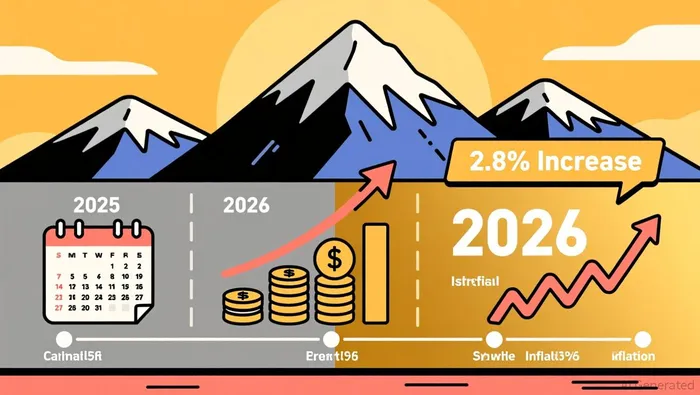 Simultaneously, , according to SSA data. This adjustment means higher-earning individuals will contribute slightly more to the system, though it also underscores the importance of maximizing pre-retirement income to bolster future benefits.
Strategic Claiming: Retirement Timing and Spousal Benefits
For married couples, 2026 presents opportunities to leverage spousal benefits and optimize claiming strategies. , according to financial experts. This creates a powerful tool for couples with uneven earnings histories.
One widely recommended approach is the 62/70 split strategy, where the lower-earning spouse claims benefits at age 62 while the higher earner delays until age 70. , according to financial experts. Over a lifetime, .
Survivor benefits further amplify this strategy. If the higher earner delays claiming until age 70 and passes away, , according to financial experts. However, couples must weigh life expectancy and health factors, .
Earnings Impact: Balancing Work and Benefits
For pre-retirees and those working past their full retirement age (FRA), the earnings test remains a critical consideration. In 2026, according to Kiplinger. This threshold increases once FRA is reached, .
Strategically timing work and benefit claims can mitigate these penalties. For instance, . Additionally, . In 2026, , according to economic reports. , .
Long-Term Cash Flow Optimization: Key Takeaways
- Delay Benefits When Possible: For every year benefits are delayed beyond FRA up to age 70, , according to Kiplinger.
- Coordinate Spousal Strategiesaccording to financial experts.
- Plan Around Earnings Thresholdsaccording to Kiplinger.
- Account for Inflation Adjustments, according to SSA data.
Conclusion
The 2026 Social Security landscape offers both challenges and opportunities for retirees and pre-retirees. By understanding updated policy parameters, strategically timing benefit claims, and optimizing earnings, . As always, personalized planning-considering health, life expectancy, .







Comentarios
Aún no hay comentarios