
Maximizing Passive Income in a Low-Yield Crypto Market
The Rise of Automation in Yield Optimization
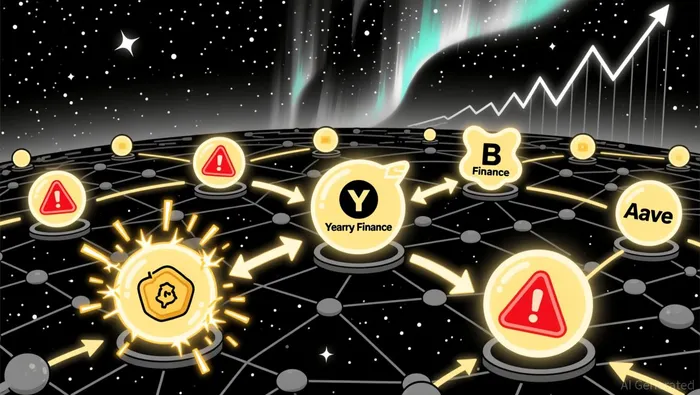
Platform-based automation tools have emerged as critical tools for optimizing returns in a low-yield environment. Protocols like Yearn FinanceYFI-- (YFI) and BeefyBIFI-- Finance are leading the charge, offering automated strategies that compoundCOMP-- rewards and dynamically allocate capital across DeFi protocols. For instance, Yearn's vaults automatically shift funds between high-yield opportunities, reducing the need for manual intervention while maximizing returns, as noted in a Token Metrics analysis. Similarly, Beefy Finance's cross-chain capabilities enable users to aggregate and compound rewards from multiple protocols, a feature that becomes increasingly valuable as individual yields shrink, as highlighted in the same analysis.
Aave (AAVE) further exemplifies this trend, with liquidity pools offering variable annual percentage yields (APYs) that can reach up to 10% during periods of high demand, as reported in the Token Metrics analysis. These platforms rely on smart contracts to execute complex strategies, ensuring efficiency and security in an environment where manual management is impractical.
Strategic Diversification and Risk Management
Diversification remains a cornerstone of yield optimization. In 2025, experts recommend allocating 50-70% of a portfolio to large-cap assets like BitcoinBTC-- and EthereumETH--, 20-30% to mid-cap altcoins with strong fundamentals, and 5-10% to high-potential, low-cap tokens, as outlined in a BitUnix guide. This approach balances stability with growth potential, mitigating the risks of overexposure to volatile assets.
For active traders, dollar-cost averaging (DCA) and regime-switching strategies have gained traction. DCA involves buying fixed amounts at regular intervals, reducing the impact of price volatility, while the Token Metrics Global 100 Index adjusts exposure based on market conditions, shifting to stablecoins during downturns to preserve capital, as detailed in a Token Metrics blog. These strategies underscore the importance of adaptability in a low-yield environment.
Regulatory Tailwinds and Institutional Adoption
Regulatory developments are also reshaping yield opportunities. The U.S. Treasury and IRS recently cleared the path for crypto ETFs to stake assets, enabling them to share staking rewards with retail investors while complying with tax regulations, as reported by a Blockonomi article. This move legitimizes yield generation through blockchain networks and could attract institutional capital. In Brazil, however, stricter AML and CTF rules for stablecoin issuers have raised privacy concerns, illustrating the tension between regulation and innovation, as covered in a Coinotag report.
The Future of Yield in 2025
As the market evolves, crypto options trading is emerging as a novel avenue for yield generation. Strategies like covered calls and cash-secured puts allow investors to earn premiums while managing risk, particularly in high-volatility environments, as discussed in an XBT0 analysis. These tools, combined with automation platforms and strategic diversification, position investors to thrive even in a low-yield landscape.
For those seeking to maximize passive income, the message is clear: automation, diversification, and regulatory agility are no longer optional-they are essential.






Comentarios
Aún no hay comentarios