
Mattel's Tariff Troubles: Why Investors Should Be Watching This Barbie Maker Closely
Folks, here’s a situation that’s got investors and analysts on edge: MattelMAT--, the iconic maker of Barbie and Hot Wheels, just pulled its 2025 financial forecasts and announced U.S. price hikes—all because of those pesky tariffs. Let me break this down for you.
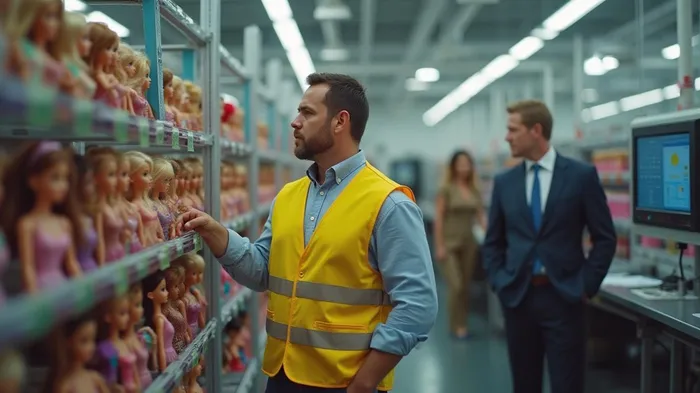
The Tariff Tsunami Hitting Mattel
The Trump-era tariffs, now exceeding 100% on key imports from China and other manufacturing hubs, are the root cause. Mattel sources 20% of its U.S. goods from China, with the rest coming from Indonesia, Malaysia, and Thailand—all under the tariff microscope. A staggering 145% tariff on Chinese-made goods has forced Mattel to raise prices “where necessary,” CEO Ynon Kreiz admitted. This isn’t just a Mattel problem: it’s an industry-wide crisis.
The trade war’s ripple effects—supply chain bottlenecks, rising input costs, and weakened demand—have left companies scrambling. Mattel isn’t alone in abandoning forecasts; Ford, GM, and PepsiCo have done the same. But let’s dig into the numbers to see why this matters for investors.
The Financial Tightrope
In Q1 2025, Mattel’s sales hit $827 million, beating estimates of $786 million. But here’s the catch: its adjusted loss widened to 3 cents per share, missing projections of a 10-cent loss. While cost-saving measures were boosted to $80 million annually (up from $60 million), the company axed its EPS guidance of $1.66–$1.72 and sales growth targets of 2%–3%.
Why? Tariffs have created a “volatile macroeconomic environment,” Kreiz said. Translation: No one knows if consumers will keep buying pricier toys or if supply chains will stabilize.
What’s an Investor to Do?
The market’s reaction was swift: shares dropped nearly 3% after-hours on the news. But here’s the twist: Mattel still executed a $160 million share buyback in Q1, part of a $600 million annual target. That shows confidence in the long game—but short-term pain is inevitable.
Compare this to broader markets. While the S&P 500 has held up, consumer discretionary stocks like Mattel are under pressure. Tariffs aren’t just a cost issue—they’re a demand killer. If prices keep rising, will shoppers keep buying?
The Bottom Line: Tariffs = Uncertainty = Risk
Mattel’s story is a microcosm of the U.S. economy’s tariff-driven turbulence. Here’s the data that matters:
- 145% tariffs on Chinese goods: Squeezing margins even as sales grow.
- 3% stock drop post-announcement: Investors penalizing uncertainty.
- $80M cost cuts vs. $160M buybacks: Prioritizing shareholder returns but battling inflation.
The takeaway? Mattel’s future hinges on two factors: tariff relief and consumer spending resilience. If the White House scraps these punitive tariffs or the global supply chain stabilizes, Mattel could rebound. But until then, this is a high-risk, high-reward play.
Investors, keep a close eye on tariff policy updates and Mattel’s next earnings call. For now, this Barbie maker is a cautionary tale of how trade wars can turn even a beloved brand’s bright future into a game of fiscal roulette.
Final Verdict: Hold for Now, but Keep an Eye on D.C.
Mattel’s stock isn’t dead, but it’s clearly wounded. Unless tariffs ease or sales surprise to the upside, this isn’t a buy—unless you’re a long-term fan of the brand. For the rest of us? Wait and watch. The next move is in Washington, not in Mattel’s factories.
Stay tuned, and always trade with discipline.





Comentarios
Aún no hay comentarios