
Mastering the Mind: How Disciplined Investing Defies Emotional Chaos and Fuels Long-Term Resilience
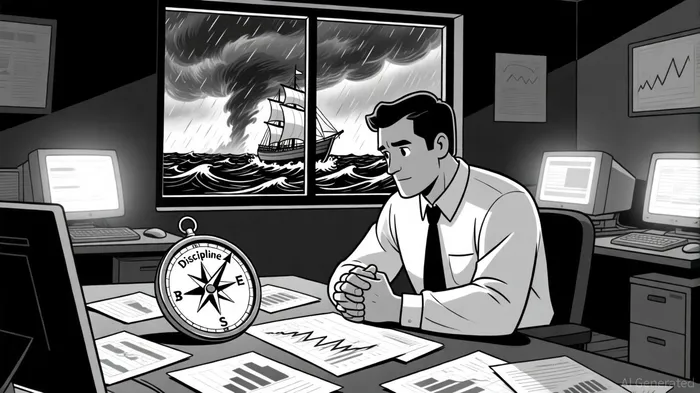
In the high-stakes arena of investing, emotions often masquerade as allies, only to betray you when volatility strikes. Fear, greed, and FOMO (fear of missing out) are the triple threats that derail even the most well-intentioned portfolios. But here's the hard truth: markets are not governed by sentiment—they're governed by mathematics. And the key to navigating this emotional minefield? Discipline. As Suze Orman has long championed, disciplined, patient investing isn't just a strategy—it's a survival tactic in a world where behavioral finance dictates that 80% of investors underperform the market due to poor timing and emotional overreach .
The Behavioral Finance Trap
Behavioral finance has exposed the fragility of human rationality in investing. Take the 2008 financial crisis: panic-driven sell-offs erased trillions in wealth, yet those who stayed the course and reinvested during the downturn saw the S&P 500 recover and hit new highs within five years . The problem? Emotion hijacks logic. When markets plunge, fear compels us to sell at the worst possible moment. Conversely, during euphoric bull runs, greed pushes us to buy at peaks, only to face the inevitable correction.
Suze Orman's Blueprint for Discipline
Suze Orman's principles of disciplined investing—rooted in patience, structure, and emotional detachment—offer a counterbalance to these pitfalls. Her framework emphasizes three pillars:
1. Structured Planning: Establish clear, long-term goals and rebalance portfolios periodically, regardless of short-term noise.
2. Risk-Reward Balance: Avoid overexposure to volatile assets during euphoric cycles and maintain emergency reserves during downturns.
3. Patience as a Virtue: Recognize that time, not timing, is the investor's greatest ally. Compounding works its magic only when left undisturbed by emotional interference .
Consider the dot-com bubble of 2000. Investors who clung to tech stocks during the crash lost 78% of their value by 2002. Yet those who held diversified portfolios and avoided panic selling saw full recovery by 2007. Discipline isn't about ignoring risk—it's about mitigating it through premeditated rules.
The Resilience of Long-Term Thinking
Markets are inherently resilient. Since 1950, the S&P 500 has averaged a 10.4% annual return, weathering 11 major corrections (declines of 10% or more) and 4 bear markets (declines of 20% or more). The key to capitalizing on this resilience? Staying invested. A 2023 Bloomberg report underscores that investors who remained in the market during the 2020 pandemic crash—when the S&P 500 fell 34%—recovered losses within 11 months, outperforming those who exited and re-entered .
Actionable Steps for Emotional Control
- Automate Rebalancing: Use robo-advisors or scheduled trades to enforce periodic adjustments, removing the need for real-time decisions.
- Dollar-Cost Averaging: Invest fixed amounts regularly, smoothing out the impact of volatility and reducing the urge to time the market.
- Emotional Checklists: Before making a trade, ask: Is this decision aligned with my long-term plan or my current mood?
Conclusion
Disciplined investing isn't about being unemotional—it's about recognizing emotions and having systems to override them. Suze Orman's principles, though often oversimplified, cut through the noise: structure, patience, and risk management are the bedrock of wealth. As the markets continue to oscillate between euphoria and despair, remember that the most profitable investors aren't the ones with the sharpest instincts—they're the ones with the steadiest hands.







Comentarios
Aún no hay comentarios