
Massive Leverage Collapse: A Stress Test for Crypto Market Resilience
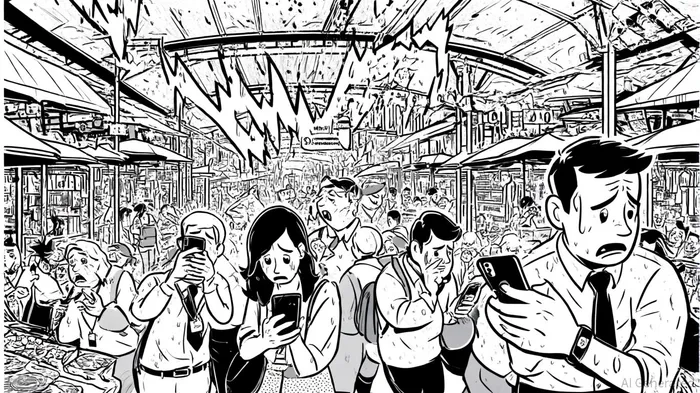
The crypto market's 2024–2025 leverage collapse was a seismic event, exposing both the fragility and latent resilience of decentralized finance (DeFi). Triggered by former U.S. President Donald Trump's 100% tariff announcement on Chinese imports, the crash saw BitcoinBTC-- plummet below $110,000 and over $19 billion in leveraged positions liquidated in a single day, according to a DeFi risk analysis. This systemic shockwave tested the institutional underpinnings of DeFi, revealing critical vulnerabilities while also highlighting innovations that mitigated cascading failures.
Systemic Risk: The Leverage Overhang
The collapse was fueled by a leverage boom across centralized and decentralized exchanges. Platforms like Hyperliquid allowed traders to deploy up to 100x leverage, creating a precarious ecosystem where margin calls and auto-deleveraging mechanisms exacerbated volatility, the same analysis found. Galaxy Research's Q1 2025 report underscored the scale of risk, with $39.07 billion in crypto-collateralized lending and $115.97 billion in futures open interest. Such leverage accumulation amplified the crash's severity, as cascading liquidations widened spreads and destabilized stablecoins like USDTUSDT-- and USDCUSDC--, according to the earlier analysis.
The event also exposed DeFi's asymmetric risk profile. While protocols like AaveAAVE-- and MorphoMORPHO-- withered under stress, their stricter collateral requirements and stable asset pairings allowed them to absorb shocks better than unregulated counterparts, the same DeFi risk analysis noted. Meanwhile, the "Hyperliquid Whale" profited $200 million by shorting BTCBTC-- and ETHETH--, raising concerns about market manipulation and transparency, according to a DepegWatch analysis.
Institutional Frameworks: Collateral, Governance, and Oracles
DeFi's institutional frameworks proved both a lifeline and a liability. Collateral mechanisms, for instance, mitigated losses during the crash. Protocols requiring over-collateralization-such as DAI's 150% ETH-backed model-prevented under-collateralized positions from triggering systemic defaults, Coindesk's analysis found. However, oracle failures emerged as a critical vulnerability. The 2024 Wintermute incident, where a 3-second price feed delay caused $47 million in erroneous liquidations, demonstrated how real-time data accuracy is paramount.
Governance models also played a pivotal role. Decentralized autonomous organizations (DAOs) with transparent, community-driven risk parameters-like Aave's dynamic LTV adjustments-proved more resilient than centralized exchanges, which faced accusations of opaque auto-deleveraging tactics, as earlier reporting observed. Regulatory scrutiny is now intensifying: the EU AI Act classifies DeFi oracles as high-risk systems, mandating real-time audit trails and human oversight, a development highlighted in the initial DeFi risk analysis.
Oracle Reliability: The New Frontier
Oracles, the bridge between on-chain smart contracts and real-world data, became a focal point during the collapse. Centralized oracles, such as Chainlink's Avalanche malfunction in May 2025, triggered $500,000 in liquidations due to incorrect price feeds, according to the DepegWatch analysis. In response, DeFi protocols are adopting multi-layered oracle architectures, including neuromorphic processing units (NPUs) for real-time validation and quantum-resistant cryptography, measures the earlier DeFi analysis describes. These innovations reduced single-point failure risks by 83% in 2025, compared to 2024 systems, the same industry review reported.
Despite progress, oracle reliability remains a work in progress. Flash loan attacks and liquidity concentration continue to pose risks, necessitating cross-chain consensus validation and ML-powered outlier rejection, as the DepegWatch piece outlines. An MDPI study further highlights ETH, LINK, and UNI as systemic risk transmitters during downturns, underscoring the need for tail-sensitive diagnostics.
Lessons and the Path Forward
The 2024–2025 collapse was a necessary reset, wiping out excess leverage and exposing DeFi's fragility. Yet, it also accelerated institutional-grade risk frameworks. Exploit losses declined by 90% since 2020, with daily loss rates hitting 0.0014% by 2024, according to Coindesk's analysis. This maturation reflects the sector's shift from experimental protocols to infrastructure capable of supporting institutional capital.
However, challenges persist. Private key compromises now account for 20% of incidents, signaling a shift in attacker focus from technical vulnerabilities to operational security, as the Coindesk report notes. To address this, DeFi must prioritize layered security strategies, including formal verification, decentralized governance, and insurance mechanisms, recommendations echoed in the MDPI study.
Conclusion
The leverage collapse of 2024–2025 was a stress test for crypto's resilience. While systemic risks like oracle failures and interconnected protocols remain, the sector's institutional frameworks have evolved to mitigate cascading failures. For investors, the lesson is clear: DeFi's future hinges on robust collateral mechanisms, decentralized governance, and oracle reliability. As the market rebuilds, these innovations will determine whether crypto transitions from speculative frenzy to sustainable infrastructure.







Comentarios
Aún no hay comentarios