
Massachusetts' Stalled Bitcoin Reserve Legislation and the Strategic Timing of Public Blockchain Investment
The stalled BitcoinBTC-- reserve legislation in Massachusetts has become a focal point for debates over state-level cryptocurrency adoption and the strategic timing of investments in blockchain infrastructure. Introduced by Republican State Senator Peter Durant in February 2025, the bill proposes allocating up to 10% of the Commonwealth Stabilization Fund-worth billions-into Bitcoin and other digital assets, alongside a mechanism to deposit seized cryptocurrencies into a dedicated reserve, according to a Yahoo Finance report. Despite its ambitious goals, the bill has faced a "silent treatment" from the Joint Committee on Revenue during its first hearing in eight months, reflecting broader political and economic hesitancy, according to a BTC Peers article. This delay underscores a critical question: How does Massachusetts' legislative inertia compare to the proactive strategies of states like Texas, Arizona, and New Hampshire, and what does this mean for the timing of investments in public blockchain infrastructure?
The Massachusetts Conundrum: Political Gridlock and Missed Opportunities
Massachusetts, a historical financial hub, now finds itself at a crossroads. The state's Democratic supermajority in both legislative chambers and the governor's office has created a political environment where a Republican-sponsored crypto bill faces significant hurdles, as noted in a NatLaw Review article. While proponents argue that the proposed reserve could diversify the state's assets and hedge against inflation, critics highlight Bitcoin's volatility and regulatory uncertainties, as reported by Yahoo Finance. The lack of engagement from lawmakers during the October 2025 hearing-a hearing that lasted mere minutes without questions-suggests a lack of consensus or urgency, according to the BTC Peers article.
This stagnation contrasts sharply with the national trend. As of October 2025, only three states (New Hampshire, Arizona, and Texas) have successfully passed Bitcoin reserve legislation, a gap that risks ceding influence in the crypto policy arena and signals to investors that the state may lag in adopting infrastructure to support digital assets. For instance, the absence of a clear legislative timeline complicates demand forecasting for blockchain custodians, cold storage providers, and compliance firms-key players in the public blockchain ecosystem, according to a Wheatstones briefing.
Contrasting Strategies: Lessons from Pro-Crypto States
The states that have enacted Bitcoin reserve laws offer instructive case studies. New Hampshire's House Bill 302, passed in early 2025, allows the state treasurer to invest up to 5% of public funds in digital assets with a market capitalization exceeding $500 billion, positioning the state as a pioneer in integrating crypto into public finance, according to a CoinReporter article. Arizona's HB 2749, meanwhile, leverages unclaimed digital assets and staking rewards to build a reserve without directly using taxpayer money, addressing fiscal conservatism while embracing innovation, as reported by Yahoo Finance. Texas, under Governor Greg Abbott, has taken the boldest step with Senate Bill 21, which ties its Bitcoin reserve to the state's energy infrastructure, creating a symbiotic relationship between crypto mining and renewable energy projects.
These initiatives have catalyzed investment in blockchain infrastructure. A 2025 scorecard by ChainlinkLINK-- and the Blockchain Association recognized Texas, Arizona, and Utah as "Trailblazers" in blockchain policy, citing their legislative momentum, workforce specialization, and ecosystem development, according to a Chainlink scorecard. For example, Texas's strategic reserve has spurred demand for secure cold storage solutions, while New Hampshire's crypto-friendly policies have attracted startups offering compliance tools for state-held digital assets.
Strategic Investment Timing: The Massachusetts Dilemma
The timing of investments in blockchain infrastructure hinges on legislative clarity. In states with enacted laws, firms specializing in crypto custody, energy-efficient mining, and regulatory compliance have secured early-mover advantages. For instance, Arizona's reserve has already driven partnerships with blockchain security firms, while Texas's energy-linked strategy has attracted venture capital for green mining operations. Massachusetts, by contrast, remains in a holding pattern. The 60-day window for the Joint Committee on Revenue to decide the bill's fate-expected by early December 2025-creates uncertainty for investors.
This uncertainty has two implications. First, it delays infrastructure projects that rely on state contracts, such as cold storage facilities or blockchain-based audit systems. Second, it risks deterring institutional investors who prioritize jurisdictions with stable regulatory frameworks. A 2025 BNY Mellon study found that 97% of institutional investors view tokenization as a "revolutionary" force in asset management, but their willingness to allocate capital depends on legislative certainty. Massachusetts' stalled bill may push such investments to states with clearer roadmaps.
Conclusion: A Crossroads for Crypto Policy and Infrastructure
Massachusetts' Bitcoin reserve legislation is more than a local political issue; it is a barometer for the broader adoption of digital assets in public finance. The state's failure to act swiftly risks not only its own economic competitiveness but also the timing of critical infrastructure investments. While Texas, Arizona, and New Hampshire have turned their crypto policies into engines of innovation, Massachusetts remains mired in partisan gridlock. For investors, the lesson is clear: Strategic timing in blockchain infrastructure requires legislative momentum. As the December 2025 deadline looms, the world will watch to see whether Massachusetts chooses to join the vanguard-or remain a laggard in the crypto era.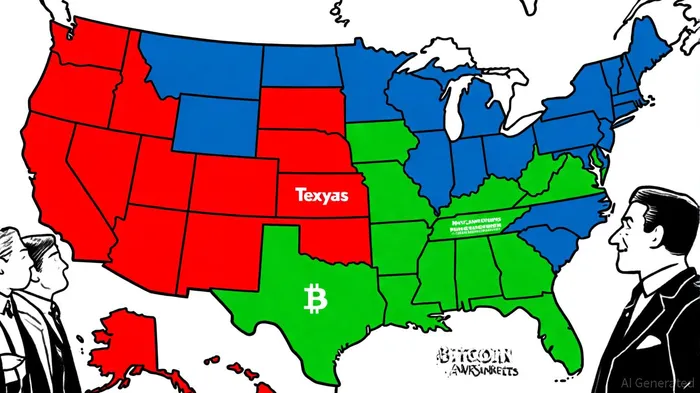






Comentarios
Aún no hay comentarios