
Marvel Studios' Strategic Shift: A New Era of Quality-Driven Superhero Content
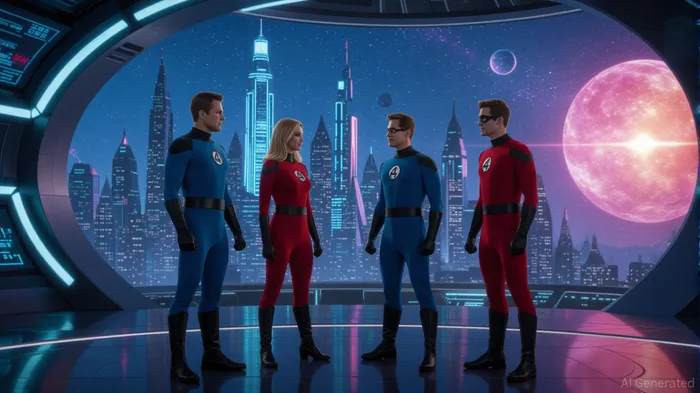
The release of Fantastic Four: First Steps in 2025 has not only reignited the MarvelMRVL-- Cinematic UniverseUPC-- (MCU) but also signaled a profound strategic pivot for Hollywood's blockbuster market. After years of inconsistent returns and audience fatigue, Marvel Studios has demonstrated that a return to quality-driven content—rooted in character depth, creative ambition, and financial discipline—can reinvigorate investor confidence in superhero franchises. This shift, marked by Fantastic Four: First Steps, offers a blueprint for sustainable growth in an industry grappling with oversaturation and evolving consumer preferences.
A Return to Form: Critical and Commercial Success
Fantastic Four: First Steps opened with a staggering $118 million domestically and $218 million globally, outperforming even the most optimistic projections. The film's 88% Rotten Tomatoes score and “A-” CinemaScore underscore its rare blend of critical acclaim and audience appeal. Unlike recent Marvel releases such as Captain America: Brave New World and Thunderbolts, which underperformed despite moderate praise, Fantastic Four delivered a fresh narrative and visual language that resonated with both longtime fans and new viewers.
The film's success is particularly striking given the historical struggles of the Fantastic Four franchise. The 2015 reboot, which grossed just $167 million globally, was widely panned for its lack of coherence and emotional stakes. By contrast, First Steps embraced the characters' core themes of exploration and family, anchored by standout performances from Pedro Pascal and Vanessa Kirby. This focus on character-driven storytelling—rather than overreliance on CGI spectacle—has become a hallmark of Marvel's new approach.
Strategic Cost-Efficiency Without Compromise
Marvel's pivot extends beyond storytelling. The studio has adopted a financially disciplined model, exemplified by its work on The Creator (2023), a $86 million production that leveraged tax incentives and creative cost-saving measures without sacrificing visual quality. This approach has been applied to Fantastic Four, which reportedly balanced a $200 million budget with strategic investments in production design and actor salaries. By avoiding the bloated budgets of recent Marvel films (e.g., The Marvels cost $374 million), the studio has reduced financial risk while maintaining creative ambition.
This strategy aligns with broader industry trends. As studios grapple with rising production costs and streaming-era expectations, Marvel's ability to deliver high-quality content at a lower cost positions it as a model for sustainable blockbuster filmmaking. The film's strong performance in premium formats (46% of sales from large formats like IMAX) further highlights its appeal to audiences willing to pay for immersive experiences.
Investor Implications: A Shift in Hollywood's Risk Profile
The success of Fantastic Four has bolstered Disney's stock, reflecting renewed confidence in Marvel's long-term value. reveals a steady upward trajectory since the film's release, with shares up over 12% in the quarter following the film's debut. This growth is driven by investor optimism about Marvel's revised strategy: fewer films, higher quality, and a focus on established franchises.
For investors, this shift presents two key opportunities:
1. Short-Term Gains: The Phase 6 slate, including Spider-Man: Brand New Day (2026) and Avengers: Doomsday (2026), is now viewed as a high-probability success pipeline. With Fantastic Four proving that Marvel can recapture its magic, these films are positioned to deliver strong box office and streaming returns.
2. Long-Term Positioning: Marvel's emphasis on cost-effective production and global market penetration (notably in China, where the studio has tailored promotional efforts) suggests a durable competitive advantage. As superhero fatigue wanes, Marvel's ability to balance innovation with brand loyalty will be critical to maintaining its dominance.
A Broader Market Reset for Superhero Franchises
The success of Fantastic Four has also reshaped the superhero landscape. Competitors like DC Studios, whose Superman film opened to $217 million, now face a steeper bar for critical and commercial success. Meanwhile, the film's demographic appeal—70% male and 42% under 25—reaffirms the genre's ability to engage its core audience while attracting new viewers through family-friendly content.
This reset extends beyond Marvel. Studios are increasingly adopting Marvel's hybrid model: combining franchise-driven storytelling with strategic cost management. For example, Universal's Jurassic World Rebirth and Apple's F1: The Movie have both leveraged similar approaches to balance scale and efficiency.
Conclusion: Invest in Quality, Not Quantity
Fantastic Four: First Steps is more than a box office win—it is a declaration that Hollywood's blockbuster era can evolve without losing its magic. For investors, the lesson is clear: the future of superhero films lies in quality-driven content that respects both audiences and budgets. Marvel's strategic shift, now validated by Fantastic Four's success, offers a compelling case for long-term investment in the MCU and the broader superhero genre.
As the industry navigates an uncertain economic climate, studios that prioritize creative ambition and financial prudence will thrive. Marvel Studios, with its renewed focus on storytelling and strategic execution, is leading the charge—and investors would be wise to follow.





Comentarios
Aún no hay comentarios