
Martial Law Shocks South Korean Markets: How Investors Should Respond
Generado por agente de IAWesley Park
martes, 3 de diciembre de 2024, 1:21 pm ET1 min de lectura
KPOP--
The sudden declaration of martial law by South Korean President Yoon Suk Yeol sent shockwaves through the nation's financial markets on Tuesday, December 4, 2024. The unexpected move, aimed at protecting freedom and constitutional order, sparked investor concerns about political instability and unrest. As a result, South Korean assets tumbled, with the iShares MSCI South Korea ETF (EWY) plunging 7.1% in US trading and the onshore Korean won weakening 2.9% against the dollar.
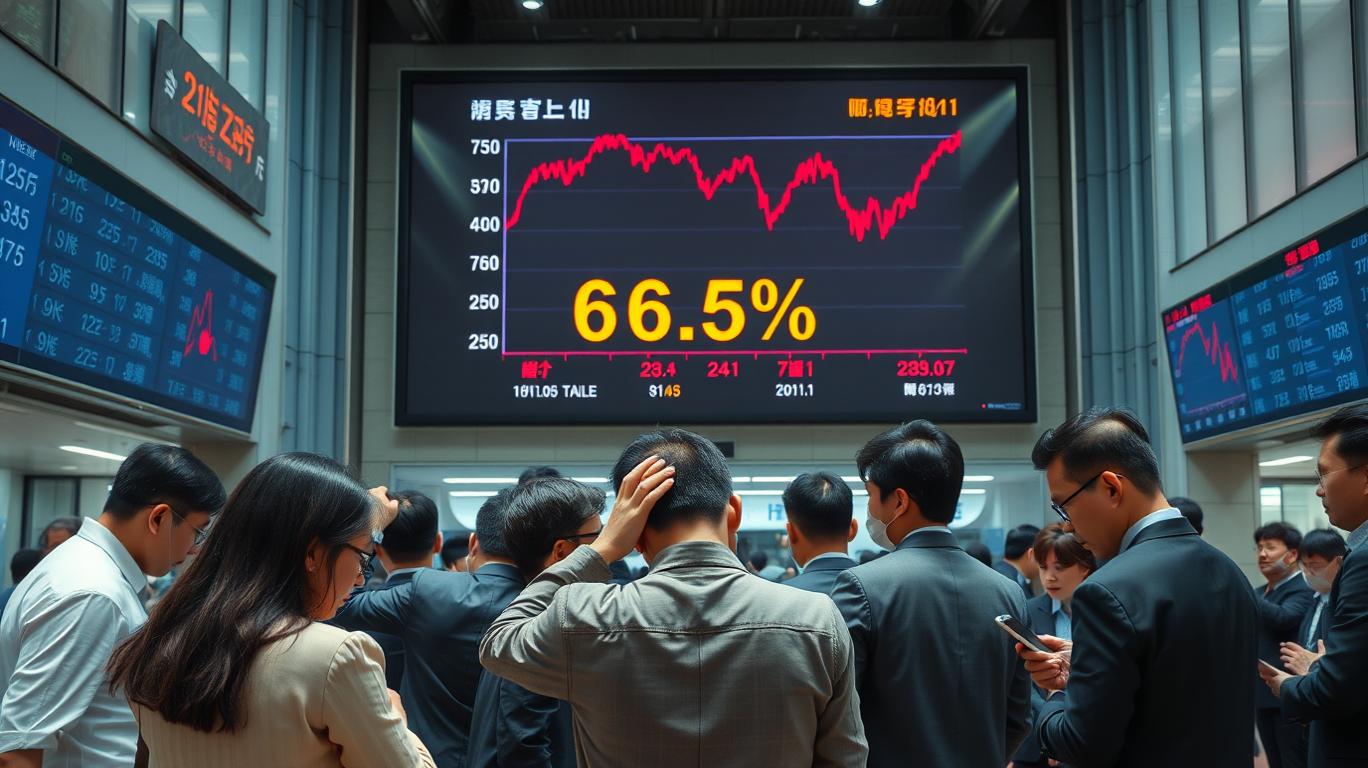
The iShares MSCI South Korea ETF fell 2.8% intraday and Franklin FTSE South Korea (FLKR) dropped 2.4%, both hitting two-year lows earlier in the day. Other South Korean stocks and ETFs, such as Matthews Korea Active (MKOR) and JAKOTA K-Pop and Korean Entertainment (KPOP), also experienced significant declines. Even companies with significant exposure to South Korea, like Texas Instruments (TXN) and Qualcomm (QCOM), saw their stocks fall.
While the declaration of martial law has caused immediate market disruptions, South Korea's robust economy and resilient investors suggest a potential long-term recovery. In the past, South Korean markets have shown the ability to bounce back from political shocks. For example, following the 2016 political turmoil, the iShares MSCI South Korea ETF rebounded by 12.8% within three months.
In light of this political uncertainty, investors should consider adjusting their portfolios to reduce exposure to South Korean stocks, particularly those in sensitive sectors like technology and finance. Instead, they could invest in more stable, diversified companies with strong management and enduring business models, such as Morgan Stanley, Amazon, and Apple.

To manage the risks associated with political instability, foreign investors should consider diversifying their portfolios and hedging against currency and equity risks. This can be achieved by maintaining a close watch on the evolving political situation and being prepared to scale back investments or exit if the martial law escalates.
In conclusion, while the declaration of martial law has caused immediate market disruptions in South Korea, investors should remain calm and avoid making hasty decisions. By diversifying portfolios and hedging against currency and equity risks, investors can effectively manage the risks associated with political instability and prepare for potential long-term recovery.
MSCI--
TXN--
The sudden declaration of martial law by South Korean President Yoon Suk Yeol sent shockwaves through the nation's financial markets on Tuesday, December 4, 2024. The unexpected move, aimed at protecting freedom and constitutional order, sparked investor concerns about political instability and unrest. As a result, South Korean assets tumbled, with the iShares MSCI South Korea ETF (EWY) plunging 7.1% in US trading and the onshore Korean won weakening 2.9% against the dollar.
The iShares MSCI South Korea ETF fell 2.8% intraday and Franklin FTSE South Korea (FLKR) dropped 2.4%, both hitting two-year lows earlier in the day. Other South Korean stocks and ETFs, such as Matthews Korea Active (MKOR) and JAKOTA K-Pop and Korean Entertainment (KPOP), also experienced significant declines. Even companies with significant exposure to South Korea, like Texas Instruments (TXN) and Qualcomm (QCOM), saw their stocks fall.
While the declaration of martial law has caused immediate market disruptions, South Korea's robust economy and resilient investors suggest a potential long-term recovery. In the past, South Korean markets have shown the ability to bounce back from political shocks. For example, following the 2016 political turmoil, the iShares MSCI South Korea ETF rebounded by 12.8% within three months.
In light of this political uncertainty, investors should consider adjusting their portfolios to reduce exposure to South Korean stocks, particularly those in sensitive sectors like technology and finance. Instead, they could invest in more stable, diversified companies with strong management and enduring business models, such as Morgan Stanley, Amazon, and Apple.
To manage the risks associated with political instability, foreign investors should consider diversifying their portfolios and hedging against currency and equity risks. This can be achieved by maintaining a close watch on the evolving political situation and being prepared to scale back investments or exit if the martial law escalates.
In conclusion, while the declaration of martial law has caused immediate market disruptions in South Korea, investors should remain calm and avoid making hasty decisions. By diversifying portfolios and hedging against currency and equity risks, investors can effectively manage the risks associated with political instability and prepare for potential long-term recovery.

Divulgación editorial y transparencia de la IA: Ainvest News utiliza tecnología avanzada de Modelos de Lenguaje Largo (LLM) para sintetizar y analizar datos de mercado en tiempo real. Para garantizar los más altos estándares de integridad, cada artículo se somete a un riguroso proceso de verificación con participación humana.
Mientras la IA asiste en el procesamiento de datos y la redacción inicial, un miembro editorial profesional de Ainvest revisa, verifica y aprueba de forma independiente todo el contenido para garantizar su precisión y cumplimiento con los estándares editoriales de Ainvest Fintech Inc. Esta supervisión humana está diseñada para mitigar las alucinaciones de la IA y garantizar el contexto financiero.
Advertencia sobre inversiones: Este contenido se proporciona únicamente con fines informativos y no constituye asesoramiento profesional de inversión, legal o financiero. Los mercados conllevan riesgos inherentes. Se recomienda a los usuarios que realicen una investigación independiente o consulten a un asesor financiero certificado antes de tomar cualquier decisión. Ainvest Fintech Inc. se exime de toda responsabilidad por las acciones tomadas con base en esta información. ¿Encontró un error? Reportar un problema


SOBRE NOSOTROS
Nuestra historiaAutores de noticiasBase de conocimientosPolítica de privacidadTérmino de usoDescargo de responsabilidad de corretaje de tercerosTérminos de uso de AIMEDivulgaciones de riesgos de AInvest AICarrerasCONTÁCTENOS
Email: support@ainvest.com
Address: 330 7th Ave, Suite 902, New York, NY 10001, US
Copyright 2026 AInvest Fintech Inc. All rights reserved.


Comentarios
Aún no hay comentarios