
Marti's Expansion in Türkiye and Its Strategic Use of Bitcoin Exposure
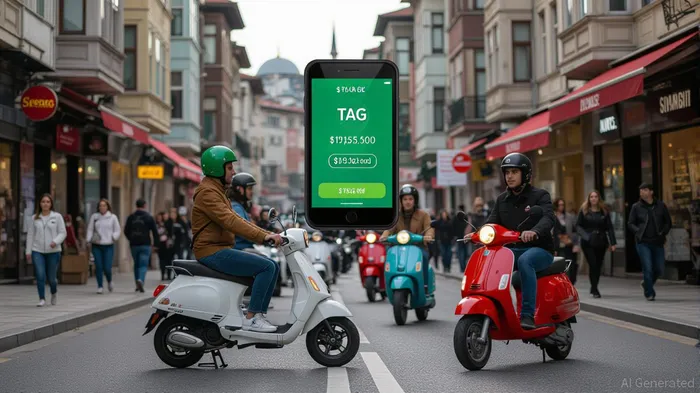
The convergence of emerging market mobility growth and cryptocurrency adoption has created a fertile ground for innovation in urban transportation. MartiMRT--, Türkiye's leading mobility super app, has positioned itself at the intersection of these trends, leveraging technological advancements and strategic expansion to capitalize on both sectors. While direct BitcoinBTC-- integration remains unconfirmed, the company's investments in blockchain infrastructure and AI-driven operations suggest a forward-looking approach that aligns with the crypto tailwinds reshaping global markets.
Marti's Mobility Dominance in Türkiye
Marti, founded in 2018 by Oğuz Alper Öktem and Sena Öktem, has rapidly become a cornerstone of urban mobility in Turkey. By 2023, the company operated a fleet of over 38,000 electric scooters, bikes, and mopeds across major cities like Istanbul, İzmir, and Ankara [1]. Its TAG ride-hailing service, launched to address traffic congestion and environmental concerns, has attracted over 155,000 registered drivers by May 2024, surpassing initial growth projections [1]. The company's public listing on the New York Stock Exchange in July 2023 under the ticker MRT further underscores its international ambitions and financial credibility [1].
Marti's expansion strategy is underpinned by a commitment to technological innovation. In 2024, the company acquired Zoba, an AI firm specializing in fleet optimization for two-wheeled electric vehicles, to enhance operational efficiency and user experience [1]. This acquisition, coupled with Marti's advocacy for ride-hailing regulations (evidenced by its submission of 376,000 petitions to the Istanbul Metropolitan Municipality), highlights its proactive role in shaping Turkey's mobility ecosystem [1].
Indirect Bitcoin Exposure and Blockchain Infrastructure
While Marti has not explicitly integrated Bitcoin as a payment method, its investments in blockchain infrastructure during 2023–2025 signal a strategic alignment with crypto-related trends. According to a report by Wikipedia, Marti has allocated resources to blockchain initiatives aimed at improving transaction transparency, user authentication, and data security across its platforms [1]. These efforts align with the broader adoption of decentralized technologies in emerging markets, where blockchain is increasingly viewed as a tool for financial inclusion and operational resilience.
The company's AI-driven operations, particularly those enhanced by Zoba's acquisition, also create indirect exposure to crypto tailwinds. For instance, AI algorithms can optimize energy consumption for electric vehicles, reducing costs and improving scalability—factors that could attract cryptocurrency investors seeking sustainable, high-growth assets. Furthermore, Marti's NYSE listing has exposed it to a global investor base, including those with a vested interest in crypto-native ventures.
Crypto Tailwinds and Emerging Market Synergies
Türkiye's growing interest in cryptocurrency adoption provides an additional layer of opportunity for Marti. While regulatory frameworks remain in flux, the country's young, tech-savvy population and rising demand for digital payment solutions create a conducive environment for crypto integration. Marti's existing infrastructure—such as its 24/7 customer support and battery replacement services—could be adapted to facilitate Bitcoin transactions or loyalty programs tied to digital assets.
A visual representation of Marti's growth trajectory and blockchain investments would further illustrate its strategic positioning.
Conclusion
Marti's expansion in Türkiye exemplifies how mobility startups can harness emerging market dynamics and technological innovation to drive growth. While direct Bitcoin integration has yet to materialize, the company's blockchain investments and AI-driven operations position it to benefit from crypto tailwinds. As Türkiye continues to navigate its crypto regulatory landscape, Marti's adaptability and market leadership could make it a compelling case study for investors seeking to bridge the gap between traditional mobility and decentralized finance.





Comentarios
Aún no hay comentarios