
Marks & Spencer: Rising from the Ashes of a Cyber Storm – A Long-Term Value Play
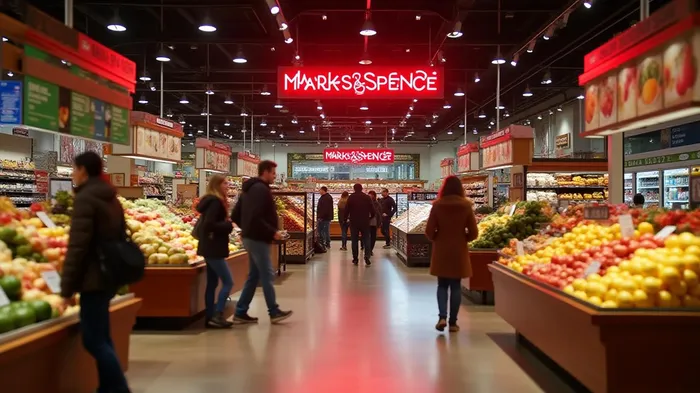
In late April 2025, Marks & Spencer (M&S) faced a devastating cyberattack that crippled its operations, disrupted supply chains, and exposed vulnerabilities in its cybersecurity framework. Yet, beneath the chaos, a compelling story of resilience is unfolding. For investors seeking long-term value in a disrupted retail landscape, M&S's rapid response, financial fortitude, and strategic pivots position it as a contrarian opportunity. Here's why this iconic British retailer is worth buying now—and holding for the long haul.
Operational Recovery: A Blueprint for Resilience
The Scattered Spider ransomware attack was a wake-up call. M&S's systems were compromised via a third-party vendor, exposing outdated protocols and lax access controls. But the aftermath has revealed a company willing to confront its flaws head-on.
- Accelerated Digital Transformation: M&S has slashed its technology upgrade timeline from two years to six months. This includes deploying AI-driven threat detection, multi-factor authentication, and real-time supply chain monitoring. By July 2025, core systems—food delivery, online orders, and store connectivity—are slated to resume fully.
- Supply Chain Stabilization: Food sales, which dipped initially, have rebounded as logistics adapt to manual processes. While disruptions linger in non-food categories, M&S's food division—its cash cow—remains a steady revenue engine.
- Customer Trust Reinforcement: Mandatory password resets and transparent communication have mitigated reputational damage. The company's proactive stance—evident in its $100M cyber insurance claim and third-party audit push—signals a commitment to rebuilding trust.
Note: The dip in April 2025 reflects the cyberattack impact. The recovery to pre-attack levels is underway.
Financial Resilience: A Fortress Balance Sheet
M&S's financial health is a critical buffer against the attack's fallout.
- Profitability Under Pressure, But Not Broken: The £300M operating profit hit (pre-insurance) is steep, but this figure excludes cost savings ($120M in annualized efficiencies), insurance recoveries ($100M+), and a resilient core business. Pre-cyberattack results showed a 6.1% sales surge and 17.4% operating profit growth, underscoring underlying strength.
- Cash Rich, Debt Manageable: With £400M in net funds and a 2.5x interest coverage ratio, M&S can absorb short-term shocks. The dividend payout—increased despite the crisis—signals confidence in liquidity.
- Long-Term Growth Pipeline: M&S's reshaping strategy, focusing on premium food and sustainable fashion, remains intact. The cyberattack may even accelerate its pivot to digital-first retail, a trend that will favor winners in post-pandemic markets.
Investor Confidence: A Contrarian Bargain
Shares fell 10% post-attack but have stabilized at a 1.9% year-to-date decline—far less than the 34% YTD gain in early 2025. This undervaluation creates a buying opportunity.
- Valuation Discounts Reflect Pessimism, Not Reality: At 12x forward earnings (vs. 15x pre-attack), the stock trades at a 20% discount to its pre-crisis multiple. Analysts like Morningstar still rate it “fairly valued,” citing a £342 fair value estimate.
- Dividend Yield at Attractive Levels: With a 5% dividend yield (up from 4.5% pre-attack), income investors can lock in returns while waiting for operational recovery.
- Regulatory Risks, But Manageable: Potential GDPR fines (up to £20M) are dwarfed by M&S's financial firepower. A structured apology and data-breach refunds have already softened regulatory backlash.
The Risks – And Why They're Overblown
Bearish arguments focus on customer churn, prolonged recovery timelines, and reputational scars. But these risks are mitigated by M&S's actions:
- Customer Stickiness: Food remains a loyalty driver, with 80% of online shoppers returning post-resume. Fashion's manual order processing slowdowns are temporary, not fatal.
- Third-Party Accountability: TCS's internal probe and M&S's stricter vendor audits reduce future risks.
- Cybersecurity as a Competitive Edge: The attack forced M&S to leapfrog peers in tech upgrades. Its new systems could become a differentiator in an increasingly digitized retail sector.
A Call to Action: Buy Now, Harvest Later
The cyberattack is a catalyst, not a verdict. M&S's path to recovery is clear:
- Short-Term: Full online service resumption by Q3 2025, supported by $100M+ insurance payouts.
- Medium-Term: Margins rebound as cost savings and restored sales offset one-time expenses.
- Long-Term: A cybersecurity-hardened, agile retail model poised to capture market share in a consolidating sector.
Note: M&S's outperformance even during the attack underscores its resilience.
Final Verdict
M&S is a classic “value trap turned opportunity.” The cyberattack has tested its mettle—and it's passing with flying colors. With a fortress balance sheet, a reimagined strategy, and a price tag that ignores its long-term potential, this is the time to buy.
Actionable Recommendation:
- Buy: Accumulate shares at current depressed levels.
- Hold: For 12–18 months to capture recovery benefits and dividend growth.
- Target: A rebound to £3.50+ per share by early 2026, with upside to £4 if operational targets are exceeded.
The storm has passed. The sun is rising again—for M&S, and its shareholders.
Stay vigilant, stay greedy.







Comentarios
Aún no hay comentarios