
Markets Weigh Kwon's 15-Year Sentence as Landmark Crypto Fraud Verdict
Do Kwon, the co-founder of Terraform Labs, was sentenced to 15 years in federal prison on Thursday for orchestrating a $40 billion cryptocurrency fraud that left global investors reeling. The sentence, delivered by U.S. District Judge Paul A. Engelmayer, followed Kwon's guilty plea to charges of conspiracy and wire fraud. Kwon was found responsible for misleading investors about the stability of TerraUSD, a supposedly reliable stablecoin that collapsed in 2022.
The fraud, according to prosecutors, involved misleading claims about TerraUSD's ability to maintain its peg to the U.S. dollar. In reality, Kwon arranged secret interventions by a trading firm to prop up the coin's price, a deception that unraveled when the price collapsed. The fallout led to a cascade of financial crises across the crypto sector, with losses surpassing those of other high-profile crypto scams like FTX and OneCoin.
Kwon, 34, acknowledged his role in the fraud and expressed remorse during the sentencing hearing. He apologized to victims, including those who submitted harrowing letters detailing the personal and financial devastation caused by the crash. "I alone am responsible for everyone's pain," Kwon said in court according to reports.
The Scale of the Fraud
Prosecutors emphasized the unprecedented scale of the fraud, noting that Kwon's actions caused losses exceeding $40 billion and left an estimated one million investors in the lurch. U.S. District Judge Paul A. Engelmayer called the scheme an "epic fraud" with "incalculable human wreckage." The judge rejected both the prosecution's 12-year recommendation and the defense's request for a five-year sentence, deeming the latter "utterly unthinkable" according to court records.
TerraUSD was marketed as a stablecoin, a type of digital currency designed to maintain a steady value. Unlike traditional stablecoins backed by tangible assets, TerraUSD relied on an algorithmic model that Kwon claimed could sustain its $1 peg even during market volatility. 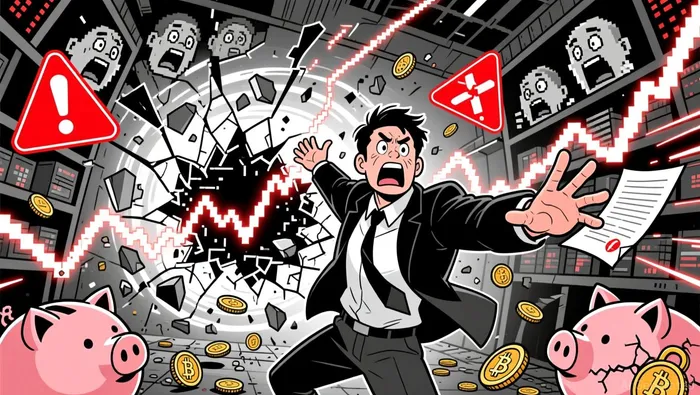 The illusion was shattered in May 2022 when TerraUSD's value plummeted, triggering a chain reaction that wiped out the value of its sister coin, Luna, in days as reported by The Wall Street Journal.
Legal and Financial Fallout
As part of his plea deal, Kwon agreed to forfeit $19.3 million in ill-gotten gains and faces additional charges in South Korea. The U.S. government has also secured a $4.55 billion settlement with Terraform Labs and Kwon, which includes an $80 million civil fine and a ban on future crypto transactions according to business reports. U.S. prosecutors will support Kwon's transfer to South Korea after serving half of his U.S. sentence, provided he abides by the terms of the plea agreement according to legal sources.
Kwon's legal troubles began after his arrest in Montenegro in 2023 while traveling on a fake passport. He spent 17 months in Montenegrin custody before being extradited to the U.S. in January 2025. His attorneys argued that a lighter sentence would allow Kwon to return to South Korea to face additional charges, but Judge Engelmayer rejected this request, citing the need to hold him accountable for the global impact of his actions according to court documents.
Investor Impact and Public Response
The human toll of the collapse was starkly illustrated during the hearing. Victims described losing retirement savings, having to sell homes, and facing emotional distress. One investor, speaking by phone, revealed that his family had to move back in with his parents and his sons had to abandon college plans according to victim testimony. Another described his guilt in persuading nonprofits and relatives to invest in TerraUSD, resulting in losses exceeding $2 million as victims shared.
Assistant U.S. Attorney Sarah Mortazavi read excerpts from over 300 letters submitted by victims, highlighting the trust Kwon exploited. One letter from an anonymous investor detailed how $11,400 in savings-years of effort-was wiped out in an instant. "To some that is just a number on a page, but to me it was years of effort," the investor wrote. "Watching it evaporate, literally overnight, was one of the most terrifying experiences of my life" according to victim accounts.
The sentencing marks a significant moment in the regulatory crackdown on crypto fraud. As the Trump administration has generally moved to soften enforcement, Kwon's case stands as a rare and forceful example of legal accountability in the crypto space. The outcome may influence future enforcement actions and investor confidence in digital assets according to financial analysts.







Comentarios
Aún no hay comentarios