
Markets Reeling as US-China Trade War Escalates to New Heights
The U.S.-China trade war has entered a new phase of volatility in early 2025, with tariffs now hitting historic highs and markets swinging between panic and fragile hope. The latest round of punitive measures—U.S. tariffs on Chinese goods soaring to 145% and China’s retaliatory 125% duties—has sparked fears of a “hard decoupling” that could upend global supply chains and derail economic growth.
Tariff Escalation: A Numbers Game with No Winners
The U.S. has weaponized tariffs like never before. Starting with a baseline 10% levy, President Trump’s administration layered on additional duties, including a 50% tariff in April, pushing the total to 145% for some Chinese imports. This includes the elimination of the “de minimis” exemption for low-value shipments, which now face a 120% tariff, crippling e-commerce giants like AmazonAMZN-- and platforms such as Shein and Temu.
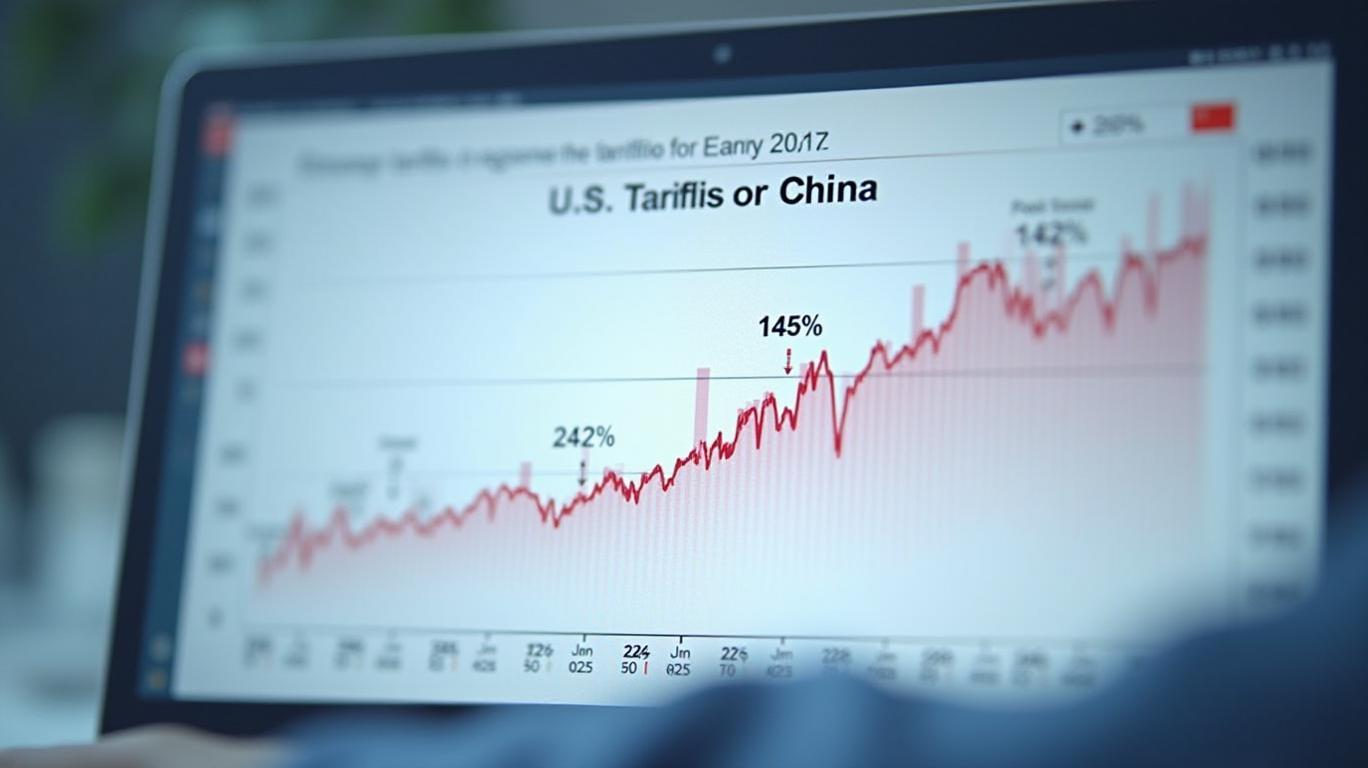
China has responded in kind, imposing its own 125% tariffs on U.S. goods and tightening export controls on critical materials like rare earth elements. The U.S. has also added 11 Chinese companies to its “Unreliable Entity List,” while Beijing retaliated by suspending import qualifications for six U.S. firms.
Market Volatility: Tech Sectors Bear the Brunt
The tech sector has become ground zero for the trade war’s impact. Semiconductor stocks have been hit hardest, with companies like Taiwan Semiconductor Manufacturing (TSM) and Samsung Electronics (005930.KS) dropping sharply after U.S. restrictions on chip exports to China.
The ripple effects are global. Japan’s Advantest (6857.T) and SoftBank (9984.T), both critical to semiconductor manufacturing, saw declines, while U.S. tech giants like Apple (AAPL) and Tesla (TSLA) faced steep drops amid concerns over supply chain disruptions.
Economic Forecasts: Recession Risks and Structural Damage
The economic toll is mounting. Goldman Sachs now projects China’s 2025 GDP growth at just 4%, citing tariff-driven unemployment risks for 10–20 million workers in export-heavy sectors. In the U.S., JP Morgan warns of an $860 billion effective tax increase on consumers, pushing inflation higher and raising recession odds.
China’s Q1 2025 GDP growth of 5.4% masks underlying fragility. Analysts like Zhiwei Zhang of Pinpoint Asset Management note that March’s export surge was a “front-loaded” response to tariffs, with April data likely showing a sharp decline. Meanwhile, the U.S. retail sector faces a reckoning: Amazon’s (AMZN) third-party sellers, which rely heavily on Chinese imports, warn of potential price hikes or business closures.
Safe Havens and Geopolitical Gambits
Investors are fleeing to gold, which hit a record $3,261.62 per ounce in April, as fear of economic fallout grows.
Geopolitically, the conflict is reshaping alliances. The U.S. is pressuring allies like Japan and the EU to curb trade with China, but many remain economically tethered. China, meanwhile, is accelerating diversification, rerouting shipments through Southeast Asia and boosting domestic tech production. Beijing’s state media frames the conflict as a “war of attrition,” leveraging its authoritarian system to suppress dissent and endure prolonged pain.
Conclusion: A New Era of Uncertainty
The U.S.-China trade war has crossed into uncharted territory, with tariffs at Depression-era levels and markets oscillating between panic and fleeting optimism. The data paints a grim picture:
- Supply Chain Chaos: Semiconductor ETFs (e.g., SMH) have fallen 15% YTD, while China’s rare earth export bans threaten global tech production.
- Consumer Squeeze: U.S. households face an $860 billion “tariff tax,” per JPMorgan, with inflation set to climb further.
- Growth Meltdown: China’s 2025 GDP growth could halve from 2024’s 5.2%, while the U.S. risks a mild recession.
Neither side is backing down. Trump’s “madman strategy” and Xi’s defiant rhetoric suggest this conflict will persist, reshaping global trade for years. Investors must brace for prolonged volatility, favoring defensive plays like gold (GLD) and tech stocks with diversified supply chains. As one analyst put it: “This isn’t a trade war—it’s a systemic battle for economic dominance, and no one wins.”
The path forward remains unclear, but one thing is certain: the era of seamless global integration is over.







Comentarios
Aún no hay comentarios