
Markets Growing Numb to Tariff Vows: A New Normal?
Generado por agente de IAWesley Park
miércoles, 19 de febrero de 2025, 2:00 am ET1 min de lectura
As the U.S.-China trade war drags on, markets seem to be growing increasingly numb to tariff vows and announcements. In the past, such news would send shockwaves through financial markets, but now, the reaction appears to be more muted. What's behind this perceived numbness, and what does it mean for investors?
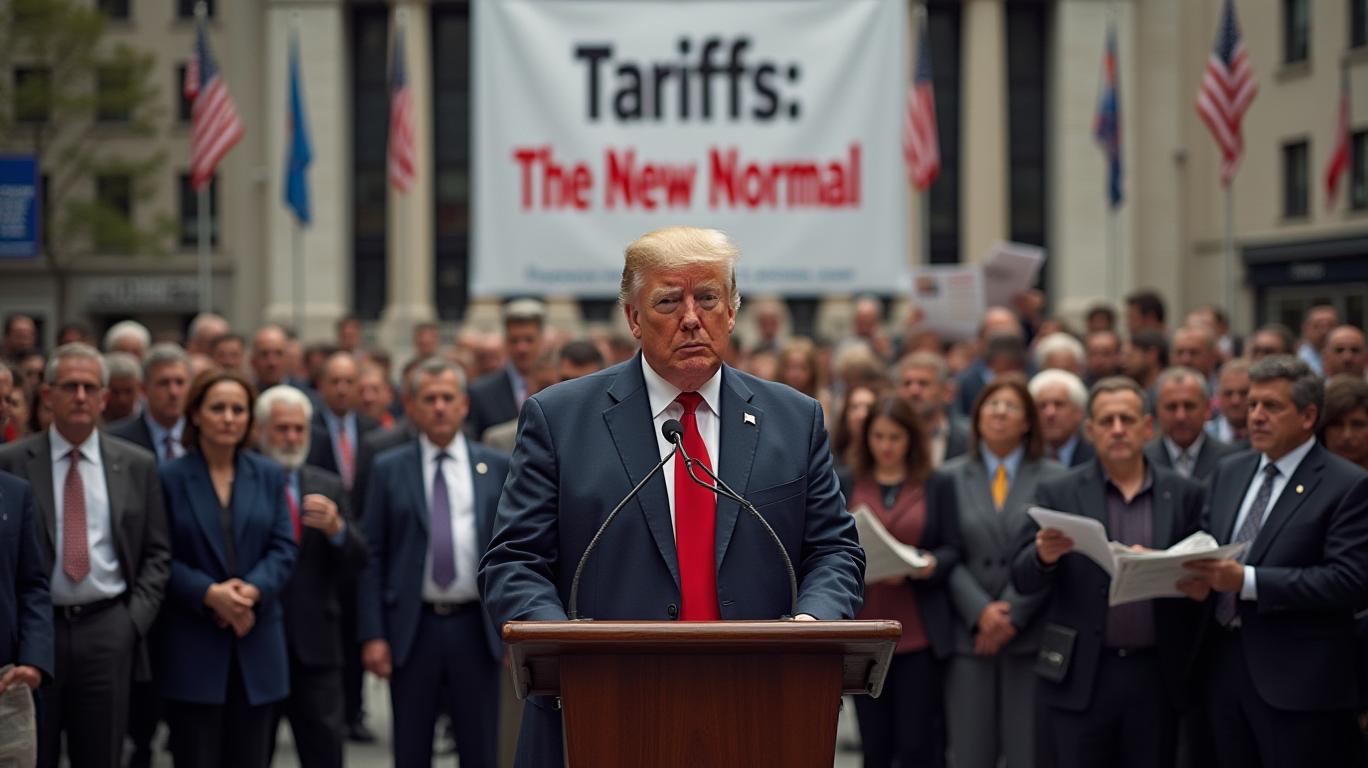
1. Familiarity breeds contempt: The U.S.-China trade war has been ongoing since 2018, and markets have become accustomed to tariff announcements and their potential impacts. This familiarity may contribute to a more subdued market reaction compared to the initial announcements.
2. Market expectations: Investors may have already priced in the potential impacts of tariffs, leading to less dramatic market reactions when announcements are made. For instance, when Trump announced a 25% tariff on all Mexican goods in 2019, markets initially reacted negatively, but the impact was short-lived as investors anticipated a quick resolution (Reuters, 2019).
3. Tariff fatigue: The prolonged nature of the trade war and the numerous tariff announcements may have led to "tariff fatigue," where investors become desensitized to the news and focus more on other factors driving the market.
4. Economic fundamentals: Market reactions to tariff announcements may be overshadowed by other economic factors, such as interest rates, inflation, and geopolitical events. For example, during the COVID-19 pandemic, markets were more focused on the global health crisis and its economic implications than on tariff announcements.
While markets may be growing numb to tariff vows, it's essential to remember that tariffs still have real-world consequences. Industries and sectors most sensitive to tariff-related news, such as automakers, agricultural producers, and technology companies, have experienced significant volatility and price changes due to tariff announcements (Reuters, 2018, 2019).
Moreover, investor sentiment and market expectations play a significant role in shaping the impact of tariff vows on financial markets. Market expectations can amplify or mitigate the impact of tariff announcements, while investor sentiment can exacerbate market volatility in response to tariff vows (Baker & Wurgler, 2006; Bekaert et al., 2021).
In conclusion, while markets may be growing numb to tariff vows, investors should remain vigilant to the potential impacts on specific sectors and industries. As the U.S.-China trade war continues to unfold, investors should stay informed about the latest developments and maintain a balanced perspective on the broader economic landscape. By doing so, investors can better navigate market dynamics and make informed decisions during periods of tariff-related uncertainty.



Divulgación editorial y transparencia de la IA: Ainvest News utiliza tecnología avanzada de Modelos de Lenguaje Largo (LLM) para sintetizar y analizar datos de mercado en tiempo real. Para garantizar los más altos estándares de integridad, cada artículo se somete a un riguroso proceso de verificación con participación humana.
Mientras la IA asiste en el procesamiento de datos y la redacción inicial, un miembro editorial profesional de Ainvest revisa, verifica y aprueba de forma independiente todo el contenido para garantizar su precisión y cumplimiento con los estándares editoriales de Ainvest Fintech Inc. Esta supervisión humana está diseñada para mitigar las alucinaciones de la IA y garantizar el contexto financiero.
Advertencia sobre inversiones: Este contenido se proporciona únicamente con fines informativos y no constituye asesoramiento profesional de inversión, legal o financiero. Los mercados conllevan riesgos inherentes. Se recomienda a los usuarios que realicen una investigación independiente o consulten a un asesor financiero certificado antes de tomar cualquier decisión. Ainvest Fintech Inc. se exime de toda responsabilidad por las acciones tomadas con base en esta información. ¿Encontró un error? Reportar un problema




Comentarios
Aún no hay comentarios