
Market Volatility and Short Squeeze Risks in a Fragmented Crypto Ecosystem
The cryptocurrency market in 2025 remains a labyrinth of fragmentation, with over 700 trading venues globally, making it the most fragmented asset class in electronic trading history, according to a FinanceFeeds report. This dispersion of liquidity across centralized exchanges (CEXs), decentralized exchanges (DEXs), over-the-counter (OTC) platforms, and cross-chain protocols has created a volatile environment where short squeeze risks are amplified. For investors, understanding how to navigate this complexity through short-term hedging strategies is no longer optional—it is a necessity.
The Anatomy of Fragmentation and Its Risks
Market fragmentation in crypto manifests in three key dimensions: cross-chain, protocol-level, and fee-tier. Cross-chain fragmentation arises as assets like ETHETH-- and stablecoins are siloed across isolated liquidity pools, often requiring wrapped tokens or bridges to transfer value between networks, a point highlighted in the FinanceFeeds report. Protocol-level fragmentation splits liquidity further, with DeFi protocols like UniswapUNI-- and SushiSwapSUSHI-- competing for the same user base. Fee-tier fragmentation, exemplified by Uniswap V3's tiered liquidity pools, forces traders to navigate suboptimal pricing unless they employ advanced tools like smart order routers (SORs) or liquidity aggregators, according to a FinchTrade analysis.
This fragmentation exacerbates volatility and short squeeze risks. During periods of stress, liquidity dries up on smaller exchanges, leading to price discrepancies of over 5% on platforms like Binance.US or Zaif's BTC-JPY pair, as the FinchTrade analysis documents. For short sellers, this means sudden price surges can trigger margin calls or force rapid coverings, creating self-reinforcing upward spirals. Regulatory divergence compounds the problem, as jurisdictions like Singapore and Switzerland attract institutional capital while others impose restrictive KYC/AML rules, further splintering liquidity, as noted in the FinanceFeeds report.
Hedging Strategies for a Fragmented Market
To mitigate these risks, traders are increasingly adopting derivatives, liquidity aggregation, and dynamic hedging techniques.
1. Derivatives: Futures, Options, and Collars
Futures contracts remain a cornerstone of short-term hedging. By locking in prices for future delivery, traders can offset potential losses from spot market declines. For example, an investor holding BitcoinBTC-- can sell equivalent Bitcoin futures to create a synthetic short position, neutralizing directional risk, as explained in an OKX guide. Perpetual futures, with their lack of expiry dates, offer added flexibility in volatile markets, a benefit highlighted by FinchTrade.
Options, particularly put options, act as insurance against downside risk. A classic collar strategy—buying a put to secure a floor price while selling a call to offset costs—has gained traction among institutional players. In 2025, funds managing large EthereumETH-- positions have used this approach to hedge against drawdowns while capping upside exposure, according to the FinchTrade analysis. For instance, during the May 2024 Ethereum halving event, a fund holding 10,000 ETH purchased at-the-money puts and sold out-of-the-money calls, limiting losses during a 20% price drop while retaining partial upside potential, as reported by FinchTrade.
2. Liquidity Aggregation: Bridging the Gaps
Liquidity aggregation tools are critical for navigating fragmented markets. Protocols like Thorchain and ZetaChain enable native cross-chain swaps, reducing reliance on intermediaries and minimizing slippage—an observation the FinanceFeeds report emphasizes. DEX aggregators such as 1inch and Jupiter further optimize execution by routing trades to the most favorable liquidity sources. For example, 1inch's Pathfinder algorithm splits orders across multiple DEXs, achieving price improvements of 3–5% on average, according to FinchTrade.
Institutional traders also leverage OTC desks to execute large orders without exposing market depth. While OTC trading provides access to deep liquidity, it introduces “shadow” trading risks, as hidden orders can distort perceptions of market health, as explained in the OKX guide.
3. Dynamic Hedging: Real-Time Adjustments
Dynamic hedging strategies adjust hedge ratios in real time using volatility metrics like DVOL Snapshot and liquidity insights. This approach is particularly effective in derivatives markets, where implied volatility and asset behavior shift rapidly, a pattern discussed in the FinanceFeeds report. For example, during the March 2025 Bitcoin sell-off, traders using dynamic hedging recalibrated their futures positions hourly, reducing losses by 15% compared to static hedging methods, according to the OKX guide.
Advanced strategies like calendar spreads—pairing long-term put options with short-term puts—offer extended protection at lower costs. By rolling short-term options as they expire, investors can maintain coverage without incurring premium decay, as the OKX guide outlines.
Case Studies: Hedging in Action
Real-world examples underscore the efficacy of these strategies. In 2024, a blockchain development firm hedged against market downturns by shorting Bitcoin futures contracts, preserving capital during a 30% correction in the TerraLUNA-- ecosystem, per the OKX guide. Similarly, during the June 2025 stablecoin depegging crisis, a DeFi fund used variance swaps to hedge against funding rate volatility, avoiding $2M in losses, according to a CoinCryptoRank guide.
Another notable case involves cross-hedging with correlated assets. In 2023, a portfolio manager hedged Bitcoin exposure using Ethereum futures, capitalizing on their 70% correlation during a market-wide selloff, as detailed in the CoinCryptoRank guide.
The Road Ahead: Consolidation and Innovation
While fragmentation persists, market infrastructure is evolving. Mergers and acquisitions in the crypto sector are accelerating, with platforms like Finery Markets and Cointelegraph Research predicting a 30% reduction in fragmented liquidity pools by 2026, according to a Finery Markets report. AI-powered tools for market analysis and trade execution are also emerging, enabling real-time hedging decisions—a trend the Finery Markets report highlights.
Conclusion
The fragmented crypto ecosystem of 2025 demands a nuanced approach to risk management. By combining derivatives, liquidity aggregation, and dynamic hedging, investors can mitigate volatility and short squeeze risks while capitalizing on market inefficiencies. As the industry matures, the integration of AI and cross-chain solutions will further enhance resilience, but for now, proactive hedging remains the best defense against the unpredictable tides of crypto markets.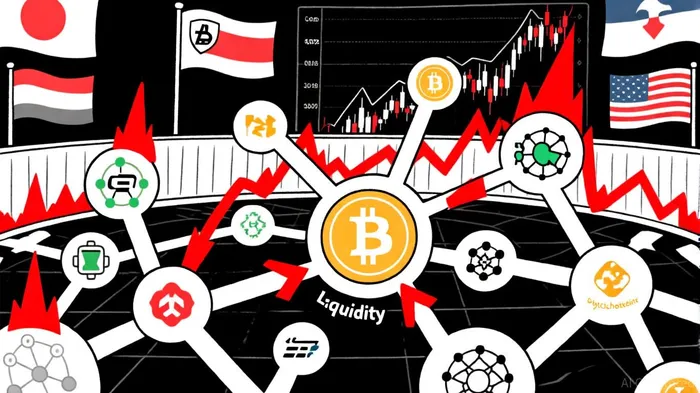







Comentarios
Aún no hay comentarios