
Market Volatility and Sector Rotation in Early 2026: Navigating High-Conviction Opportunities Amid AI-Driven Growth and Macroeconomic Shifts
As 2026 unfolds, investors face a complex interplay of macroeconomic turbulence and AI-driven innovation, creating both challenges and opportunities for strategic sector rotation. The Federal Reserve's pivot toward rate cuts, coupled with uneven labor market dynamics and persistent trade policy uncertainties, has amplified market volatility. 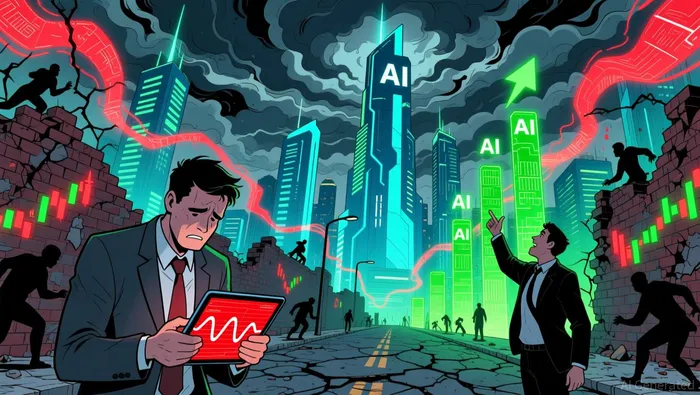 Simultaneously, AI infrastructure spending is reshaping capital allocation across industries, from utilities to retail. This analysis identifies high-conviction opportunities for investors seeking to capitalize on these shifting dynamics while mitigating risks.
Macroeconomic Drivers of Volatility
The U.S. economy enters 2026 in a K-shaped trajectory, where gains in sectors like healthcare and communication services contrast with stagnation in others. According to a report by Schwab, policy crosscurrents-including unresolved tariff disputes and the renegotiation of trade agreements like -continue to weigh on supply chains and sector-specific performance. Meanwhile, the Federal Reserve's rate-cutting cycle, initiated in late 2025, has reduced borrowing costs and boosted dividend-paying stocks, incentivizing capital flows into defensive and high-cash-flow sectors.
Consumer spending remains resilient, supported by low unemployment and asset price gains, though younger and lower-income demographics show signs of strain. The One Big Beautiful Bill Act (), set to deliver tax refunds in 2026, is expected to provide a modest stimulus, but its impact will likely be uneven. Housing market dynamics further complicate the outlook, with elevated mortgage rates and supply shortages keeping homebuilding activity subdued.
Sector Rotation Strategies: High-Conviction Opportunities
Institutional investors are increasingly reallocating capital to sectors poised to benefit from both macroeconomic tailwinds and AI-driven productivity gains. The Communication Services sector, for instance, is gaining traction due to its reasonable valuations and earnings growth. Major players like Meta and Alphabet are transitioning from speculative AI spending to monetizing the technology, improving profit margins and investor confidence.
Healthcare remains a defensive anchor, driven by demand for pharmaceutical innovations such as GLP-1 medications and AI-enabled diagnostic tools. The sector's resilience in 2025, marked by strong returns, underscores its appeal as a hedge against economic uncertainty. Similarly, Utilities and Energy are positioned to benefit from AI-driven demand for power generation and grid modernization, with infrastructure spending projected to surge as hyperscalers and sovereign entities expand their AI capabilities.
Beyond traditional sectors, AI is catalyzing growth in unexpected areas. Retail & E-Commerce is leveraging AI for recommendation engines and inventory optimization, while Manufacturing is adopting AI-driven robotics to enhance efficiency. Media & Telecom industries are also transforming, with AI enabling personalized content delivery and network optimization.
AI Infrastructure: A Macroeconomic Catalyst
AI infrastructure spending has emerged as a critical macroeconomic indicator, with global expenditures projected to exceed $700 billion in 2026. Hyperscalers like AmazonAMZN-- and MicrosoftMSFT-- are leading this charge, but sovereign entities and enterprises are also ramping up investments in power grids, memory chips, and supercomputing platforms. This capital-intensive expansion is reshaping productivity metrics and corporate earnings, creating a self-reinforcing cycle of investment and growth.
However, the concentration of AI exposure in portfolios introduces risks. As noted by , higher correlations among AI-driven sectors could amplify volatility, prompting investors to diversify into international equities and alternative assets. For example, companies like ServiceNow are demonstrating how AI can be integrated into enterprise workflows, offering a more sustainable path to earnings growth compared to speculative infrastructure bets.
Risks and Strategic Considerations
While AI-driven narratives offer compelling opportunities, investors must remain cautious. Circular financing models-where AI spending is funded by AI-generated revenue-risk overvaluation in the long term. Regulatory scrutiny, particularly around data privacy and monopolistic practices, could also disrupt momentum. Additionally, the K-shaped economy means that gains in high-growth sectors may not translate to broader economic stability, necessitating a balanced approach to sector rotation.
Conclusion
Early 2026 presents a pivotal moment for investors navigating a volatile market. By prioritizing sectors with strong cash flows, defensive characteristics, and AI-driven productivity gains-such as Communication Services, Healthcare, and Utilities-investors can position themselves to capitalize on macroeconomic shifts. However, diversification into international markets and alternative assets will be critical to managing risks associated with AI concentration and policy uncertainties. As the AI industrial revolution unfolds, strategic agility will be the key to unlocking long-term value.







Comentarios
Aún no hay comentarios