
Market Volatility Post-Shutdown: Navigating Economic Data Gaps and Earnings Realities
The Data Gap: A New Normal?
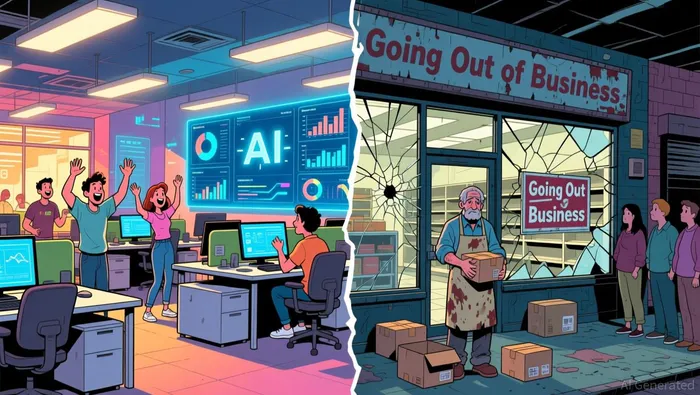
The shutdown's most immediate and lasting impact lies in its disruption of critical economic data. According to a Reuters report, the Bureau of Labor Statistics was closed for the entire month of October 2025, leaving key metrics like the unemployment rate and inflation-linked consumer spending figures in limbo. UBS economists warn that October CPI data may not be released at all, creating a vacuum in the information typically used to gauge inflationary pressures. This data gap has amplified market volatility, particularly in sectors reliant on real-time economic signals. For instance, the -where technology and AI-driven firms thrive while consumer staples falter-has become more pronounced. Chipotle Mexican Grill, for example, faces declining discretionary spending from lower-income households, while luxury goods firms like LVMH benefit from resilient demand.
The implications for earnings analysis are profound. With traditional benchmarks compromised, investors must rely on alternative indicators, such as sector-specific performance and forward-looking guidance. The recycled glass and agricultural biologicals markets are driven by sustainability trends and regulatory shifts rather than macroeconomic data. This suggests that industries with structural tailwinds may offer more reliable returns in an environment of data scarcity.
Sector Rotation: Defense, Healthcare, and the
Historical patterns during government shutdowns reveal a clear sectoral bias. Defense stocks have historically outperformed the S&P 500 during such events, driven by long-term fiscal commitments and geopolitical risks. Similarly, healthcare's performance has been mixed but often resilient, as demand for medical services remains inelastic. In the post-2025 shutdown context, these sectors retain strategic appeal. Defense contractors may benefit from renewed focus on national security, while healthcare firms with strong cash flows can weather economic headwinds.
The K-shaped recovery further underscores the need for selective sector rotation. Technology and AI-driven industries, which have already demonstrated growth resilience, are likely to continue outperforming. Conversely, consumer discretionary and retail sectors face prolonged pressure as spending habits shift. Investors should prioritize companies with pricing power and diversified revenue streams, such as those in the agricultural biologicals market, which is .
Hedging and Asset Allocation: Balancing Risk in a Fragmented Market
The post-shutdown environment demands a nuanced approach to risk management. Fixed-income markets have historically served as a safe haven during shutdowns, . However, the delayed release of inflation data complicates bond pricing, making medium-term Treasuries a more attractive option than long-dated instruments. Quality fixed-income allocations, combined with income-generating structured products, can provide stability while preserving capital.
Gold has also emerged as a compelling hedge. UBS analysts note that gold prices tend to rise during extended shutdowns, . For equity investors, -such as overweighting healthcare and utilities-can mitigate downside risks. Additionally, diversification across geographies and asset classes (e.g., incorporating global equities or real assets) can further insulate portfolios from localized shocks.
Conclusion: Strategic Positioning in a Post-Shutdown World
The 2025 shutdown has accelerated existing market trends while exposing vulnerabilities in data-driven decision-making. Investors must now navigate a landscape where traditional metrics are unreliable, and sectoral performance is increasingly divergent. By prioritizing structural growth industries, adopting defensive asset allocations, and leveraging alternative hedging tools, investors can position themselves to thrive in this fragmented environment. As the fog of uncertainty lifts, the ability to adapt to a new normal will separate resilient portfolios from those left behind.







Comentarios
Aún no hay comentarios