
Market Volatility and the "Line of Death" Indicator: Navigating Corrections with Defensive Sector Rotation
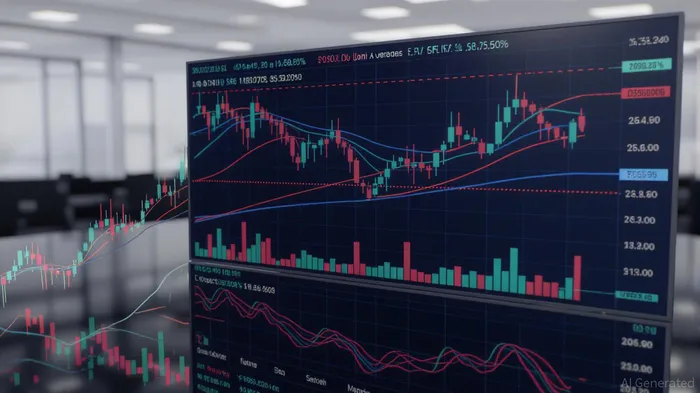
The markets are in a state of flux. With the S&P 500 recently triggering its first "death cross" in three years—a technical indicator formed when the 50-day moving average crosses below the 200-day moving average—investors are once again grappling with the specter of a potential correction. Historically, this pattern has served as a cautionary flag, often preceding periods of heightened volatility or prolonged bear markets. But what does it mean for investors now, and how can defensive strategies help mitigate risk?
The "Line of Death" in Context
The death cross, often dubbed the "Line of Death" in colloquial trading circles, is not a standalone oracleORCL--. Its predictive power is nuanced. Since 1971, the S&P 500 has seen 22 death cross events, with mixed outcomes. For example, the death cross in March 2020 coincided with a broader market crash but was followed by a 542% rebound in Bitcoin—a reminder that such indicators reflect sentiment, not inevitability. In the S&P 500, however, the average return over six months post-death cross has been 12.4%, according to NautilusNAUT-- Research, suggesting that while the signal warns of short-term pain, it may also signal a buying opportunity.
Yet the psychological impact of the death cross is undeniable. It amplifies fear, often triggering panic selling and reinforcing bearish narratives. This is where defensive positioning becomes critical.
Defensive Sectors: The First Line of Defense
When the death cross emerges, investors often rotate into sectors less sensitive to macroeconomic headwinds. Consumer staples (XLP) and utilities (XLU), for instance, have historically outperformed during periods of market stress. Year to date in 2025, XLP has gained 4.5% while the S&P 500 has fallen 7.7%, underscoring their resilience. These sectors offer stable cash flows, high dividend yields, and low volatility—traits that become increasingly valuable as growth stocks and cyclical sectors falter.
The logic is straightforward: during corrections, investors prioritize preservation over growth. Defensive sectors provide a buffer, absorbing less downside while maintaining cash flow. For example, during the 2008 financial crisis, utilities and healthcare outperformed the broader market by double digits in the months following the death cross.
Combining Technical Signals with Fundamentals
While the death cross is a useful barometer, it must be paired with fundamental analysis. Earnings trends, interest rate expectations, and macroeconomic data all influence sector performance. For instance, rising interest rates typically hurt high-growth tech stocks but leave consumer staples relatively unscathed. Similarly, inflationary pressures often elevate energy and materials sectors, but in a recessionary environment, utilities may shine.
Investors should also consider hedging strategies. Options, such as protective puts on broad-market indices, can limit downside risk without sacrificing upside potential. Stop-loss orders and diversification across asset classes—bonds, gold, and cash—further reinforce portfolio resilience.
The Case for Prudent Positioning
The current market environment—marked by decelerating corporate earnings, geopolitical tensions, and a potential U.S. recession—heightens the case for defensive positioning. The death cross in April 2025, while not a definitive harbinger of a bear market, serves as a reminder to reassess allocations.
- Rebalance Toward Defensive Sectors: Increase exposure to consumer staples, utilities, and healthcare. These sectors have historically provided stability during corrections.
- Diversify Across Asset Classes: Allocate a portion of the portfolio to bonds, gold, or cash equivalents to reduce volatility.
- Monitor Earnings and Sentiment: Use the death cross as a signal to scrutinize earnings reports and macroeconomic data for further clues.
- Hedge with Derivatives: Consider options or inverse ETFs to protect against short-term declines while maintaining long-term bullish exposure.
Conclusion
The "Line of Death" is not a death sentence for markets, but a call to action. While the death cross highlights bearish momentum, its mixed historical performance underscores the need for a multifaceted approach. Defensive sector rotation, combined with prudent risk management, offers a roadmap to navigate uncertainty. As the market grapples with its next chapter, investors who prepare for the worst while staying attuned to the nuances of technical and fundamental signals may find themselves well-positioned for whatever comes next.







Comentarios
Aún no hay comentarios