
Market Volatility and Investor Response: A Post-Dow Jones Drop Analysis
The recent 0.6% decline in the Dow Jones Industrial Average (DJIA) on September 2, 2025, underscores the persistent volatility shaping global markets. This drop, driven by uncertainty over trade policies and the Federal Reserve's rate-cut trajectory, follows a turbulent year marked by sharp swings, including a 4.20% loss in March 2025-the worst March performance since 2020, according to a TheStreet analysis. To navigate such turbulence, investors must adopt strategic reallocation and risk mitigation frameworks, drawing lessons from historical crises and current market dynamics.
Historical Context: Lessons from 2020 and 2025 Crashes
The 2020 pandemic-induced crash, which saw the DJIA plummet 12.93% on March 16, 2020, and the 2025 market turbulence highlight recurring investor behaviors. Panic selling, herd mentality, and recency bias have historically led to suboptimal decisions, such as exiting at market bottoms or overexposure to high-flying sectors, as outlined in a MarketClutch recovery plan. For instance, during the 2008 financial crisis, many investors liquidated assets at the nadir, missing the subsequent rebound. Similarly, the 2020 crash revealed how fear of economic collapse initially triggered sell-offs, only for markets to recover rapidly as fiscal stimulus and central bank interventions stabilized economies, a point echoed in the MarketClutch analysis.
Post-crisis strategies have evolved. The 2008 crisis spurred regulatory reforms, while the 2020 crash emphasized fiscal policy's role in recovery. Today, investors are advised to rebalance portfolios by selling overperforming assets and buying undervalued ones, adhering to the "buy low, sell high" principle noted by MarketClutch. The Kelly Criterion, a mathematical formula for optimal capital allocation, has also gained traction, helping investors quantify risk exposure based on historical probabilities, as MarketClutch explains.
Post-September 2025 Adjustments: Sector Shifts and Institutional Responses
The September 2025 DJIA drop has prompted a reevaluation of asset allocations. Institutions like T. Rowe Price and iShares have recommended a neutral stance in equities, favoring international stocks and small-cap opportunities amid expectations of Fed rate cuts, a stance covered in the MarketClutch commentary. The Russell 2000, for example, surged 4.58% since late August, reflecting investor appetite for value plays, a trend TheStreet highlighted.
Sector performance has diverged sharply. Technology and Communication Services remain dominant, with the Morningstar Global Next Generation AI Index returning 29.33% year-to-date, driven by AI-driven growth and favorable legal rulings, according to a StockMarketWatch report. Conversely, Utilities and Healthcare have lagged, with the latter down 0.41% year-to-date amid pharmaceutical industry challenges, the StockMarketWatch report notes. Materials, however, emerged as a September winner, gaining 5.59% for the month, per that same report.
Institutional responses emphasize diversification beyond traditional assets. iShares advocates digital assets and international equities to hedge against shifting correlations between stocks and bonds, while BlackRock recommends income-generating strategies like short-dated TIPS and equity income to navigate inflationary pressures.
Risk Mitigation: Hedging and Portfolio Resilience
Hedging strategies have become critical in an environment of geopolitical and economic uncertainty. Options, macro hedge funds, and cash buffers are increasingly used to protect against equity losses, as TheStreet advises. For example, Schwab's Marketperform rating on all sectors reflects caution until trade policy clarity emerges, a point highlighted in the StockMarketWatch coverage.
The Federal Reserve's September rate cut-lowering the federal funds rate to 4.00%–4.25%-has further influenced risk appetites. Short-duration bonds have benefited, while longer-term bonds face inflation concerns, the StockMarketWatch report indicates. Investors are advised to balance high-growth tech stocks with defensive sectors like Consumer Staples and Utilities, consistent with the sector guidance in that report.
Expert Recommendations: Balancing Risk and Reward
To navigate ongoing volatility, experts advocate a multi-pronged approach:
1. Diversification: Allocate to uncorrelated assets such as commodities, real estate, and private credit to reduce systemic risk, as advised in a Center4BFG report.
2. Dynamic Rebalancing: Periodically adjust portfolios to maintain target allocations, selling overvalued assets and buying undervalued ones, a tactic MarketClutch recommends.
3. Cash Buffers: Maintain liquidity to capitalize on market dislocations, as seen in the 2020 rebound and noted in the MarketClutch guidance.
4. Sector Rotation: Shift toward sectors with favorable fundamentals, such as Materials and Communication Services, while underweighting lagging areas like Utilities, in line with the StockMarketWatch analysis.
Conclusion
The September 2025 DJIA drop serves as a reminder of markets' inherent volatility and the need for disciplined, adaptive strategies. By learning from historical crises, leveraging sector-specific insights, and employing robust risk mitigation techniques, investors can position portfolios to weather uncertainty while capturing growth opportunities. As the Fed's easing cycle unfolds and trade policies evolve, strategic reallocation will remain paramount in balancing risk and reward.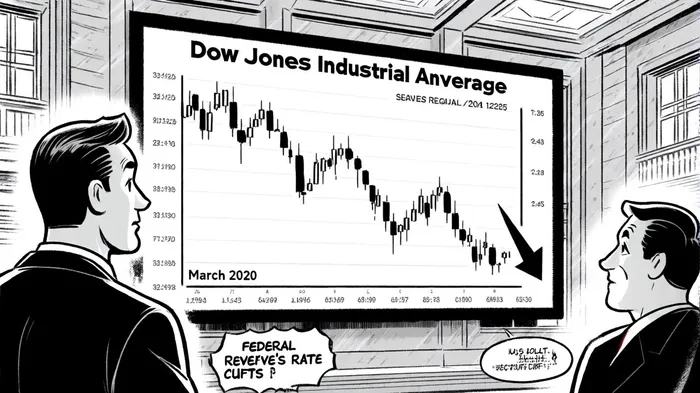







Comentarios
Aún no hay comentarios