
Market Volatility and Investor Behavior During U.S. Holiday Closures
Reduced Trading Volumes and Market Dynamics
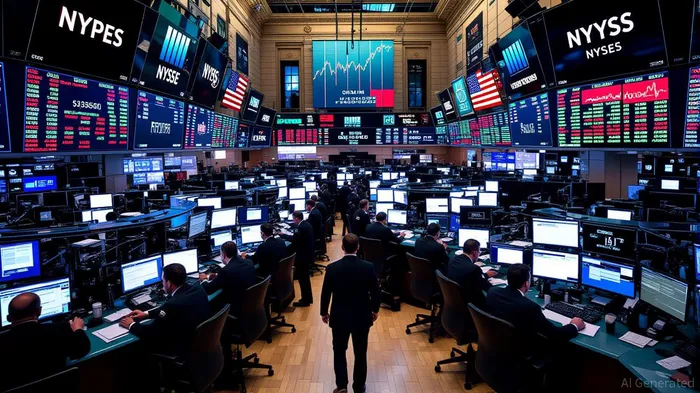
Historically, Thanksgiving and Black Friday have been associated with significantly lower trading volumes. According to a Bloomberg report, , with some years seeing volumes drop to as low as one billion shares. This reduction is partly due to the shortened trading session on Black Friday, which closes at 1:00 PM ET. The diminished liquidity often leads to exaggerated price movements, particularly in retail and consumer discretionary stocks, as fewer trades can disproportionately influence prices according to Nasdaq analysis.
Despite the low volume, Thanksgiving week has shown a consistent positive bias in market performance. From 2015 to 2024, the S&P 500 and Nasdaq Composite outperformed annual averages in seven years, with the Nasdaq despite a flat S&P 500. This pattern suggests that the holiday period may reflect a collective easing of year-end anxiety, as investors and consumers alike anticipate the holiday season.
Retail Investor Sentiment and Behavioral Biases
Retail investor sentiment plays a pivotal role in shaping market dynamics during this period. The National Retail Federation notes that marks the official start of the holiday shopping season, making it a critical barometer for consumer spending. In 2024, , , according to Plus500 market insights. These figures not only highlight robust consumer demand but also create a feedback loop: strong retail performance often boosts broader market indices, according to Plus500 analysis.
However, retail investor behavior is not always rational. The holiday period often amplifies , such as overconfidence or herd mentality. For example, WalmartWMT-- (WMT), TargetTGT-- (TGT), and AmazonAMZN-- (AMZN) typically see heightened trading activity during Thanksgiving to Cyber Monday, with investors betting on short-term gains tied to sales performance according to Investopedia. Yet, as the 2025 data suggests, persistent inflation and economic uncertainty have tempered spending, leading to slower growth projections according to OANDA analysis. This divergence between retail optimism and macroeconomic realities creates fertile ground for contrarian strategies.
Contrarian Opportunities and Tactical Entry Points
The holiday period's unique characteristics-low volume, sentiment-driven price swings, and sector-specific volatility-offer tactical entry points for contrarian investors. Historical examples underscore this potential. During the 2008 , , signaling a rare shift in investor sentiment amid widespread pessimism according to Medium analysis. Similarly, in 2024, , driven by strong Black Friday and Cyber Monday performance according to Mitrade insights. These cases illustrate how contrarians can exploit mispricings caused by short-term sentiment extremes.
One key strategy involves targeting underperforming retail stocks ahead of the holiday rush. For instance, , yet its stock may face short-term volatility due to market noise according to Barchart analysis. Similarly, Shopify's reliance on e-commerce exposes it to seasonal swings, according to Mitrade insights. By identifying such asymmetries, contrarians can position for rebounds once sentiment normalizes.
Risks and Considerations
While the holiday period presents opportunities, it also carries risks. Thinly traded securities are particularly vulnerable to liquidity shocks, as noted in a 2024 analysis by Confluent Asset Management according to their report. Additionally, macroeconomic headwinds-such as the 2025 slowdown in consumer spending-can undermine even the most well-timed trades. Investors must balance historical patterns with real-time data, such as retail sales reports and consumer confidence indices, to avoid overreliance on seasonal trends.
Conclusion
The Thanksgiving and Black Friday period is a microcosm of broader market dynamics: reduced liquidity, sentiment-driven volatility, and sector-specific opportunities. For contrarian investors, this environment offers a chance to capitalize on mispricings, provided they navigate the risks with discipline. As the 2025 holiday season approaches, the interplay between retail optimism and macroeconomic caution will likely shape the next chapter in this enduring market narrative.





Comentarios
Aún no hay comentarios