
Market Volatility and Central Bank Independence: Why Powell's Fate Could Drive Equity and Bond Moves
The Federal Reserve's independence has long been a pillar of U.S. economic stability, but its fragility is now under the spotlight. President Donald Trump's recurring threats to remove Fed Chair Jerome Powell—reportedly considering dismissal unless fraud is proven—have reignited a debate with profound implications for markets. As political tensions collide with monetary policy, investors must grapple with how perceived threats to the Fed's autonomy could reshape equity and bond valuations.
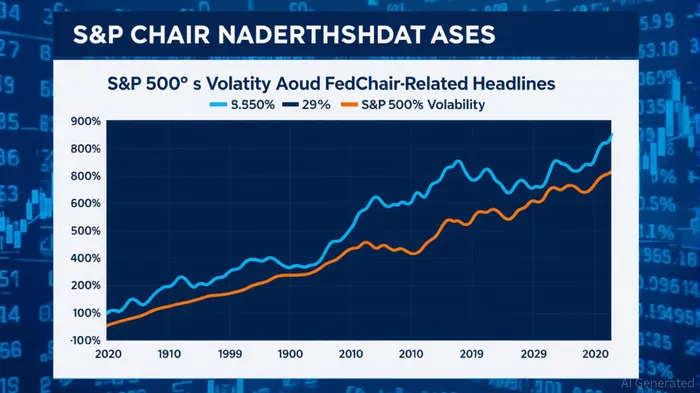
The stakes are high. In mid-2025, whispers of Powell's potential ouster sent the S&P 500 tumbling 0.7% before stabilizing after Trump publicly denied plans to act. Meanwhile, bond markets reacted with equal volatility: short-term Treasury yields fell, reflecting immediate relief, while long-term yields rose—a sign investors fear inflation risks if the Fed's credibility erodes.
The Fragile Balance of Fed Independence
The Fed's legal independence is enshrined in its mandate: its chair can only be removed “for cause,” such as fraud or malfeasance. Yet Trump's rhetoric—lambasting Powell as a “knucklehead” and criticizing his handling of a $2.5 billion renovation project—hints at a broader strategy to pressure monetary policy. A key question looms: Would a Trump-appointed successor prioritize short-term economic gains over inflation control?
Historical precedents warn of the consequences. In the 1970s, the Fed's politicization under Nixon led to soaring inflation, while emerging markets like Argentina have seen central bank meddling fuel crises. As Georgetown University's James Angel notes, “Politically influenced central banks often become tools of fiscal profligacy, destabilizing economies.”
Interest Rate Expectations: The Core of the Conflict
Trump's push for lower rates has long clashed with the Fed's data-driven approach. If Powell were replaced, markets might anticipate a more dovish stance, potentially boosting equities in the short term. But the long-term risks are stark: a Fed perceived as politically pliable could trigger inflation fears, pushing bond yields higher as investors demand compensation for uncertainty.
The bond market's recent behavior reflects this tension. In July 2025, the 30-year Treasury yield rose to 5.08% amid rumors of Powell's dismissal—a sign investors are pricing in inflation risks if the Fed's independence falters.
Policy Credibility and Market Psychology
The Fed's credibility hinges on its ability to anchor inflation expectations. Analysts like Morningstar's Dominic Pappalardo argue that repeated threats to Powell's position risk eroding trust, destabilizing markets. “If investors doubt the Fed's commitment to price stability, even brief policy shifts could spark sell-offs,” he warns.
This dynamic creates a paradox: while short-term equity gains might follow a dovish Fed, the long-term cost—a loss of inflation control—could outweigh them. The 2025 episode mirrors 2019, when Trump's attacks on Powell briefly rattled markets before investors dismissed the threats as bluster.
Investment Strategies: Navigating the Crosscurrents
Investors face a critical choice: hedge against political uncertainty or bet on markets shrugging off the noise.
Safe Havens First: If Powell's removal seems plausible, Treasury bonds and gold could gain traction as inflation fears rise. The 2-year Treasury yield's recent dip to 3.87% suggests short-term rates may stay muted, but long-term maturities could climb.
Avoid Rate-Sensitive Sectors: Banks and utilities—sensitive to rate cuts—might initially rally on dovish expectations. However, prolonged Fed instability could reverse this, as higher long-term yields pressure real estate and consumer discretionary stocks.
Equity Volatility: The S&P 500's July 2025 dip underscores the risks, but markets may grow desensitized if Trump's threats remain unacted upon.
Conclusion: The Fed's Independence Is Non-Negotiable
While Trump's rhetoric creates noise, the Fed's institutional safeguards—its committee-based decision-making and legal barriers to removal—limit immediate damage. Yet the long-term erosion of credibility is a slower, subtler threat. Investors should treat near-term volatility as a buying opportunity in resilient sectors, while maintaining a defensive posture in bonds.
In the end, markets will reward clarity. If Powell stays, equities and bonds may stabilize. If he leaves, investors must brace for a Fed whose every move will be scrutinized for political bias—a scenario where the only certainty is uncertainty itself.







Comentarios
Aún no hay comentarios