
Market Surges 3.4% on False Trump Tariff News
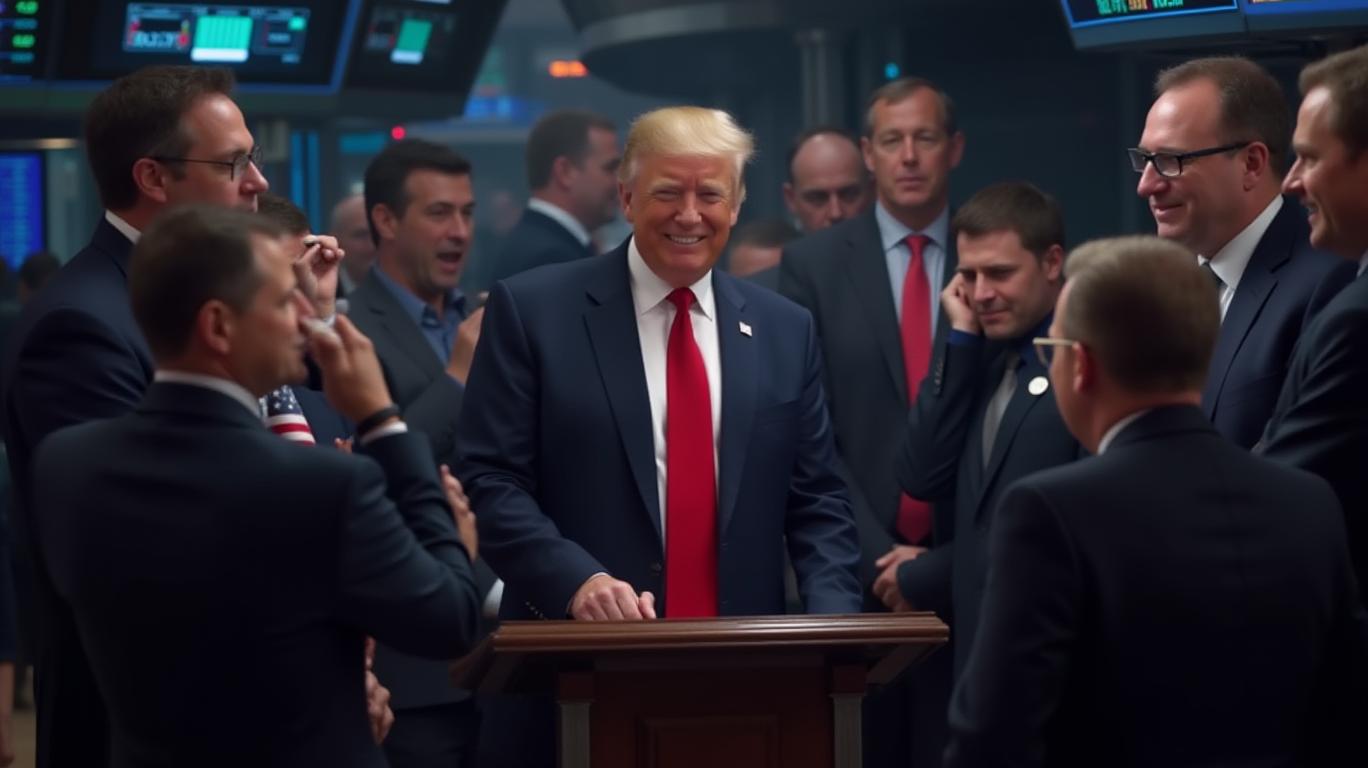
On a Monday morning, just after 10 am, the trading floor at Siebert in downtown Manhattan erupted in chaos. Mark Malek, the company's chief investment officer, rushed out of his office to find the chief trader shouting that President Donald Trump was considering a temporary halt to the comprehensive reciprocal tariffs that had caused significant market declines over the past few days.
Malek was skeptical. "I thought it was nonsense," he remarked. However, within seconds, he was astonished to see the stock market surge, with the S&P 500 index not only recovering all its morning losses but also rising by 3.4% at one point. "The market is extremely sensitive," Malek observed, "the phrase 'on edge' doesn't even begin to describe it."
For traders desperate for good news, the message that triggered the market's dramatic swing seemed credible enough, despite originating from an obscure account on a social media platform. The post read: "Hassett says: Trump is considering a 90-day suspension of tariffs on some countries."
As the market soared, the post was widely shared, and major news outlets quickly picked up the story with nearly identical headlines. Within seven minutes, the market capitalization of the S&P 500 index increased by over $2.5 trillion.
However, the gains evaporated just as quickly. The White House denied that Kevin Hassett, the chairman of the National Economic Council, had made such a statement, dismissing it as "fake news."
As traders realized the news was false, a massive sell-off began. "When the market realized the news was not true, a large-scale sell-off started. Almost everyone was caught off guard," said Peter Tuchman, a senior trader at the New York Stock Exchange. "It was simply crazy."
In summary, the entire episode lasted about 15 minutes. Although the White House denied the news and the market gave back its gains, the selling pressure eased, and the overall market remained significantly higher than its intraday low. This event served as a reminder that sudden, dramatic market movements can be triggered by minimal information, and some investors began to worry if their stock positions were cut too aggressively.
"When the market can surge 8% based on a post from Truth Social or fake news, the upside risk is equally frightening," said Chris Murphy, co-head of derivatives strategy at Susquehanna.







Comentarios
Aún no hay comentarios