
The Market Risks of Trump Ousting Jerome Powell
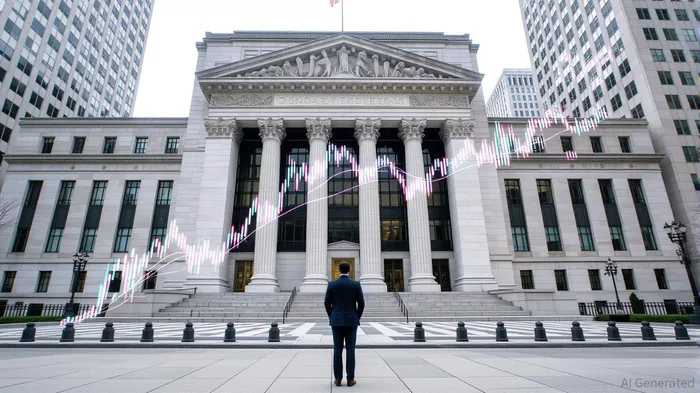
The potential ousting of Federal Reserve Chair Jerome Powell by President Donald Trump has ignited a storm of uncertainty in financial markets. While the political theater of 2025 has long been marked by clashes between executive power and institutional independence, the stakes now transcend partisan rhetoric. The Federal Reserve's mandate to insulate monetary policy from short-term political pressures is being tested, with Treasury yields and broader financial stability hanging in the balance.
The Legal and Institutional Tightrope
Federal law stipulates that the president can remove a Fed chair only “for cause,” a provision designed to safeguard the Fed's autonomy from political cycles. However, Trump's repeated threats to fire Powell—coupled with his administration's weaponization of the Fed's headquarters renovation as a “cause”—highlight a dangerous erosion of this firewall. The Supreme Court's recent cautionary stance against presidential overreach in removing Fed officials has not deterred a leader who thrives on destabilizing norms. If Trump succeeds in ousting Powell without a clear legal basis, it would signal to markets that monetary policy could become a political tool rather than an economic one.
Historical precedents underscore the risks. In April 2025, Trump's announcement of broad tariffs triggered a spike in Treasury yields as investors recalibrated inflation and growth expectations. The 10-year yield surged to 4.5% intra-day, reflecting a loss of confidence in the Fed's ability to remain unswayed by political agendas. This pattern—where political interference raises yields—has repeated itself in prior crises, including the 2020 liquidity crunch, when the Fed had to inject $360 billion into the Treasury market to avert collapse.
The Mechanics of Market Panic
Treasury yields are not merely numbers; they are barometers of investor trust. When yields rise, they signal a loss of confidence in the Fed's independence and a reassessment of inflation risks. The bond market's role as a check on political interference is critical: as Jon Hilsenrath, a seasoned Fed observer, notes, “The people who decide Powell's fate are in the bond market.” A forced removal of Powell could trigger a self-fulfilling prophecy—markets would price in higher inflation expectations, pushing yields upward even if the Fed's actual policy remains unchanged.
The implications for equities are equally dire. A prolonged period of elevated Treasury yields would weigh heavily on rate-sensitive sectors, such as technology and real estate. Growth stocks, which rely on discounted future earnings, would face valuation headwinds as borrowing costs rise. Defensive sectors like utilities and consumer staples might offer temporary refuge, but even these could be dragged down by a broader economic slowdown.
A Fragile Financial Infrastructure
The Treasury market's fragility has been exposed by its evolving investor base. Private funds, money market vehicles, and hedge funds now hold a larger share of Treasuries, making the market more susceptible to liquidity shocks. In March 2020, a “dash for cash” during the pandemic led to a liquidity vacuum, forcing the Fed to intervene. A similar scenario could unfold if political uncertainty drives a sudden reallocation of capital.
Regulatory reforms, such as expanding dealer intermediation capacity and modernizing repo markets, have aimed to address these vulnerabilities. However, progress remains incomplete. The Securities and Exchange Commission's rule to mandate central clearing of Treasury transactions is still pending, leaving the system exposed. Investors must remain vigilant about these structural weaknesses, which could amplify volatility during periods of political turmoil.
Investment Advice for Navigating the Storm
For investors, the key takeaway is to hedge against the erosion of central bank independence. Strategies should include:
1. Diversification into inflation-protected assets: TIPS (Treasury Inflation-Protected Securities) and commodities like gold offer protection against inflation expectations tied to political interference.
2. Defensive equity positioning: Sectors like healthcare and utilities, which are less sensitive to interest rates, may provide stability.
3. Short-duration fixed income: Bonds with shorter maturities can mitigate interest rate risk in a rising-yield environment.
4. Geographic diversification: Global equities and emerging market bonds could offer a counterbalance to U.S. market volatility.
Conclusion
The ousting of Jerome Powell would not merely be a political spectacle—it would be a seismic event for financial markets. By undermining the Fed's independence, such an action would erode trust in the institution responsible for anchoring inflation and stabilizing the economy. Investors must prepare for a world where political interference becomes a recurring feature, not an outlier. The path forward demands a rethinking of risk management, with a focus on resilience, diversification, and a keen eye on the Fed's institutional health.
The coming months will test the Fed's independence and the Treasury market's resilience. For now, the message from markets is clear: confidence in the Fed's autonomy is a fragile asset, and its erosion could come at a steep price.







Comentarios
Aún no hay comentarios