
Market Resilience Amid Political Uncertainty: Navigating Risk and Sectoral Shifts in 2025
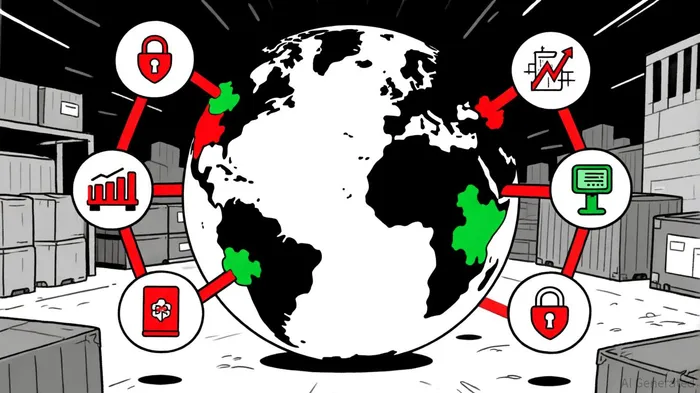
Political uncertainty and policy volatility have emerged as defining challenges for global markets in 2025. From U.S. tariff hikes to fragmented trade alliances and escalating geopolitical conflicts, businesses and investors face a landscape where resilience is no longer optional but a survival imperative. This analysis examines how sectors have adapted to these pressures, the risk management frameworks driving stability, and the investment implications for a world of persistent uncertainty.
Sectoral Performance: Winners, Losers, and Asymmetric Volatility
The interplay between economic policy uncertainty (EPU) and geopolitical risk has created stark divergences in sectoral performance. According to a report by the Federal Reserve Board, a one-standard deviation increase in EPU typically reduces industrial production by 0.5% and investment by 0.75–1% [1]. This asymmetry is particularly evident in sectors reliant on global supply chains. For instance, the electronics and fabricated products industries have faced heightened volatility due to U.S.-China trade tensions and U.S. tariff policies, which now account for 43% of the variation in net profit margins for public corporations [2].
Conversely, sectors like agriculture and pharmaceuticals have capitalized on geopolitical disruptions. The Russia-Ukraine war, for example, reduced foreign competition in agricultural markets, enabling localized supply chains to thrive [3]. Similarly, the pharmaceutical sector has seen increased demand for essential goods during conflicts, though this has also exposed vulnerabilities in cross-border regulatory compliance [4]. Energy and basic materials, however, remain under persistent pressure due to their dependence on global trade and foreign demand [5].
Risk Management: From Reactive to Proactive Strategies
The traditional "wait-and-see" approach to uncertainty has proven inadequate. Instead, firms are adopting proactive, enterprise-wide risk management frameworks. A key insight from WTW's 2025 risk management guide emphasizes the need for centralized geopolitical risk strategies, enabling consistent methodologies across departments and regions [6]. For example, a mining company's standardized risk rating system allowed it to reallocate resources more effectively in politically unstable regions [6].
Supply chain resilience has become a cornerstone of these strategies. Diversification of suppliers, nearshoring, and predictive analytics are now standard practices. The Manufacturers AllianceAENT-- reports that 94% of U.S. manufacturing executives cite tariff uncertainty as a major factor delaying investment, prompting a shift toward politically stable markets and localized production [7]. Additionally, firms are leveraging AI-driven tools to anticipate disruptions, with 83% of manufacturers investing in automation to mitigate workforce challenges exacerbated by geopolitical risks [7].
Policy Volatility and the Role of Governments
Governments are both contributors to and mitigators of uncertainty. In the U.S., the polarized political climate and potential for domestic extremism have forced businesses to reassess travel risk frameworks and enhance digital security [8]. Meanwhile, emerging markets like India and Vietnam are outperforming developed economies, partly due to government stimulus and efforts to attract manufacturing investment amid U.S. tariff pressures [9].
Public sector institutions also play a critical role in stabilizing economies. The European Commission's focus on public finance sustainability and digital resilience highlights how policy coherence can buffer against external shocks [10]. However, fragmented regulatory environments—such as those emerging from U.S.-China technological competition—continue to complicate global operations [11].
Investment Implications and Future Outlook
For investors, the 2025 landscape demands a nuanced approach. Sectors with strong domestic demand, such as defense and clean energy, are poised to benefit from policy tailwinds, including $150 billion in U.S. defense spending and shifting AI regulations [12]. Conversely, industries like healthcare and industrials face margin pressures from litigation risks and regulatory changes [12].
Emerging markets present both opportunities and risks. While China's growth is projected at 4.3% for 2025, driven by front-loaded exports and stimulus, its manufacturing sector has weakened, with a PMI below 50 since April 2025 [9]. Investors must weigh these dynamics against the long-term trend of "friend-shoring," which prioritizes politically aligned partners over cost efficiency [13].
Conclusion
Market resilience in 2025 hinges on the ability to anticipate, adapt, and act decisively in the face of political uncertainty. While no sector is immune to volatility, proactive risk management and strategic diversification offer pathways to stability. For investors, the key lies in identifying sectors and geographies that align with both current geopolitical realities and long-term policy trajectories. As the global economy navigates this turbulent decade, agility—and not just capital—will determine success.







Comentarios
Aún no hay comentarios