
Market Resilience Amid Bear Market Predictions: A Contrarian Value Investing Playbook for the S&P 500
The S&P 500 faces a crossroads in 2025. With Wall Street analysts slashing 2025 price targets in response to the Trump administration's sweeping tariff policies, the market is bracing for a potential bear market[2]. Goldman SachsGS-- and RBC Capital Markets have revised their S&P 500 forecasts downward by 800 and 1,100 points, respectively, citing risks to global growth and corporate profits[2]. Yet, history suggests that bear markets often create fertile ground for contrarian value investing—a strategy that has historically outperformed during periods of market pessimism.
The Tariff-Driven Downturn and Its Implications
The Trump administration's proposed tariffs—ranging from a 10% duty on all imported goods to reciprocal duties on China and Europe—have triggered a wave of caution among investors[2]. These measures, while aimed at protecting domestic industries, could reduce global trade volumes and dampen earnings for multinational corporations. However, as Ed Yardeni of Yardeni Research notes, “Tariff-driven corrections are painful in the short term but often pave the way for long-term rebounds, as seen in 2018–2019”[2]. The S&P 500's historical resilience during such events underscores the importance of identifying undervalued sectors and assets.
Contrarian Value Investing: A Path Through the Storm
Morningstar's “Buy the Unloved” strategy highlights a critical insight: equity categories experiencing outflows and undervaluation often rebound when sentiment shifts[1]. For instance, foreign large-growth and large-value sectors, which have seen significant outflows in 2025, are now considered contrarian picks[1]. Similarly, U.S.-focused ETFs like the Virtus LifeSci Biotech Products ETF (BBP) and Vanguard Value ETF (VTV) offer exposure to undervalued biotech and traditional value stocks[3]. These strategies align with historical precedents, such as Warren Buffett's success during the dot-com bubble by investing in undervalued assets when sentiment turned negative[4].
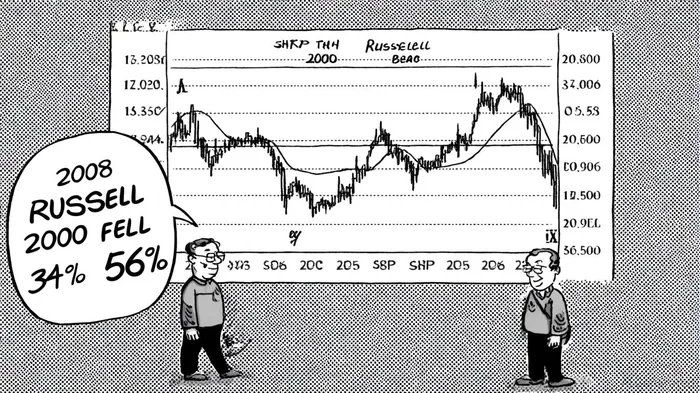
The Russell 2000's historical performance further reinforces the case for contrarian investing. During the 2008 financial crisis, the Russell 2000 declined by -34.15%, while the S&P 500 fell by -56%[4]. Small-cap stocks, often more sensitive to economic cycles, tend to outperform large-cap peers during bear markets, making them a compelling addition to a diversified contrarian portfolio.
Navigating the 2020–2025 Bear Market Landscape
Value investing strategies have shown mixed performance in recent U.S. bear markets. During the 2022 bear market, which lasted 10 months and saw the S&P 500 drop 25%, large-value equity funds outperformed growth counterparts, with dividend-focused strategies like JPMorgan Equity Income (OIEIX) losing less than the broader market[1]. However, the 2020–2025 period has been shaped by shocks to fundamentals—such as post-pandemic supply chain disruptions and inflation—rather than valuation bubbles, leading to underperformance of U.S. value strategies compared to international counterparts[1].
Despite these challenges, 2025 has seen brief glimmers of value outperformance as growth-oriented tech stocks faltered. For example, the MSCI Europe Small Cap Value Index gained 12% in local currency terms in 2025, outperforming the broader MSCI Europe Index[1]. This suggests that while U.S. value strategies face headwinds, global diversification and sector-specific opportunities (e.g., energy, healthcare) can mitigate risks[5].
The Road Ahead: Balancing Caution and Opportunity
The S&P 500's near-bear market drawdown of 19% in 2025 has already prompted a recovery, with the index ending the first half of the year in positive territory[2]. This resilience, driven by stable inflation expectations and manageable interest rates, highlights the importance of maintaining a long-term perspective. For contrarian investors, the key lies in identifying sectors and assets that are out of favor but fundamentally sound.
ETFs like the Amplify Natural Resources Dividend Income ETF (NDIV) and Vanguard Energy VGENX offer exposure to undervalued resource-based industries, while the Russell 2000's potential to outperform the S&P 500 during downturns adds another layer of diversification[5]. As Research Affiliates notes, value strategies have historically outperformed in six major U.S. bear markets since 1963, with an average outperformance of 12% from peak to trough[1].
Conclusion: Embracing Contrarianism in Uncertain Times
While bear market predictions loom large, history and current data suggest that contrarian value investing remains a viable strategy. By focusing on undervalued sectors, leveraging small-cap resilience, and maintaining a global perspective, investors can navigate the 2025 market environment with confidence. As the S&P 500's historical rebounds demonstrate, market downturns are not the end of the story—they are often the prelude to the next chapter of growth.





Comentarios
Aún no hay comentarios