
Market at Record Highs: Assessing Buy Zones for Nvidia, Palantir, and Tesla
The market is closing 2025 on a wave of record highs, creating a backdrop where traditional investment strategies are failing. The S&P 500 is on track for its fourth weekly advance in five weeks, having set new intraday and closing all-time highs just days before the Christmas holiday. This momentum is amplified by a historically strong seasonal period, the so-called "Santa Claus rally," where the S&P 500 averages a 1.3% gain during the last five trading days of the year and the first two of the new year. In this environment, the central question for investors is not whether to buy, but where to buy-and whether a stock's move is a genuine "buy zone" or simply riding a concentrated, powerful tide.
The tide is overwhelmingly in favor of the AI and tech mega-force. This isn't a broad-based rally; it's a phenomenon where a handful of dominant themes are driving returns. As the BlackRockBLK-- Investment Institute notes, trying to diversify away from the U.S. or the AI mega force towards other regions or equal-weighted indices amount to larger active calls than before. The implication is stark: a "neutral" portfolio allocation is a mirage. With returns increasingly tied to a single common driver, passive exposure to a broad index is effectively an overweight bet on that dominant theme. This renders traditional diversification ineffective, forcing every investor to make an active decision on whether to lean into or away from the AI trade.
The result is a market where the distinction between a stock's fundamental strength and its participation in a broader momentum play becomes blurred. A stock like Ross Stores, which hit an all-time high and is up more than 20% for the year, is outperforming the S&P 500. Yet its rally occurs alongside a tech selloff, showing how individual stories can be overshadowed by the mega-force narrative. Conversely, a stock like Oracle is on pace for its worst quarter since 2001, a stark fundamental failure that the broader market's record highs cannot mask. This divergence highlights the risk of being caught in a concentrated rally without a solid underlying catalyst.
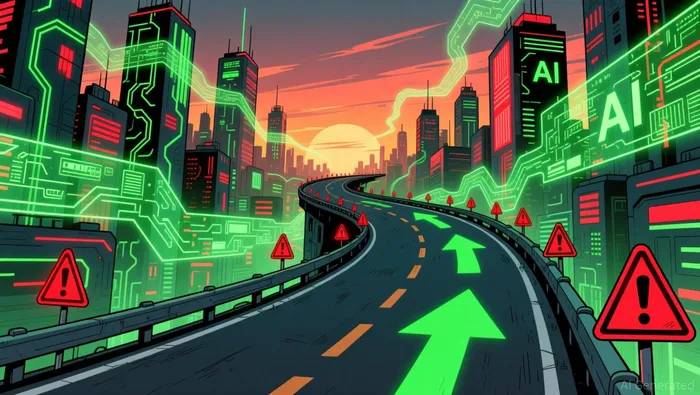
The bottom line is that the current market structure has eliminated the option of neutrality. The combination of record highs, a powerful seasonal tailwind, and a dominant AI driver means investors must be dynamic. The "buy zone" for any individual stock now requires a clear-eyed assessment: is the move driven by company-specific strength, or is it simply a function of riding the wave of a handful of mega-forces? In a market where the ballast of traditional diversifiers like long-term bonds is diminishing, the path forward demands deliberate, active positioning.
Stock-Specific Buy Zone Analysis: Metrics and Momentum
The AI infrastructure theme is not a monolithic rally; it is a portfolio of distinct momentum plays, each with its own technical and fundamental profile. The "buy zone" status for NvidiaNVDA--, PalantirPLTR--, and TeslaTSLA-- reveals a market where genuine opportunity is intertwined with noise, and where recent price action tells a more nuanced story than headline gains suggest.
Nvidia's position is one of structural dominance, but it is also a stock that has pulled ahead of its own momentum. The company trades at $191.25, up 42.5% year-to-date and 19.5% over 120 days. This performance is underpinned by a staggering Q3 revenue beat of 62.5% year-over-year, a fundamental reality that justifies the premium. Yet, the technical picture shows a stock that has already run hard. Its 52-week high is $212.19, meaning it is trading about 10% below its peak. This creates a classic "buy the dip" scenario, but the dip is relative. The stock's recent 1.4% daily gain and 6.1% 20-day change indicate it is still in an uptrend, supported by a rolling annual return of 40.4%. The risk is that the momentum has become so powerful that even a pause could be misinterpreted as a reversal, given the stock's high beta of 2.29.
Palantir presents a different kind of buy zone, one defined by explosive momentum that has recently cooled. The stock has surged 153% year-to-date and 37.1% over 120 days, a run that has pushed it to $191.56. This performance is a direct result of its AI software integration wins, which have propelled it into a technical "buy zone" above a buy point of 190.39. The recent 1.3% daily decline is a classic consolidation after a parabolic move, not necessarily a trend change. The stock's 15.6% 20-day gain shows underlying strength, but the volatility is higher than Nvidia's, with a daily volatility of 2.66%. For investors, the buy zone here is a tactical entry point after a sharp run, betting that the fundamental story of AI-driven revenue growth can reassert itself.
Tesla, meanwhile, shows the volatility and mixed signals that define a stock caught between its legacy and its future. It has gained 60.4% over 120 days and 18.4% year-to-date, a move that reflects both its AI/robotaxi narrative and its core automotive business. The recent 1.6% daily dip is a reminder of its inherent instability, with a daily volatility of 2.43% and a 5-day change of -1.15%. The stock sits in a buy zone, but the catalyst is more regulatory than fundamental. The Delaware Supreme Court ruling to reinstate Elon Musk's 2018 pay package provides a near-term, binary event that could spark a pop. However, this is a short-term catalyst, not a structural shift. The bottom line is that Tesla's buy zone is a high-risk, high-reward setup, where momentum is easily disrupted by news flow and execution risk.
The bottom line is that the AI/tech rally is a story of diverging paths. Nvidia's buy zone is about buying strength after a powerful run. Palantir's is about catching a consolidation after a parabolic move. Tesla's is about betting on a regulatory catalyst in a volatile name. Separating genuine opportunity from momentum-driven noise requires looking past the headline YTD gains and examining the specific technical levels, recent price action, and the nature of the underlying catalysts.
The Broader Market Drivers and Diversification Mirage
The market's current rally is built on a narrow foundation of mega-forces, creating a dangerous illusion of stability. This environment is defined by a "diversification mirage," where traditional portfolio ballast has lost its power. The clearest signal is the spike in developed market bond yields, which undermines long-term Treasuries as a safe haven. Japanese 30-year bond yields, for instance, have hit record highs earlier this month and are up more than 100 basis points this year. This surge, triggered by fiscal spending and hawkish central bank signals, means that the asset class investors once turned to for balance is now moving in lockstep with equities, not against them.
This mirage is compounded by a growing global monetary policy disconnect. The U.S. is taking a more dovish stance, while other developed markets face weaker growth with more hawkish central banks. This divergence is a key risk heading into next year. The Fed's December meeting itself is a "coin toss" for a rate cut, with the central bank's decision being the most disputed since 2019. Any rebound in hiring or business confidence could reignite inflation pressures, bringing back policy tensions that have been on hold. The market's focus on a few dominant themes-primarily AI capex-creates systemic fragility. A shift in spending priorities or a hawkish policy reversal could trigger a sharp rotation, as seen when the Nasdaq lost 2% as AI-linked capital spending concerns hurt tech stocks.
The bottom line is that the era of neutral portfolio allocations is over. With a growing share of U.S. stock returns tied to a single, common driver, trying to diversify away from the AI mega-force is no longer a passive strategy but an active bet. This environment demands a more dynamic approach, seeking truly unique sources of return beyond traditional equity and bond markets. For investors, the risk is not just a market correction, but a fundamental re-evaluation of how portfolios are constructed in a world where a handful of forces dictate the entire market's direction.
Practical Guidance: Navigating the AI-Driven Landscape
The AI infrastructure story is a powerful, structural force, but it is not a neutral investment theme. As BlackRock's analysis shows, a growing share of U.S. stock returns are tied to a single, common driver. For investors, the takeaway is not to avoid the AI theme, but to allocate to it deliberately, using tools like hedge funds or private markets for alpha, while maintaining a clear plan B for a pivot.
The primary near-term catalyst is the release of the BlackRock 2026 Outlook. This will likely reinforce the need for dynamic, active allocation seeking unique return sources beyond traditional equity/bond mixes. The environment is defined by a diversification mirage, where traditional hedges like long-term bonds offer less portfolio ballast than they once did, as developed market bond yields have spiked. This makes a passive, "set and forget" approach dangerously inadequate.
A 'good' scenario sees AI capex sustain growth, supporting valuations and driving a Santa Claus rally. The evidence for this is strong: AI-driven capital expenditure already helped drive half of 2025 GDP growth from capex and investment. The risk, however, is a policy-driven capex slowdown or a bond market selloff reigniting inflation fears. The Federal Reserve's path is uncertain, with the most disputed decision since 2019 highlighting deep divisions. Any rebound in hiring or business confidence could reignite policy tensions.
For investors, the monitoring metrics are clear. Watch for signs of a capex slowdown in the hyperscaler spending reports and the broader industrial data. Simultaneously, track the bond market's reaction to fiscal policy, as a sustained selloff would confirm the erosion of traditional diversifiers. The bottom line is that the AI theme is a powerful tailwind, but navigating it requires a portfolio that is itself dynamic, with a readiness to pivot quickly when the single common driver shows signs of fatigue.





Comentarios
Aún no hay comentarios