
Market Reactions to U.S. Tariff Policy Shifts: Navigating ETFs and Equity Futures in a Fragmented Landscape
The U.S. tariff policies under President Trump's 2025 administration have created a volatile and fragmented market environment, with profound implications for ETFs and equity futures. While short-term tailwinds have emerged from strategic pauses in tariff implementation and sector-specific rotations, long-term risks loom large, including stagflationary pressures and global supply chain disruptions. Investors must weigh these dynamics carefully to determine whether current market rallies signal strategic entry points or fleeting trades.
Short-Term Tailwinds: Pauses and Sector Rotations
The administration's decision to pause reciprocal tariffs in April 2025 initially triggered a relief rally, with the Russell 2000 and Magnificent Seven indexes rebounding after steep declines[3]. This pause, extended until November 10, 2025[3], provided temporary respite for investors, though sector rotations revealed uneven impacts. For instance, U.S.-based multinational corporations benefited from a weaker dollar and tax reforms, while consumer-facing sectors like automotive and hospitality struggled with rising costs and slowing demand[3].
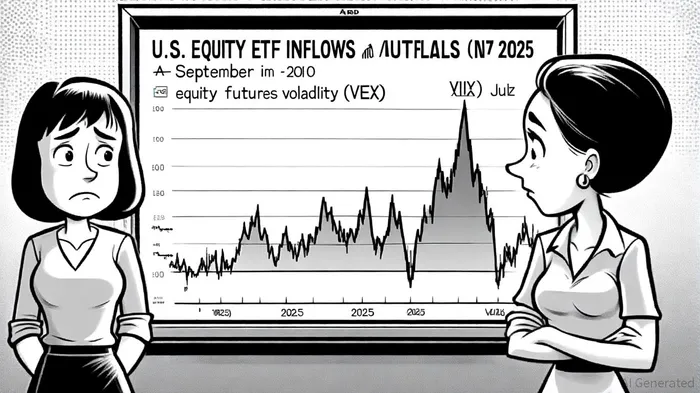
ETF flows mirrored these trends. In the summer of 2025, U.S. equity ETFs saw $147 billion in net inflows, driven by large-cap and international exposures[4]. Technology sector ETFs, in particular, attracted significant capital, reflecting optimism about tech giants' pricing power[4]. However, this optimism waned in late August and September, as investors booked profits and rotated into defensive assets. By September 17, U.S. equity funds recorded a $43.19 billion outflow, with technology sector funds losing $2.84 billion[2].
Long-Term Risks: Stagflation and Liquidity Shifts
The cumulative effect of tariffs—raising the average effective tariff rate to 17%—has exacerbated stagflationary risks. According to the OECD, U.S. GDP growth is projected to slow to 1.6% in 2025, while inflation is expected to reach nearly 4% by year-end[2]. These trends have strained corporate margins, particularly for firms reliant on imported goods. For example, the 50% tariff on Brazilian imports (combining a 40% executive order tariff and a 10% baseline rate) has disrupted supply chains and increased input costs[3].
Liquidity shifts further complicate the landscape. By August 2025, U.S. equity funds faced sharp outflows as investors sought safer havens like money market funds[1]. International-equity funds, especially those focused on China, saw record outflows amid fears of retaliatory measures[2]. Meanwhile, fixed income ETFs gained traction, with $7.33 billion in weekly inflows into short-to-intermediate debt funds in September[2]. These movements underscore a broader realignment of risk preferences, with investors prioritizing liquidity and defensive assets.
Equity Futures and ETF Rally: A Fleeting Trade?
Equity futures have mirrored the turbulence of ETF flows. Post-August 2025, the S&P 500 and Dow Jones Industrial Average fell by 2.4% and 3%, respectively, as tariffs fueled inflation fears and labor market cooling[1]. While the VIX (volatility index) spiked during this period, it stabilized slightly in September, reflecting cautious optimism about a potential Fed rate cut[4]. However, this stability may be fragile.
The current ETF rally—nearly $36 billion in U.S. equity inflows on September 19—appears driven by short-term factors, such as anticipation of monetary easing[1]. Yet, this optimism clashes with structural risks. For instance, the suspension of de minimis exemptions (tariffs on imports under $800) has broadened the tax base, potentially squeezing small businesses and consumers[4]. Additionally, sector disparities persist: while tech and industrials thrive, financials and healthcare face outflows[4].
Strategic Implications for Investors
For investors, the key lies in balancing short-term opportunities with long-term risks. Defensive sectors like utilities and healthcare may offer stability amid tariff uncertainty, while active ETFs—particularly those focusing on commodities and gold—could hedge against inflation[4]. However, overexposure to growth-oriented tech ETFs remains perilous, given their sensitivity to margin compression and valuation corrections[2].
Equity futures suggest a cautious outlook. While BlackRockBLK-- notes that the worst of tariff fears may have passed[2], the alignment between futures and ETF trends remains tenuous. For example, September's inflows into U.S. equity ETFs contrast with equity futures volatility, indicating mixed signals for market sustainability[4]. Investors should prioritize diversification, favoring quality companies with strong balance sheets and hedging strategies to navigate policy shifts[1].
Conclusion
The U.S. tariff landscape in 2025 has created a paradoxical market: short-term rallies driven by policy pauses and sector rotations coexist with long-term risks of stagflation and liquidity fragmentation. While ETF inflows and equity futures suggest tactical opportunities, these gains are contingent on navigating macroeconomic uncertainties. Investors must remain vigilant, leveraging defensive strategies and sector diversification to mitigate the fallout from an increasingly protectionist global economy.





Comentarios
Aún no hay comentarios