
Market Leadership in 2026: Why the S&P 500 and Dow's New Highs Signal a Tech-Driven Bull Run
The S&P 500 and Dow Jones Industrial Average have closed 2025 with robust gains, signaling a continuation of the tech-driven bull market that has defined the past three years. The S&P 500 surged 17% year-to-date, while the Dow added 13%, despite volatility triggered by events like President Trump's April 2025 tariff announcements according to market reports. These results underscore a broader shift in market leadership, with artificial intelligence (AI) and its infrastructure requirements emerging as the dominant force. For 2026, investors should overweight tech-linked equities, as sector momentum and macroeconomic tailwinds align to fuel a new phase of growth.
Tech Sector Momentum: From Chips to Infrastructure
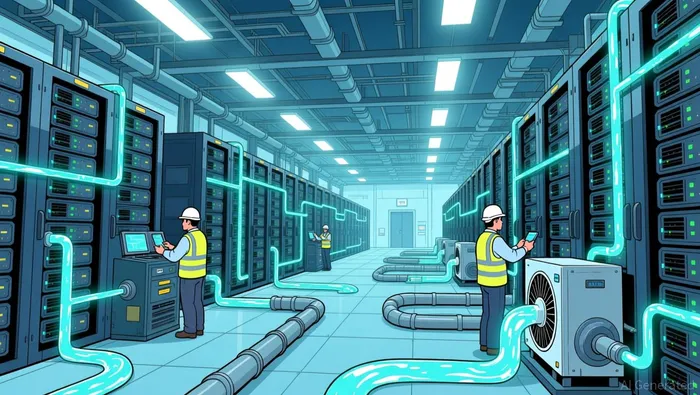
The AI boom of 2025 has reshaped the S&P 500's leadership structure. While traditional chipmakers like NvidiaNVDA-- delivered 40% returns, they paled in comparison to "pick-and-shovel" stocks enabling AI's expansion. Data storage firms such as SandiskSNDK-- (up 580%), Western DigitalWDC-- (up 110%), and SeagateSTX-- (strong growth) outperformed the index, reflecting the sector's pivot toward infrastructure. Similarly, power and cooling solutions for data centers-critical for managing AI's energy demands-saw Vertiv Holdings Co.VRT-- rise 46%, while nVent ElectricNVT-- and EatonETN-- gained traction according to analysis.
This shift highlights a key trend: investors are no longer betting solely on AI applications but on the entire ecosystem supporting its growth. As AI workloads intensify, demand for high-capacity storage, liquid cooling, and energy-efficient systems will only accelerate. However, challenges persist. The S&P 500 Software Industry Index lagged with a 12% gain in 2025, suggesting software stocks may offer more attractive valuations for future AI-driven growth.
Underperforming Cooling Companies: A Cautionary Tale
Despite the sector's overall strength, some data center cooling companies face headwinds. Traditional air cooling systems are increasingly obsolete, as AI-driven data centers require liquid cooling, immersion cooling, or direct-to-chip solutions to manage thermal loads according to industry analysis. Retrofitting these systems demands specialized expertise, particularly for natural refrigerants like ammonia or CO2, which require trained technicians and regulatory compliance according to market research.
A critical bottleneck is the shortage of skilled labor. Operators seeking to scale AI infrastructure must compete for talent in niche fields like thermal management and industrial refrigeration. Additionally, regulatory pressures-such as the EU's Energy Efficiency Directive-compel data centers to report detailed sustainability metrics, adding complexity according to industry experts. While these challenges create near-term risks, they also present opportunities for companies that adapt quickly. Investors should monitor firms addressing these gaps, as they could emerge as long-term leaders.
Macroeconomic Tailwinds: Rates, Inflation, and AI's Economic Impact
The macroeconomic backdrop for 2026 further strengthens the case for tech-linked equities. Central banks are expected to cut interest rates as inflation cools, providing liquidity to growth-oriented sectors. The U.S., in particular, remains a growth engine, with AI adoption boosting productivity and economic expansion. The "One Big Beautiful Bill Act" and corporate investment in AI infrastructure are projected to drive 2.2% GDP growth in 2026 according to economic forecasts.
However, AI's rapid rollout carries inflationary risks. The surge in data center construction, energy consumption, and chip demand could push U.S. inflation above the Federal Reserve's 2% target through 2027 according to financial analysis. While this introduces volatility, it also underscores AI's transformative scale. Governments in the U.S., Europe, and Japan are likely to continue stimulus programs, further fueling demand for tech infrastructure according to market commentary.
Strategic Implications for Investors
The confluence of sector momentum and macroeconomic support positions tech-linked equities as a core holding for 2026. Investors should overweight: 1. Infrastructure Providers: Firms supplying storage, cooling, and power solutions for AI data centers. 2. Undervalued Software Stocks: The S&P 500 Software Industry Index's underperformance in 2025 suggests potential for AI-driven growth in 2026.
3. Energy-Efficient Innovators: Companies addressing sustainability mandates and energy efficiency in high-density computing environments according to industry analysis.
While risks like inflationary pressures and speculative bubbles persist- Deutsche Bank's survey found 57% of institutional investors view a tech bubble as their top 2026 risk- the long-term trajectory of AI adoption remains compelling. For investors willing to navigate near-term volatility, the S&P 500 and Dow's new highs in 2025 are not just a reflection of past success but a harbinger of a tech-driven bull run in 2026.







Comentarios
Aún no hay comentarios