
Market on Knife's Edge: Trump's Doubts on Zelenskyy's Peace Readiness Spark Volatility
Generado por agente de IATheodore Quinn
viernes, 28 de febrero de 2025, 2:23 pm ET2 min de lectura
AAPL--
The global stock market finds itself on a precarious edge as geopolitical tensions and investor sentiment continue to drive volatility. In a recent development, U.S. President Donald Trump's skepticism about Ukrainian President Volodymyr Zelenskyy's readiness for peace has added fuel to the fire, causing markets to fluctuate. This article explores the impact of these political events on the stock market, focusing on sectors like Big Tech and insurance.
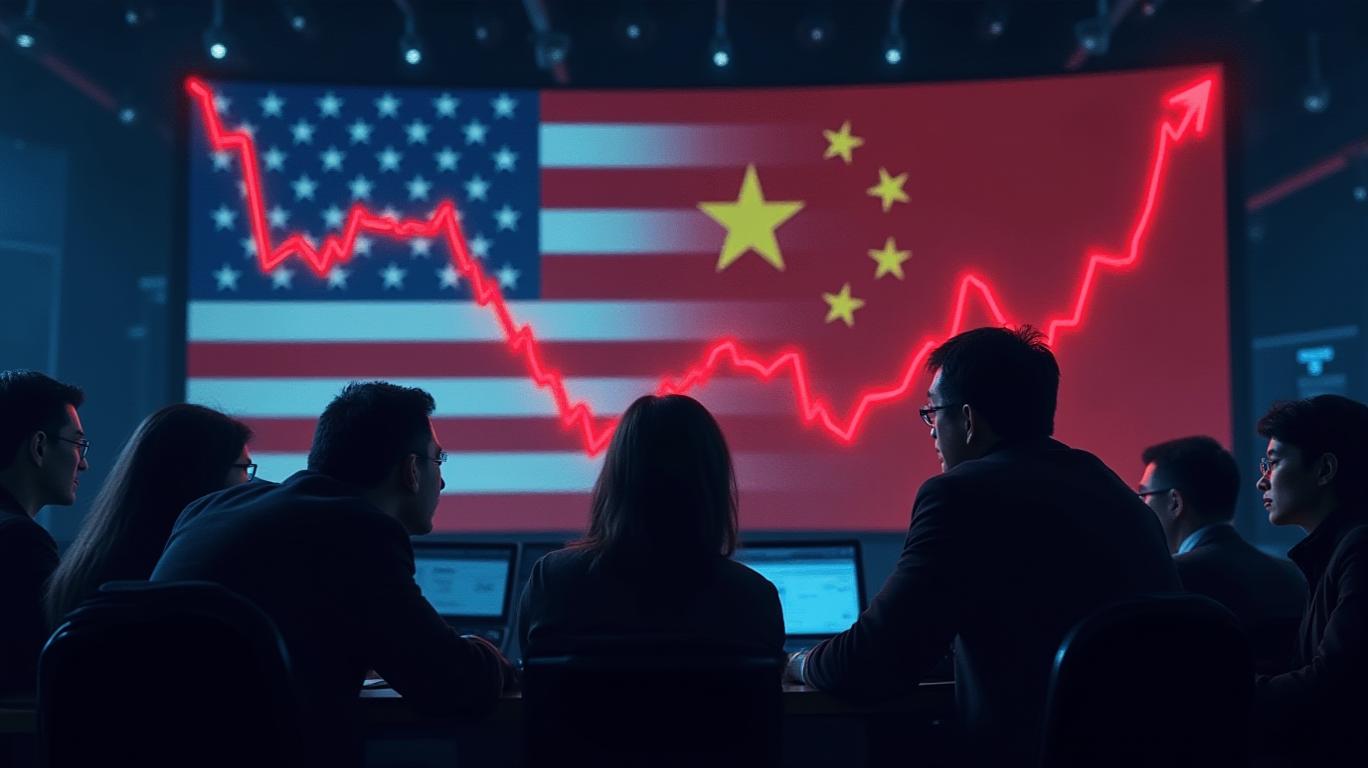
Geopolitical tensions, exacerbated by the Trump administration's policies, have significantly impacted the global stock market, particularly in sectors like Big Tech and insurance. The increased uncertainty and volatility stemming from these tensions have led to market fluctuations and changes in investor sentiment. For instance, the S&P 500 index, which includes many Big Tech companies, was on track for its worst week of the year in late February 2025, with a decline of about 2 percent, partly due to anxiety about the inflationary impact of new tariffs (Source: The New York TimesNYT--, 2025-03-01).
Different sectors are affected differently by geopolitical tensions. For example, companies in the Big Tech sector often have global operations and rely on international supply chains. Geopolitical tensions can disrupt these supply chains and increase operational costs, leading to decreased profitability. In the case of the U.S.-China trade war, many Big Tech companies, such as AppleAAPL-- and IntelINTC--, faced increased tariffs on their products, which negatively impacted their stock prices (Source: CNBC, 2019).
Insurance companies, on the other hand, face increased risks during geopolitical tensions, particularly those with exposure to affected regions. During the Russia-Ukraine conflict, insurance companies with exposure to the region faced increased risks and potential losses, which could impact their stock prices (Source: Insurance Journal, 2022).

Investor sentiment plays a crucial role in driving stock market volatility, especially in the Chinese stock market, which is more "sentiment-driven" than the U.S. market. Geopolitical risks can influence investor sentiment, leading to changes in investment decisions and causing market fluctuations. For instance, during the COVID-19 pandemic, geopolitical tensions and uncertainty led to increased investor pessimism, causing significant market volatility and affecting the performance of individual stocks.
To mitigate the impact of investor sentiments driven by political events and geopolitical risks in a long-term investment strategy, investors can consider diversification, fundamental analysis, maintaining a long-term perspective, and implementing risk management strategies. By adhering to these principles, investors can better navigate market volatility and make more informed investment decisions.
In conclusion, the geopolitical tension between the U.S. and Russia, exacerbated by the Trump administration's policies, has led to increased uncertainty and volatility in the global stock market, particularly in sectors like Big Tech and insurance. This impact is felt through increased uncertainty, sector-specific effects, changes in investor sentiment, and interconnected market volatility. To navigate these effects, investors should consider diversification, fundamental analysis, maintaining a long-term perspective, and implementing risk management strategies. By doing so, investors can better navigate market volatility and make more informed investment decisions.
INTC--
NYT--
The global stock market finds itself on a precarious edge as geopolitical tensions and investor sentiment continue to drive volatility. In a recent development, U.S. President Donald Trump's skepticism about Ukrainian President Volodymyr Zelenskyy's readiness for peace has added fuel to the fire, causing markets to fluctuate. This article explores the impact of these political events on the stock market, focusing on sectors like Big Tech and insurance.
Geopolitical tensions, exacerbated by the Trump administration's policies, have significantly impacted the global stock market, particularly in sectors like Big Tech and insurance. The increased uncertainty and volatility stemming from these tensions have led to market fluctuations and changes in investor sentiment. For instance, the S&P 500 index, which includes many Big Tech companies, was on track for its worst week of the year in late February 2025, with a decline of about 2 percent, partly due to anxiety about the inflationary impact of new tariffs (Source: The New York TimesNYT--, 2025-03-01).
Different sectors are affected differently by geopolitical tensions. For example, companies in the Big Tech sector often have global operations and rely on international supply chains. Geopolitical tensions can disrupt these supply chains and increase operational costs, leading to decreased profitability. In the case of the U.S.-China trade war, many Big Tech companies, such as AppleAAPL-- and IntelINTC--, faced increased tariffs on their products, which negatively impacted their stock prices (Source: CNBC, 2019).
Insurance companies, on the other hand, face increased risks during geopolitical tensions, particularly those with exposure to affected regions. During the Russia-Ukraine conflict, insurance companies with exposure to the region faced increased risks and potential losses, which could impact their stock prices (Source: Insurance Journal, 2022).
Investor sentiment plays a crucial role in driving stock market volatility, especially in the Chinese stock market, which is more "sentiment-driven" than the U.S. market. Geopolitical risks can influence investor sentiment, leading to changes in investment decisions and causing market fluctuations. For instance, during the COVID-19 pandemic, geopolitical tensions and uncertainty led to increased investor pessimism, causing significant market volatility and affecting the performance of individual stocks.
To mitigate the impact of investor sentiments driven by political events and geopolitical risks in a long-term investment strategy, investors can consider diversification, fundamental analysis, maintaining a long-term perspective, and implementing risk management strategies. By adhering to these principles, investors can better navigate market volatility and make more informed investment decisions.
In conclusion, the geopolitical tension between the U.S. and Russia, exacerbated by the Trump administration's policies, has led to increased uncertainty and volatility in the global stock market, particularly in sectors like Big Tech and insurance. This impact is felt through increased uncertainty, sector-specific effects, changes in investor sentiment, and interconnected market volatility. To navigate these effects, investors should consider diversification, fundamental analysis, maintaining a long-term perspective, and implementing risk management strategies. By doing so, investors can better navigate market volatility and make more informed investment decisions.

Divulgación editorial y transparencia de la IA: Ainvest News utiliza tecnología avanzada de Modelos de Lenguaje Largo (LLM) para sintetizar y analizar datos de mercado en tiempo real. Para garantizar los más altos estándares de integridad, cada artículo se somete a un riguroso proceso de verificación con participación humana.
Mientras la IA asiste en el procesamiento de datos y la redacción inicial, un miembro editorial profesional de Ainvest revisa, verifica y aprueba de forma independiente todo el contenido para garantizar su precisión y cumplimiento con los estándares editoriales de Ainvest Fintech Inc. Esta supervisión humana está diseñada para mitigar las alucinaciones de la IA y garantizar el contexto financiero.
Advertencia sobre inversiones: Este contenido se proporciona únicamente con fines informativos y no constituye asesoramiento profesional de inversión, legal o financiero. Los mercados conllevan riesgos inherentes. Se recomienda a los usuarios que realicen una investigación independiente o consulten a un asesor financiero certificado antes de tomar cualquier decisión. Ainvest Fintech Inc. se exime de toda responsabilidad por las acciones tomadas con base en esta información. ¿Encontró un error? Reportar un problema


SOBRE NOSOTROS
Nuestra historiaAutores de noticiasBase de conocimientosPolítica de privacidadTérmino de usoDescargo de responsabilidad de corretaje de tercerosTérminos de uso de AIMEDivulgaciones de riesgos de AInvest AICarrerasCONTÁCTENOS
Email: support@ainvest.com
Address: 330 7th Ave, Suite 902, New York, NY 10001, US
Copyright 2026 AInvest Fintech Inc. All rights reserved.


Comentarios
Aún no hay comentarios