
Market Holidays and Investor Behavior: Timing and Sentiment-Driven Opportunities in 2025
Market holidays, often dismissed as routine calendar events, wield profound influence over investor behavior, liquidity, and price dynamics. As global markets become increasingly interconnected, understanding the timing and sentiment-driven opportunities tied to these holidays is critical for investors seeking to navigate volatility and capitalize on patterns.
Holiday-Driven Trading Patterns and Liquidity Shifts
The closure of major exchanges like the New York Stock Exchange (NYSE) and Nasdaq for holidays such as New Year's Day, Independence Day, and Christmas Day reduces trading volume and liquidity. According to a Bloomberg report, this often leads to wider bid-ask spreads and heightened volatility, particularly in the days preceding and following closures. For instance, the NYSE's early closure on July 3 (the day before Independence Day) and the London Stock Exchange's (LSE) closure for Good Friday create windows where institutional investors may delay trades, amplifying price swings.
In Asia, extended closures-such as the Hong Kong Stock Exchange's shutdown during Chinese New Year (January 29–31) and the Tokyo Stock Exchange's (JPX) closure for Showa Day-can trigger sharp price adjustments upon reopening. A Journal of Financial Markets study notes that these gaps often result in "gap-up" or "gap-down" openings, driven by news or sentiment shifts during the closure. Later analysis of the Chinese A-share market's volatility around the 2024 National Day holiday similarly highlighted how policy announcements and capital inflows can amplify sentiment-driven swings.
Historical Performance and Behavioral Trends
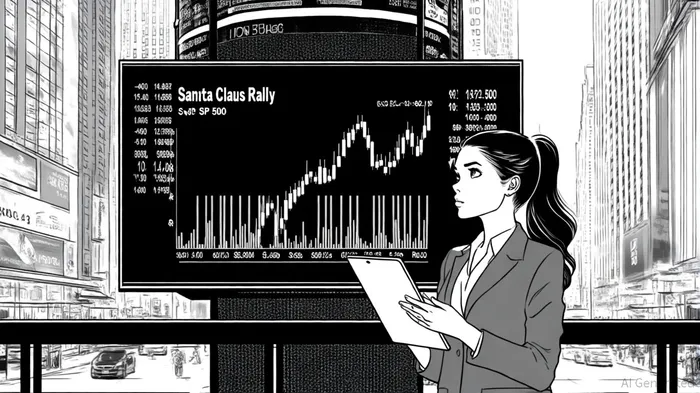
Investor sentiment around holidays has historically generated predictable patterns. The "Santa Claus Rally," for example, has seen the S&P 500 gain an average of 1.7% in the last five trading days of December and the first two days of January, with positive returns observed in over 75% of cases since 1950, as shown in a holiday season analysis. Similarly, the "January effect"-a surge in small-cap stock performance-has been linked to tax-loss harvesting in December, as that analysis notes.
Academic research further underscores these dynamics. A 2024 Emerald Insight study found that abnormal returns often occur around U.S. federal holidays like Martin Luther King Jr. Day and Presidents' Day, with investors exploiting reduced liquidity to execute trades. Meanwhile, the A-share study mentioned above highlighted how concentrated flows and policy timing can magnify short-term moves.
Strategic Opportunities for Investors
For investors, timing trades around holidays can yield advantages. Pre-holiday periods often see reduced volatility, making them ideal for executing large orders without significant price impact. Conversely, post-holiday reopenings-particularly after extended closures-can offer entry points if markets correct following gap-up openings.
Regional considerations are equally vital. The U.S. market's historical outperformance (13.8% annualized returns from 2010–2025) contrasts with global equities' 4.9% average, a trend driven by the 2010s' bull market, as shown in a Visual Capitalist chart. However, international markets have occasionally outperformed, as seen in the 2000s when China's economic rise boosted global returns, a pattern illustrated in that chart. Investors must weigh these regional dynamics against holiday-driven liquidity shifts.
Conclusion
Market holidays are not mere pauses in trading but pivotal moments that shape investor behavior and market outcomes. By analyzing historical patterns, liquidity shifts, and sentiment-driven trends, investors can identify timing opportunities and mitigate risks. As 2025 unfolds, the interplay between global closures and regional reopenings will remain a key factor in crafting resilient, adaptive strategies.







Comentarios
Aún no hay comentarios