
How Market Expectations of a September 2025 Rate Cut Are Fueling Equity Risk-On Behavior and S&P 500 Record Highs
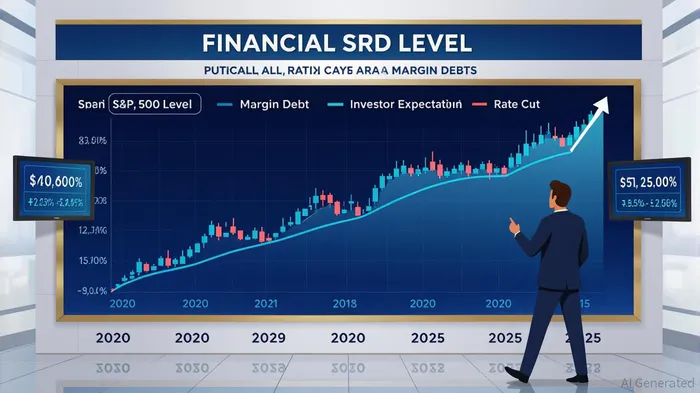
The S&P 500's ascent to record highs in 2025 has sparked intense debate about the role of forward-looking monetary policy expectations in shaping equity market behavior. While concrete data on the September 2025 rate cut remains speculative, investor psychology and self-fulfilling expectations are already driving risk-on sentiment. This analysis explores how psychological drivers—such as anticipatory buying, herd behavior, and the amplification of perceived catalysts—are creating a feedback loop that elevates equities even in the absence of immediate policy action.
The Psychology of Anticipation: How Expectations Shape Reality
Investor psychology is a powerful force in financial markets, often turning potential outcomes into self-fulfilling prophecies. According to a report by Investors.com, psychological indicators like the put/call ratio, high-low ratio, and margin debt levels serve as barometers of sentiment, frequently anticipating broader market trends[1]. For instance, a declining put/call ratio (indicating reduced fear of downside risk) and rising margin debt (reflecting increased leveraged buying) suggest that investors are positioning for growth, even if macroeconomic fundamentals lag behind.
In the context of the September 2025 rate cut, these indicators reveal a market primed for optimismOP--. Analysts note that the mere expectation of lower borrowing costs has spurred investors to overweight sectors sensitive to rate changes, such as technology and real estate. This behavior, while forward-looking, creates a self-reinforcing cycle: rising equity prices bolster confidence, which in turn deepens the conviction that central banks will act to sustain momentum.
Self-Fulfilling Mechanisms in Action
The concept of self-fulfilling expectations is particularly relevant in today's environment. When investors collectively anticipate a rate cut, they adjust their portfolios accordingly, often purchasing assets that benefit from lower discount rates. This demand-driven price action can distort traditional valuation metrics, as seen in the S&P 500's recent outperformance relative to earnings growth.
For example, data from the NY Fed shows that margin debt levels have risen to multi-year highs in 2025, signaling heightened speculative activity[1]. This trend aligns with historical patterns where loose credit conditions and accommodative policy expectations drive risk-taking. The September 2025 rate cut, though not yet enacted, has become a narrative that investors are internalizing—effectively creating a market reality where equities thrive on the promise of future liquidity.
The Role of Central Bank Communication
Central banks play a pivotal role in amplifying or dampening these psychological dynamics. Forward guidance, such as hints at rate cuts in late 2025, acts as a catalyst for investor behavior. When policymakers signal dovish intentions, markets often price in the move months in advance, as seen in the S&P 500's resilience during periods of economic uncertainty. This anticipatory pricing reduces the perceived need for immediate action, allowing asset prices to climb on the strength of expectations alone.
However, this dynamic carries risks. If actual policy diverges from expectations—say, due to inflationary surprises or geopolitical shocks—the self-fulfilling cycle could reverse rapidly. The key for investors lies in monitoring not just the Fed's statements but also the psychological metrics that gauge the market's absorption of those signals.
Conclusion: Navigating the Psychology-Driven Market
The S&P 500's record highs in 2025 underscore the growing influence of investor psychology in shaping equity valuations. While the September 2025 rate cut remains a forward-looking event, its psychological impact is already manifesting in risk-on behavior. For investors, the challenge lies in distinguishing between fundamentals and sentiment-driven momentum. By closely tracking indicators like the put/call ratio and margin debt, market participants can better navigate the self-fulfilling nature of expectations—and position themselves for both the opportunities and risks ahead.






Comentarios
Aún no hay comentarios