
Market Divergence: The Bank Selloff as a Structural Shift Indicator
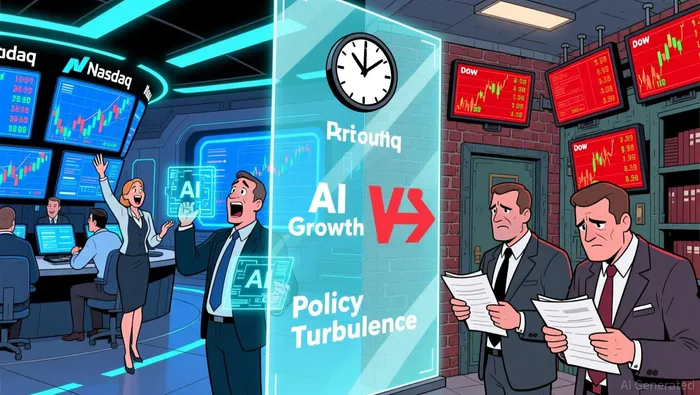
The opening week of 2026 laid bare a market in two minds. On January 2, the tech-heavy Nasdaq Composite surged more than 1.3%, fueled by an insatiable appetite for artificial intelligence and semiconductor stocks. In stark contrast, the Dow Jones Industrial Average struggled to find its footing, finishing nearly flat. This divergence wasn't a one-day fluke; it was the opening salvo of a broader sector rotation that accelerated sharply on January 7.
That day, the Dow experienced a jaring reversal, tumbling more than 200 points after hitting a fresh all-time high earlier in the session. The index finished down approximately 0.4%. Meanwhile, the Nasdaq managed to eke out a modest gain. The split was clear: while the Nasdaq extended its rally, the Dow's struggle highlighted a market pulling away from traditional financials and legacy sectors.
The catalyst for the financial sector's weakness arrived over the weekend. President Donald Trump's proposal to cap credit card interest rates at 10% for a year triggered a selloff that hit financial heavyweights hardest. The market's reaction was swift and severe. Capital One Financial plunged as much as 8.2% in New York, its biggest intraday decline in nine months. JPMorgan ChaseJPM-- dropped 1.6%, while CitigroupC-- and American ExpressAXP-- each fell more than 3%. The move underscored a growing vulnerability for banks whose profitability is deeply tied to consumer lending margins.
Viewed another way, this was a classic market split. The Nasdaq's strength was built on a narrative of relentless innovation and growth, while the Dow's pressure revealed the fragility of its value-weighted structure when confronted by specific policy headwinds. The January 7 selloff was not just a reaction to a single news item; it was a symptom of a structural shift in where capital is willing to flow.
The Policy Shock: A Catalyst for Sector Rotation
The proposed 10% APR cap on credit card interest rates was a classic policy shock. It landed with the force of a sledgehammer on a sector already under structural pressure. For institutions like Capital OneCOF-- and American Express, the move directly threatened the net interest margin on card loans-a major profit center that has powered their earnings for years. Analysts at Wells FargoWFC-- warned the cap could "wipe out earnings from cards for a year", fundamentally altering the economics of consumer lending. This wasn't a minor regulatory tweak; it was a direct assault on a core business model.
Yet, the market's initial panic may have been less about the proposal's likelihood and more about its potential impact. Analysts at Jefferies, echoing industry sentiment, deemed the plan 'highly unlikely' to become law due to legal hurdles and a lack of legislative momentum. The president's executive authority is questionable, and similar caps have historically died in Congress. In that light, the selloff on January 7 was a risk-off event crystallizing a pre-existing shift. Investors weren't just reacting to a single news item; they were pricing in the vulnerability of a sector whose profitability is increasingly at odds with a political and economic environment favoring consumer protection over financial sector margins.
This incident serves as a clear signal that capital is rotating away from traditional financials and legacy sectors. The market's bifurcation, with the Nasdaq extending its rally on AI-driven growth, highlights this structural reallocation. The financial sector's weakness, accelerated by this policy scare, underscores a broader narrative: where capital is willing to flow is shifting decisively toward high-growth, innovation-led industries. The proposed rate cap didn't cause this rotation, but it did act as a catalyst, crystallizing the risks and vulnerabilities in the old guard.
Financial Impact and Sector Vulnerability
The proposed rate cap is not a theoretical concern; it represents a direct and severe threat to a core profit engine. Analysts warn the move could "wipe out earnings from cards for a year" for major issuers. This isn't hyperbole. Credit card rates have been hovering above 20% in recent years, while the proposed cap would slash them to 10%. For a business model built on the spread between that high rate and the cost of funds, this is a fundamental economic shock. The potential earnings drag is measured in billions, directly targeting the profitability of the industry's largest players.
The vulnerability is concentrated. Capital One Financial, as the largest US card issuer, is the most exposed. Its business is synonymous with consumer lending, making it a prime target for the policy's impact. Synchrony Financial, another major card lender, also saw its shares drop sharply, signaling its own high exposure. The selloff on January 7 was a market-wide reaction, but the pain will be most acute for these institutions whose balance sheets are weighted toward card loans. The broader banking sector faces a chilling effect, as the cap threatens to eliminate the incentive to lend, potentially curtailing credit availability for millions.
This financial pressure stands in stark relief to the resilience of the Nasdaq. While financials faltered, the tech-heavy index extended its rally, driven by a growth narrative that remains intact. The AI infrastructure and semiconductor giants powering the Nasdaq are not reliant on consumer lending margins. Their growth is fueled by capital expenditure cycles and long-term technological adoption, sectors that are seeing a favorable macro backdrop with expectations of Fed rate cuts. The contrast is clear: one sector faces a policy-driven earnings reset, while the other's expansion story continues to gather momentum. The market's bifurcation is now a direct reflection of this structural divide in profitability drivers.
Catalysts, Scenarios, and What to Watch
The market's initial reaction to the proposed rate cap has been a classic risk-off event. Now, the focus shifts to near-term catalysts that will test the policy's viability and the sustainability of the sector rotation. The first major test arrives this week with the start of the earnings season. Executives from several of those institutions will get a chance to respond to that idea this week as big banks kick off earnings season, starting with JPMorgan on Tuesday. Bank management teams will be under pressure to address the proposal directly and provide guidance on how it could impact fee and interest income. Their tone and forward-looking statements will be critical for reassessing the earnings reset scenario.
Beyond the conference calls, the key to validating or invalidating the market's selloff lies in formal action. Watch for any legislative action or regulatory guidance from Congress or the Treasury Department in the coming weeks. The president's "one-year cap on Credit Card Interest Rates of 10%" proposal is a political statement, but its economic impact hinges on implementation. Without clear legislative or regulatory steps, the market's reaction may be seen as overdone. Conversely, any credible move toward enforcement would confirm the threat and likely prolong the financial sector's weakness.
The broader market split offers a real-time barometer for the rotation. Monitor the divergence between the tech-driven Nasdaq and the traditional financial-heavy Dow for signs of sustained rotation or a reversal. The Nasdaq's resilience is built on a growth narrative that remains intact, while the Dow's pressure reveals the fragility of its value-weighted structure when confronted by specific policy headwinds. If economic data evolves to show a clearer path to Fed rate cuts, that could eventually support the financial sector. But for now, the path of least resistance appears to be toward the AI and semiconductor story. The coming weeks will show whether the January 7 selloff was a temporary shock or the start of a deeper, structural reallocation of capital.





Comentarios
Aún no hay comentarios